← Fire-Bellied Newt care guide
What do fire-bellied newts eat?
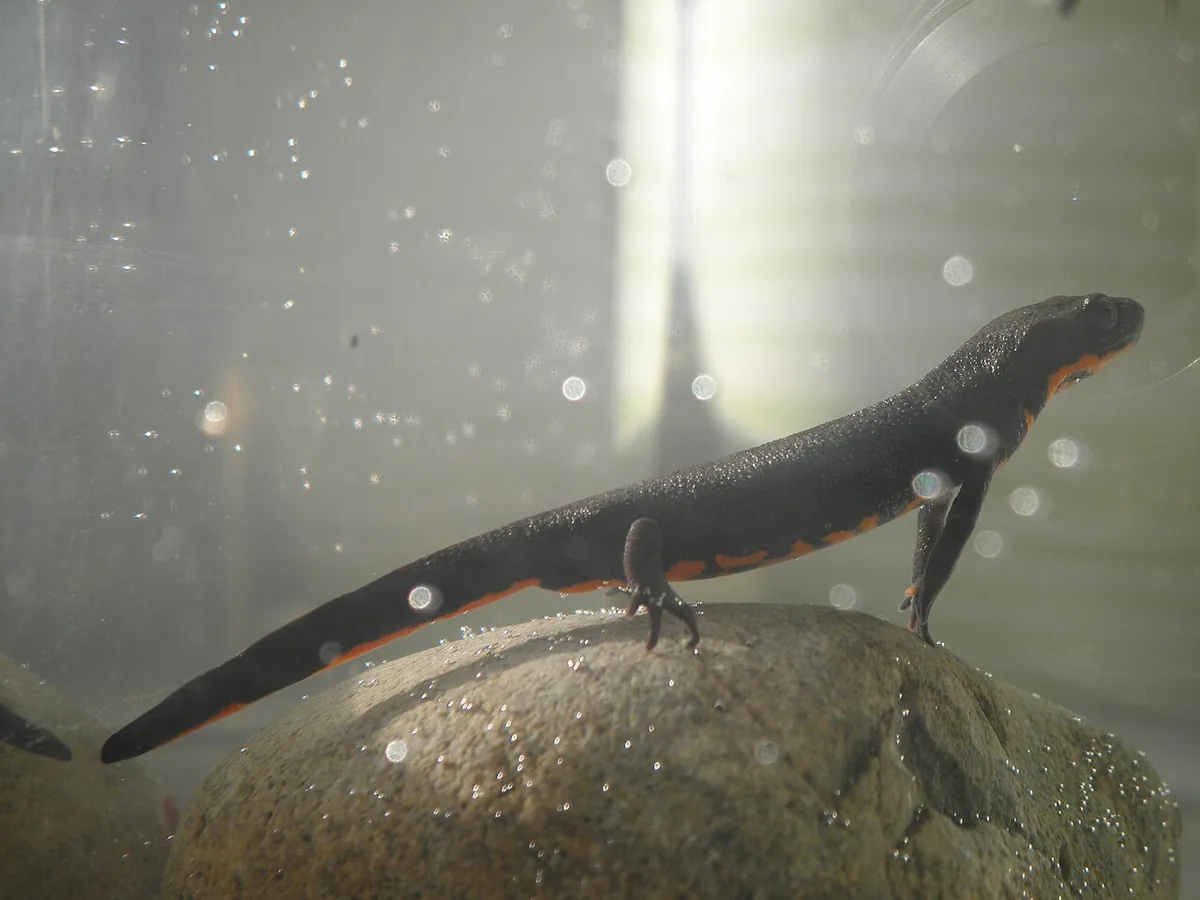
The short answer
Fire-bellied newts eat small aquatic invertebrates: bloodworms, chopped earthworms, daphnia, glass shrimp and tubifex. They are slow, deliberate foragers, and the single biggest influence on whether they eat well is not the food but the water temperature.
Feeding schedule by age
| Life stage | Diet balance | How often | Notes |
|---|---|---|---|
| Juvenile | Small live foods | Daily to every other day | Growing |
| Adult | Bloodworms, chopped worms, shrimp | Every 2-3 days | Small measured portions |
| All ages | Uneaten food | Remove promptly | Protects water quality in a small volume |
Intervals and ratios here follow the sources listed at the foot of this page, checked September 20, 2026. Where those sources differ, the disagreement is set out in Where good sources disagree rather than averaged into a single number. Figures resting on keeper consensus rather than a published source are labelled as such where they appear.
What to feed
| Food | Role | Why |
|---|---|---|
| Frozen or live bloodworms | Staple | Readily taken and easy to target-feed |
| Chopped earthworms / nightcrawlers | Staple | Excellent nutrition |
| Daphnia | Staple | Good for smaller animals |
| Glass shrimp | Rotation | Useful variety |
| Freeze-dried tubifex | Occasional | Convenient supplement |
| Waxworms | Treat only | High fat |
What never to feed
Items in this table are either outright toxic or cause predictable long-term harm. This is the part of the page worth reading twice.
| Do not feed | Why |
|---|---|
| Fish flake and floating foods | Of no use to a slow bottom-foraging newt. |
| Housing with fish | Fish out-compete them for food and may nip at them. |
| Warm water | Not a food, but the main reason a newt stops eating. |
| Leaving uneaten food in the tank | Fouls a small volume quickly. |
| Handling to feed | Permeable skin, and wild-caught animals carry tetrodotoxin. |
Where good sources disagree
Care sheets do not all say the same thing, and pretending otherwise helps nobody. These are the real points of difference between the sources cited at the foot of this page, and what we think the safe reading is.
How often adults should eat.
Recommendations range from every other day to twice weekly for adults, and intake genuinely varies with temperature, since a cooler newt eats less. Body condition is more reliable than a fixed schedule: a healthy fire-bellied newt is rounded along the body rather than showing a prominent spine.
What most fire-bellied newt feeding advice gets wrong
Check the thermometer before you change the food.
Fire-bellied newts are cool-water animals, and appetite falls away as the tank warms. A newt that has stopped eating in a room that has warmed up for summer is telling you about the water, not the menu. Sustained temperatures above about 23°C are harmful in their own right, so this is worth acting on rather than working around.
They lose food races.
These are slow, deliberate foragers. Kept with fish, or fed by scattering food into a tank, they frequently go hungry while something faster eats. Target-feeding with a pipette or dropping food directly in front of them removes the problem, and keeping them in a species-only tank removes it entirely.
A newly imported newt may not eat for a while.
Most fire-bellied newts in the trade are wild-caught and arrive stressed, often dehydrated and carrying parasites. Early food refusal is common in those animals and is not by itself a reason to change the diet. Cool, stable water, quiet surroundings and a faecal check with an exotics vet are the sensible first steps.
Common questions
What do fire-bellied newts eat?
Small aquatic invertebrates: bloodworms live or frozen, chopped earthworms, daphnia, glass shrimp and freeze-dried tubifex. They will not take fish flake or floating foods, since they forage slowly along the bottom.
How often should I feed a fire-bellied newt?
Adults roughly every two to three days in small measured portions, and juveniles daily to every other day. Intake varies with water temperature, so judge by body condition rather than a fixed schedule, and remove uneaten food promptly.
Why has my fire-bellied newt stopped eating?
Water temperature is the most common cause. These are cool-water animals, and appetite falls as the tank warms. Check that the water is in the 14 to 20°C range and has not drifted above 23°C. Recently imported wild-caught animals also commonly refuse food while settling.
Can fire-bellied newts live with fish?
It is generally a poor idea. Newts are slow feeders and lose food races to fish, and some fish will nip at them. A species-only tank makes feeding far more reliable and removes the competition entirely.