Fire-Bellied Newt Care Guide
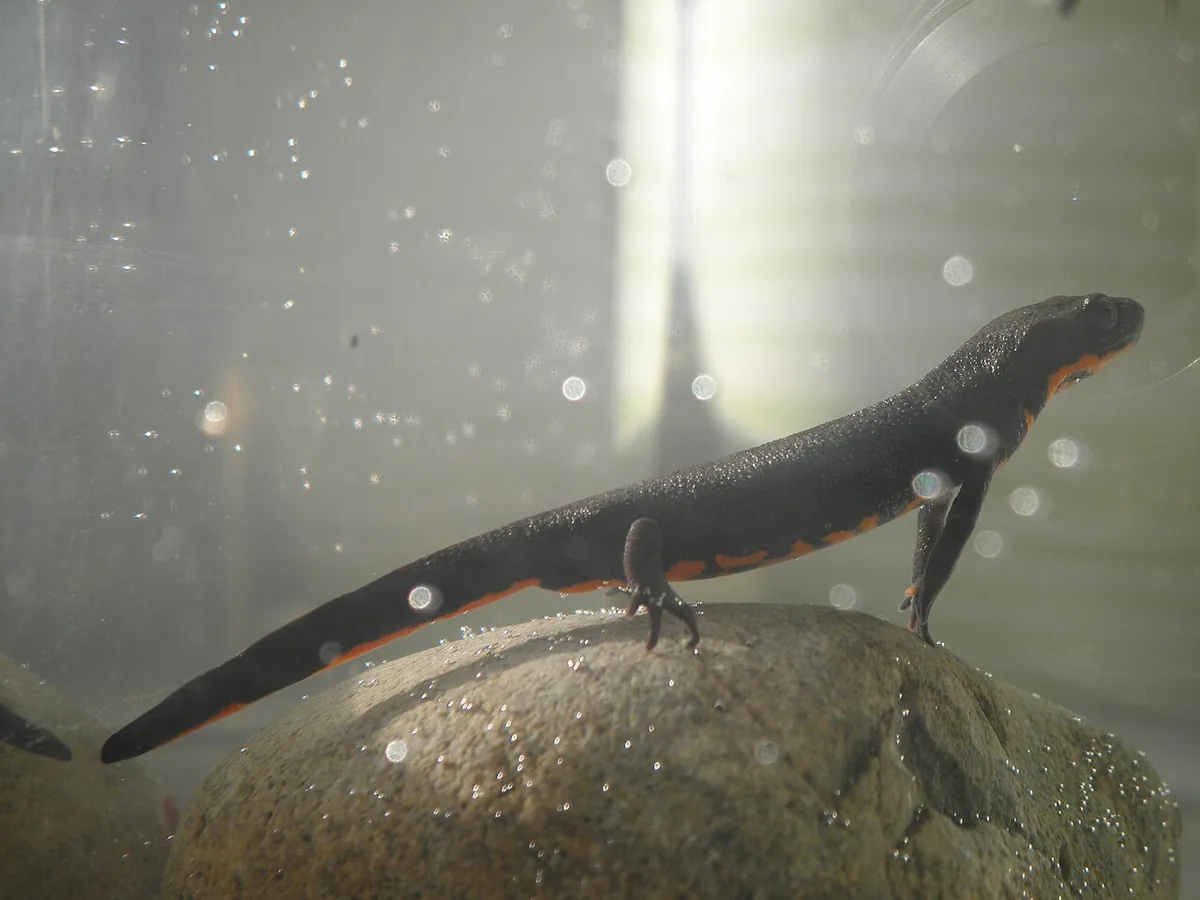
A small, long-lived, mostly aquatic newt sold cheaply as a beginner amphibian. Two things get missed: they need genuinely cool water rather than room temperature, and wild-caught animals carry tetrodotoxin while captive-bred ones do not.
Fire-Bellied Newt at a glance
| Adult size | 3-4 in |
| Lifespan | 10-15 years, sometimes longer |
| Enclosure | ~50 L aquarium for one or two, with a land area |
| Water temperature | 14-20°C (57-68°F). Avoid above 23°C |
| Setup | Mostly aquatic with accessible land |
| Diet | Bloodworms, earthworms, glass shrimp, daphnia, tubifex |
| Handling | Avoid. Permeable skin, and wild-caught animals carry TTX |
| Provenance | Most in the trade are wild-caught |
| Experience | Beginner, with the temperature caveat |
What most fire-bellied newt care sheets get wrong
These are the errors that show up most often in secondary care sheets and forum advice. Each one is a real welfare issue, not a preference.
Room temperature is too warm.
This is the single most common way fire-bellied newts are killed. They want water between roughly 14 and 20°C, can handle a little lower in winter, and should not be kept above about 23°C. Temperatures over 26°C are specifically not recommended. A tank sitting in a heated living room through summer is a slow welfare failure, and it is why so many of these newts die within a year or two of purchase despite a 10-15 year potential lifespan.
Captive-bred fire-bellied newts are not toxic. Wild-caught ones are.
Research published in Toxicon in 2021 found that wild-caught Cynops orientalis contain high concentrations of tetrodotoxin, while captive-reared offspring were entirely free of it, with none detected over 20 months. Interestingly, juveniles reared in the presence of their parents did acquire TTX, at up to 8.05 micrograms per gram, which shows the toxin can transfer without a wild diet. Either way, wash your hands: this is a reason to avoid handling, not a reason to panic.
They are sold as a cheap starter pet and live over a decade.
Fire-bellied newts are inexpensive, small and widely stocked, which positions them as a casual first amphibian. They commonly live 10 to 15 years, most available animals are wild-caught, and they need cooling in summer. None of that is difficult; all of it deserves knowing before the purchase rather than after.
Why keep a fire-bellied newt
- Striking black-and-orange colouring on a small, manageable animal
- Mostly aquatic, so the setup is simple: no misting rig or complex lighting
- Long-lived for their size and cost
- Active and visible during the day, unlike many amphibians
- Modest space requirements
Why you might not want one
- They need genuinely cool water, which many homes cannot provide in summer
- Most animals in the trade are wild-caught, with the parasite and welfare issues that brings
- Wild-caught individuals carry tetrodotoxin
- A 10-15 year commitment on an animal often sold as a cheap impulse buy
Common questions
What temperature do fire-bellied newts need?
Cool water, roughly 14 to 20°C or 57 to 68°F. They tolerate lower temperatures in winter, but sustained warmth is harmful: above 23°C should be avoided and above 26°C is specifically not recommended. Keeping them at ordinary room temperature is the most common cause of decline.
Are fire-bellied newts poisonous?
Wild-caught fire-bellied newts contain high concentrations of tetrodotoxin. Research published in Toxicon in 2021 found captive-reared offspring were entirely free of it, with none detected over 20 months, although juveniles reared alongside their parents did acquire it. Handling should be avoided regardless, both for your sake and the newt's permeable skin.
How long do fire-bellied newts live?
Commonly 10 to 15 years with stable, cool conditions, and sometimes longer. That is a substantial commitment for an animal often sold cheaply as a casual first amphibian.
Do fire-bellied newts need land?
Yes. They are primarily aquatic but still need an accessible land area to haul out onto. A tank of around 50 litres suits one or two newts, arranged mostly as water with a reliable way out of it.
Are fire-bellied newts wild-caught?
Most animals in the pet trade are, which matters for three reasons: wild-caught newts carry tetrodotoxin, they often arrive stressed and parasitised, and the collection itself has a conservation cost. Captive-bred animals are preferable where you can find them.