African Bullfrog Enclosure and Habitat
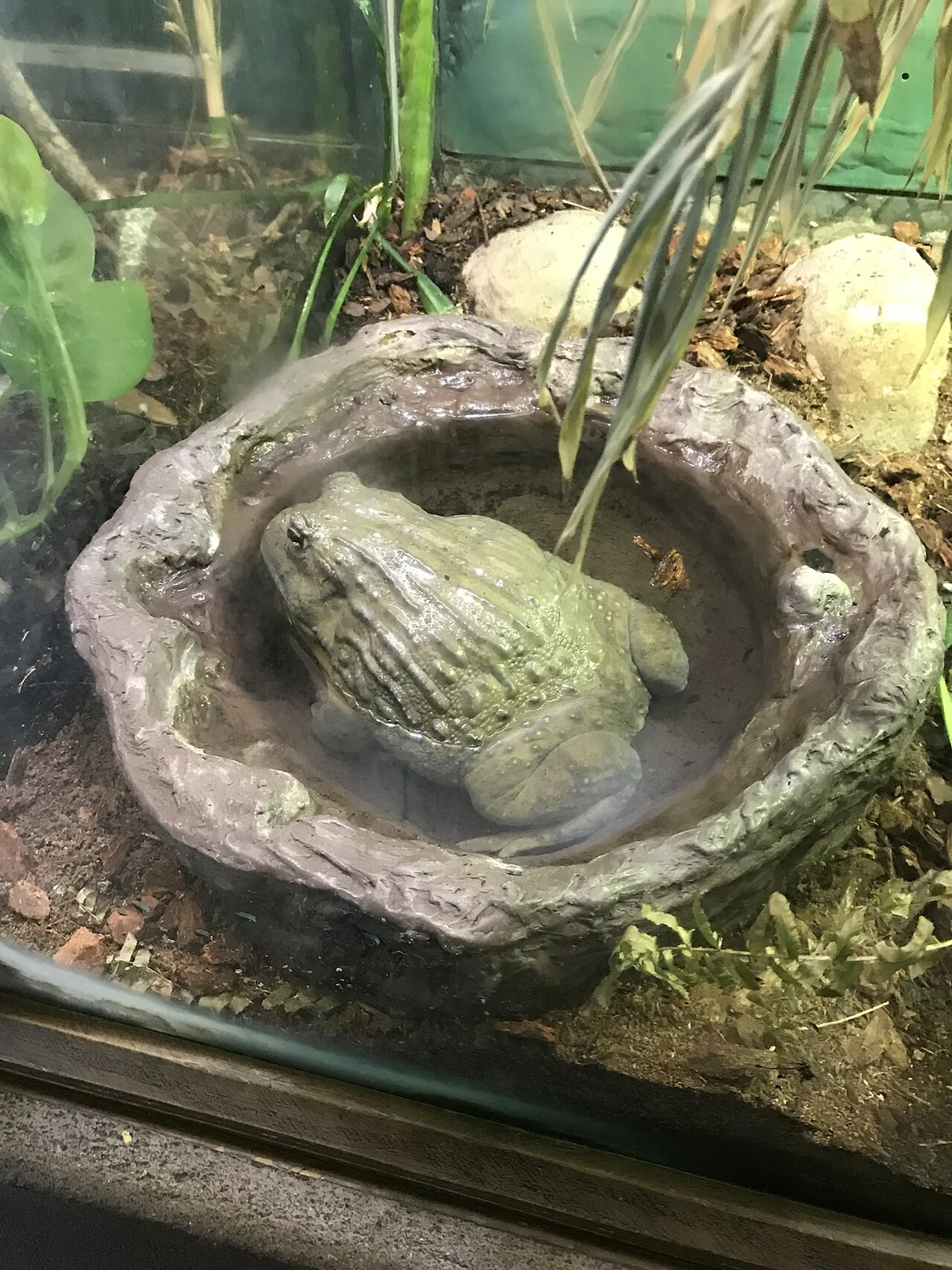
African bullfrogs are large, heavy and sedentary. The published figure on this site is 36 by 18 by 18 inches for an adult, with deep substrate mattering as much as the footprint.
What published sources give
| Figure | Size | Notes |
|---|---|---|
| Adult | 36 x 18 x 18 in | From this site's care guide |
| Substrate | Moist coco fibre, deep enough to bury completely | Burrowing is normal behaviour |
| Occupancy | Strictly solitary | They are cannibalistic |
| Temperature | 75-90°F with a ~5°F night drop | Published range |
Checked September 20, 2026. Where sources differ the range is shown rather than averaged. These are the figures published as minimums; none of them is a maximum.
What changes as they grow
Juvenile
Grows fast. Males in particular get very large, so the juvenile enclosure is short-lived.
Adult
36 by 18 by 18 inches, with deep moist substrate. Males can exceed 7 inches snout-to-vent and weigh over a kilogram, so the enclosure needs to suit a genuinely heavy animal.
Enclosure mistakes specific to this species
Untreated tap water, or residue on anything that goes in
Amphibian skin is highly permeable and absorbs what it touches. Chlorine and chloramine in tap water, soap residue on decor, and hand lotion on a keeper's fingers all reach the bloodstream in a way they never would with a reptile. Dechlorinate everything and rinse anything new.
Feeding on loose substrate
Ambush feeders strike hard and take a mouthful of whatever is under the prey. Impaction is a recognised problem across these species, and feeding with tongs or from a shallow dish removes most of the risk without changing the substrate.
Housing two together
Not a space question. They are cannibalistic and males grow far larger than females, so a size mismatch develops even among animals bought together.
Shallow or dried-out substrate
They bury themselves and need moist coco fibre deep enough to do it. Substrate that dries out removes both the behaviour and the humidity.
Enclosure hazards that apply to almost every setup
Five hazards come up across nearly every species on this site: contact burns from unguarded heat, UVB that never reaches the animal, cutting ventilation to hold humidity, unsecured decor, and trusting a bulb's wattage instead of a thermometer. They are set out in full, with sources, on our enclosure hazards page, which is worth reading once against any setup including one that looks finished.
Signs the enclosure is wrong
Animals tell you about their housing through behaviour before they tell you through illness. None of these is a diagnosis; each is a reason to look at the enclosure and, where noted, to call a vet.
| What you see | What it can mean |
|---|---|
| Sitting exposed constantly | Substrate too shallow or too dry to burrow into. |
| Obvious weight gain | Extremely common; this species has no satiety signal. |
| Lethargy with a distended abdomen | Possible impaction. Veterinary attention. |
| Dry, tacky skin | Substrate has dried out. |
Common questions
How big an enclosure does an African bullfrog need?
Around 36 by 18 by 18 inches for an adult, with deep moist substrate. They are large, heavy and sedentary, so substrate depth matters as much as floor area.
Can African bullfrogs live together?
No. They are cannibalistic, and because males grow far larger than females a dangerous size mismatch develops even between animals bought at the same time. House them alone.
What substrate do African bullfrogs need?
Moist coco fibre deep enough for the frog to bury itself completely. Substrate that is too shallow or has dried out removes both the burrowing behaviour and the humidity the animal needs.