African Bullfrog Care Guide
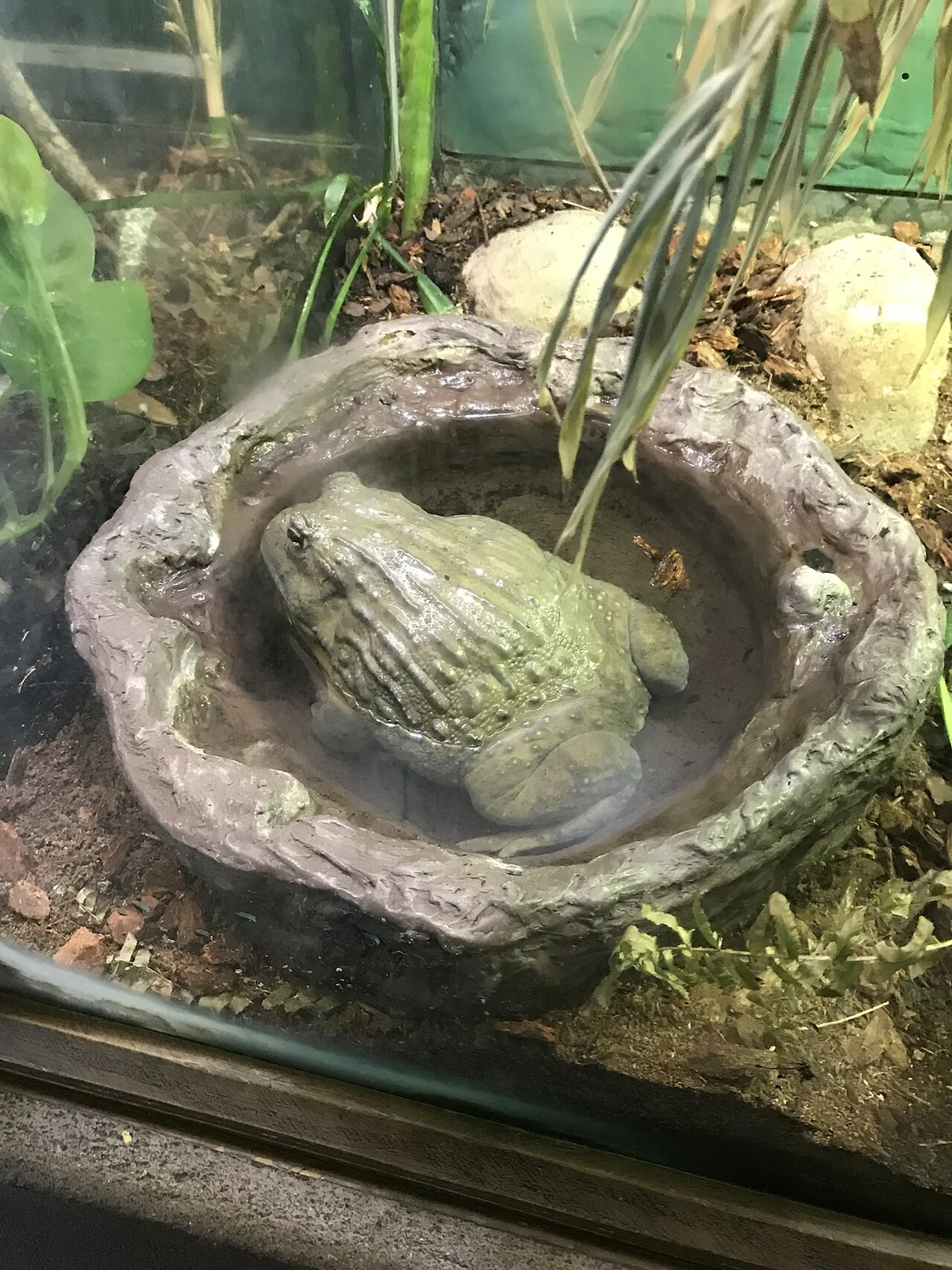
A massive, heavy-bodied frog that can live 20+ years and weigh over a kilogram. Simple to house and simple to kill with kindness. Overfeeding is the defining welfare problem of the species.
African Bullfrog at a glance
| Adult size | 5-10 in; males far larger than females |
| Lifespan | 15-25 years, 30+ reported |
| Enclosure | 36 x 18 x 18 in for an adult |
| Temperature | 75-90°F with a ~5°F night drop |
| Humidity | Moist substrate; shallow dechlorinated water dish |
| Substrate | Moist coco fiber, deep enough to bury completely |
| Diet | Insects primarily; rodents sparingly. 2-3 meals a week |
| Handling | Minimal. They bite, and their skin is permeable |
| Housing | Strictly solitary (they are cannibalistic) |
What most african bullfrog care sheets get wrong
These are the errors that show up most often in secondary care sheets and forum advice. Each one is a real welfare issue, not a preference.
They will eat themselves to death.
African bullfrogs have no meaningful satiety signal and will keep eating whatever is offered. Obesity is the most common health problem in captive pixie frogs and it drives organ disease and a shortened lifespan. An adult needs roughly two to three sensible meals per week, not daily feeding, and rodents should be occasional rather than staple.
A rodent-heavy diet is a welfare problem, not a treat.
Feeding mice regularly is common and it is the fastest route to an obese, fatty-liver frog. Insects such as earthworms, roaches, and crickets should form the bulk of the diet. Frogs fed large amounts of rodents are specifically identified as the most prone to obesity.
Housing two together is not an option you can manage.
This species is cannibalistic, and size disparity develops fast because males grow far larger than females. There is no enclosure size or feeding routine that makes cohabitation safe. Every pixie frog is a single-occupancy animal.
Why keep a african bullfrog
- Enormous presence for a small footprint. A genuinely impressive animal
- Simple housing. No complex lighting rig or climbing furniture required
- Very long-lived for an amphibian
- Bold feeding response and real personality, unusual among frogs
Why you might not want one
- Bites, and means it. This is not a gentle animal
- Cannibalistic: they must be housed alone, permanently
- Extremely easy to overfeed into a shortened life
- Twenty-plus years of maintenance for an animal that mostly sits
Common questions
How big do African bullfrogs get?
Adults range from about 5 to 10 inches. Males are dramatically larger than females, commonly reaching 7 inches or more snout-to-vent, with heavy specimens weighing over a kilogram. Females typically stay noticeably smaller, which is the reverse of the pattern in most frogs.
How often should I feed a pixie frog?
Adults need only two or three substantial meals per week, or smaller daily meals with at least one fasting day. They do not self-regulate and will keep eating, so feeding schedule is the keeper's responsibility. Obesity is the most common health problem in the species.
How long do African bullfrogs live?
Fifteen to twenty-five years is normal with good care, and lifespans over 30 years have been reported. Weight management is the biggest single factor in whether an individual reaches the upper end of that range.
Can African bullfrogs live together?
No. They are cannibalistic and will eat tankmates, including other pixie frogs. Males grow much larger than females, so a size mismatch develops quickly even among animals bought together. House every individual alone.
What temperature do pixie frogs need?
Keep them between 75 and 90°F with roughly a 5 degree drop at night. They do not need basking lights in the reptile sense, but they do need a warm, stable environment and a substrate they can burrow into to self-regulate.
Do African bullfrogs bite?
Yes, readily, and a large adult can draw blood. They have bony projections in the lower jaw and a strong feeding response to movement. Use tongs at feeding time and keep handling to what is necessary for health checks and enclosure maintenance.