What do African bullfrogs eat?
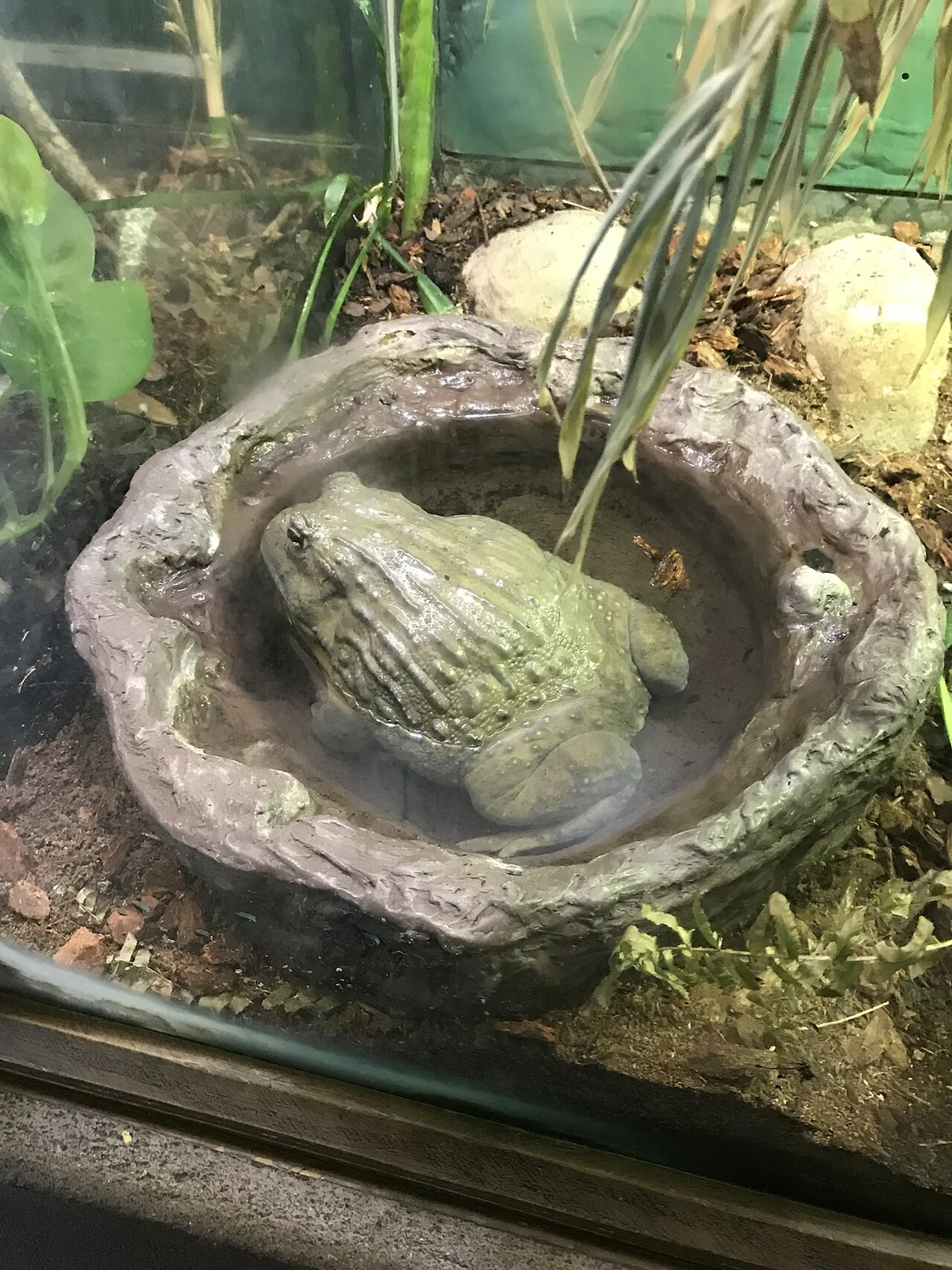
The short answer
African bullfrogs will eat until something stops them, and nothing internal does. Obesity is the most common health problem in captive pixie frogs, and it is driven by keepers feeding to appetite and leaning on rodents. Adults need roughly two to three sensible meals a week.
Feeding schedule by age
| Life stage | Diet balance | How often | Notes |
|---|---|---|---|
| Juvenile | Insects | Daily | Rapid growth |
| Adult | Insects with occasional whole prey | 2-3 meals weekly | Or smaller daily with fast days |
| All ages | Rodents | Occasional | The main obesity driver |
What to feed
| Food | Role | Why |
|---|---|---|
| Earthworms | Staple | Excellent nutrition, low fat |
| Dubia roaches | Staple | Good protein |
| Crickets and locusts | Staple | Gut-load first |
| Superworms | Rotation | Higher fat; moderate |
| Mice | Rare treat | Sparingly; the main obesity risk |
| Gut-loaded insects | Requirement | Feed the insects 24-48h before offering |
| Calcium dusting | Requirement | Insects are calcium-poor as bought |
What never to feed
Items in this table are either outright toxic or cause predictable long-term harm. This is the part of the page worth reading twice.
| Do not feed | Why |
|---|---|
| Rodents as a staple | Specifically identified as the main driver of obesity in this species. |
| Feeding to appetite | They have no satiety signal at all. |
| Housing with another frog | Cannibalistic. |
| Wild-caught insects | Pesticide, parasite and toxicity risk. |
| Handling with dry or unwashed hands | Permeable skin absorbs oils, salts and residues. |
Where good sources disagree
Care sheets do not all say the same thing, and pretending otherwise helps nobody. These are the real points of difference between the sources cited at the foot of this page, and what we think the safe reading is.
Daily small meals versus 2-3 larger ones.
Both approaches appear in the literature: two to three substantial meals a week, or smaller daily meals with at least one fasting day. They amount to similar total intake. What no source supports is feeding a large meal every day.
What most african bullfrog feeding advice gets wrong
They will eat themselves to death.
African bullfrogs have no meaningful satiety signal and will keep taking food indefinitely. Obesity is the most commonly reported health problem in the species and drives organ disease and a shortened life. This is entirely a husbandry decision, because the frog will never decline a meal.
A rodent-heavy diet is the specific problem.
Feeding mice regularly is common and is the fastest route to an obese, fatty-livered frog. Insects such as earthworms, roaches and crickets should form the bulk of the diet, with rodents occasional at most.
Common questions
What do African bullfrogs eat?
Mainly insects: earthworms, dubia roaches, crickets and locusts, gut-loaded and dusted with calcium. Rodents can be offered occasionally but should not be a staple, since rodent-heavy diets are the main driver of obesity in this species.
How often should I feed a pixie frog?
Adults need roughly two or three substantial meals per week, or smaller daily meals with at least one fasting day. They do not self-regulate and will keep eating, so feeding frequency is entirely the keeper's responsibility.
Why do African bullfrogs get fat?
Because they have no satiety signal and will eat whatever is offered, and because many are fed rodents regularly. Obesity is the most common health problem in captive pixie frogs and shortens their otherwise very long lifespan considerably.