Musk Turtle Enclosure and Habitat
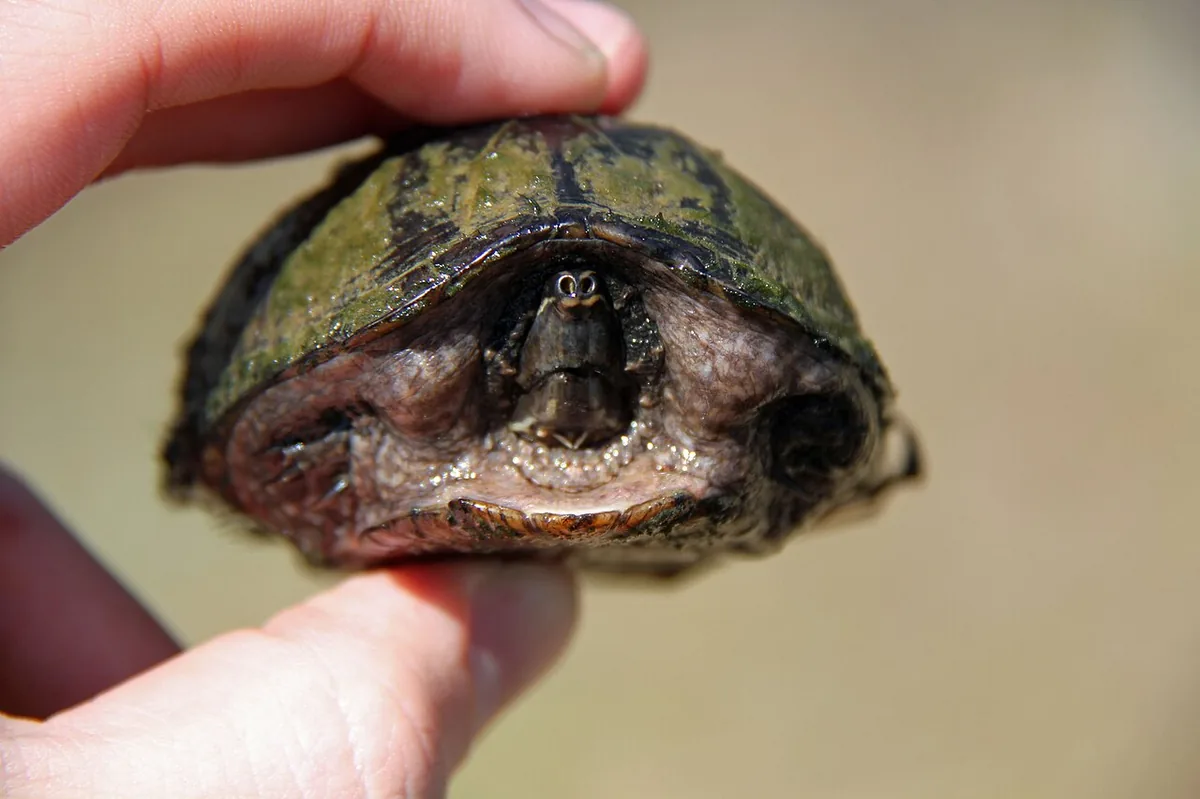
Musk turtles are small, fully aquatic, and notably poor swimmers. They walk along the bottom rather than swimming in open water, which makes depth and ease of surfacing more important than raw volume.
What published sources give
| Figure | Size | Notes |
|---|---|---|
| Adult minimum | 40-gallon breeder | From this site's care guide |
| Water depth | Shallow enough to reach the surface easily | They are poor swimmers |
| Access | Easy routes to the surface and to basking | Drowning risk in deep open water |
Checked September 20, 2026. Where sources differ the range is shown rather than averaged. These are the figures published as minimums; none of them is a maximum.
What changes as they grow
Juvenile
Very small and correspondingly poor swimmers. Shallow water with plenty of structure to climb on.
Adult
A 40-gallon breeder is the published minimum. Footprint matters more than height, since they use the bottom rather than the water column.
Enclosure mistakes specific to this species
Filtration sized for fish rather than turtles
Aquatic turtles produce far more waste than fish of the same size, and they eat in the water. Under-filtering shows up as shell and skin infections before it shows up as cloudy water.
A basking area that never fully dries
Aquatic turtles must be able to leave the water and dry off completely under heat and UVB. A platform that stays wet defeats the purpose and contributes directly to shell problems.
Deep open water
This is the musk turtle specific hazard. They are not strong swimmers, and deep water without structure or easy surface access is a genuine drowning risk rather than a theoretical one.
Housing them like a slider
Sliders swim; musk turtles walk. A tall tank optimised for swimming space is the wrong shape, and it makes surfacing harder for an animal that is not built for it.
Enclosure hazards that apply to almost every setup
Five hazards come up across nearly every species on this site: contact burns from unguarded heat, UVB that never reaches the animal, cutting ventilation to hold humidity, unsecured decor, and trusting a bulb's wattage instead of a thermometer. They are set out in full, with sources, on our enclosure hazards page, which is worth reading once against any setup including one that looks finished.
Signs the enclosure is wrong
Animals tell you about their housing through behaviour before they tell you through illness. None of these is a diagnosis; each is a reason to look at the enclosure and, where noted, to call a vet.
| What you see | What it can mean |
|---|---|
| Struggling to reach the surface | Water too deep or too little structure. Address immediately. |
| Never basking | Check the platform is accessible to a poor climber. |
| Shell or skin lesions | Water quality. Veterinary attention. |
| Water fouling quickly | Filtration undersized. |
Common questions
How big a tank does a musk turtle need?
A 40-gallon breeder is the published minimum for an adult. Footprint matters more than height, since musk turtles walk along the bottom rather than swimming in open water.
How deep should musk turtle water be?
Shallow enough that the turtle can reach the surface easily, with structure to climb on. They are poor swimmers, and deep open water without easy access to the surface is a genuine drowning risk.
Are musk turtles good swimmers?
No. They are bottom-walkers rather than swimmers, which is why water depth, structure and easy surface access matter more for them than for sliders or map turtles.