Marginated Tortoise Care Guide
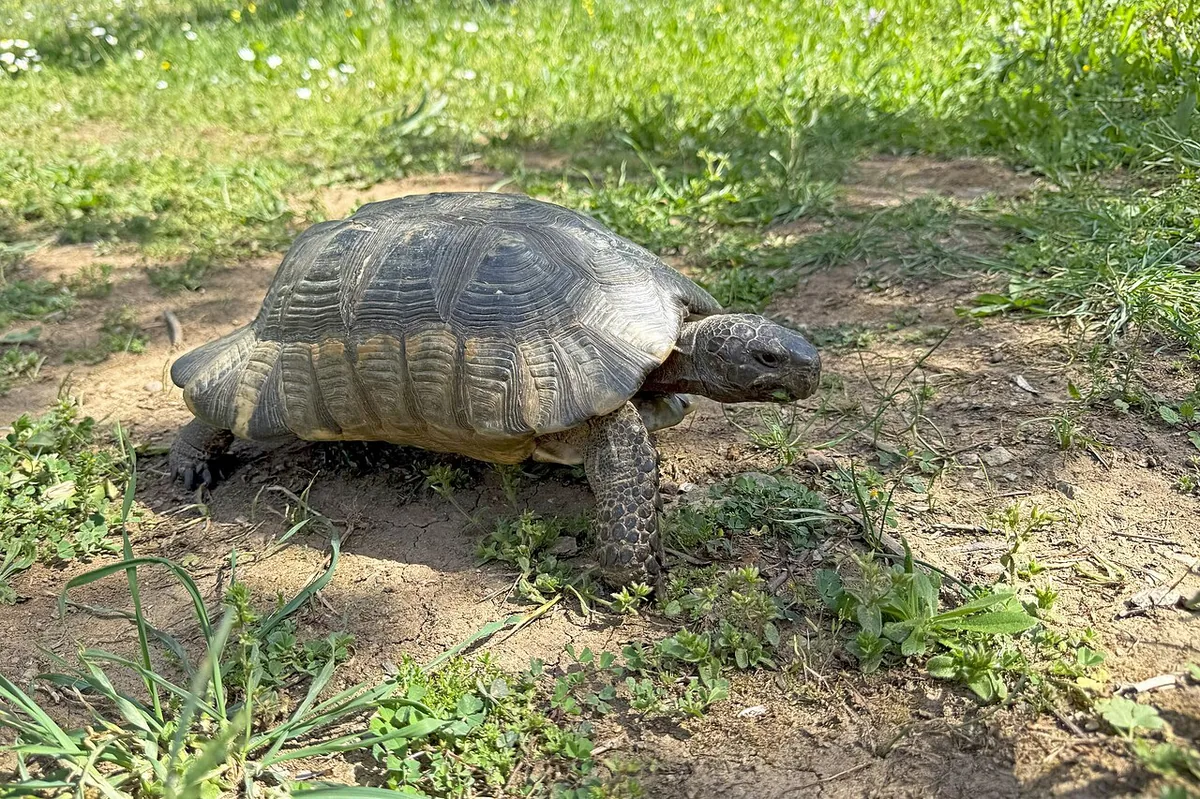
The largest European tortoise and the largest in the genus Testudo, with distinctive flared rear marginal scutes. Hardy, herbivorous and naturally brumating, which makes it well suited to temperate climates and outdoor keeping.
Marginated Tortoise at a glance
| Adult size | 25-40 cm (10-15.7 in) |
| Adult weight | Up to about 5 kg |
| Lifespan | 50-100+ years |
| Enclosure | Outdoor preferred; large indoor floor space otherwise |
| Temperature | Ambient 70-80°F · basking 95-100°F |
| Humidity | Moderate, with a humid hide for juveniles |
| UVB | Required indoors; natural sunlight ideal |
| Diet | Weeds, grasses, leafy greens. No fruit or protein |
| Brumation | 2-4 months, naturally |
| Experience | Beginner to intermediate |
What most marginated tortoise care sheets get wrong
These are the errors that show up most often in secondary care sheets and forum advice. Each one is a real welfare issue, not a preference.
It is bigger than the tortoise most buyers think they are getting.
Marginated tortoises sit alongside Hermann's and Greek tortoises in shops and care literature, and are frequently assumed to reach similar sizes. They do not: this is the largest species in the genus Testudo and the largest European tortoise, reaching 25 to 40 centimetres and up to around five kilograms. The enclosure and grazing area have to be planned for that, not for a Hermann's.
Brumation is part of the species, not an optional extra.
Marginated tortoises brumate naturally for roughly two to four months, becoming inactive, eating little or nothing and staying hidden. Keepers who are unprepared read this as illness. It needs planning, a safe and controlled environment, and a healthy animal going into it, but it is normal biology rather than a problem.
Do not feed it like a red-footed tortoise.
As a Mediterranean grazer, the marginated tortoise needs a high-fibre, low-protein diet of weeds, grasses and leafy greens, with no animal protein and little or no fruit. The fruit-and-protein diet appropriate for a forest-dwelling red-footed tortoise causes pyramiding and kidney problems in this species.
Why keep a marginated tortoise
- The largest Testudo, with real presence while still being manageable
- Distinctive flared rear scutes unlike other Mediterranean tortoises
- Brumates naturally, which suits temperate climates
- Hardy and long-lived, with well-documented care
- Outdoor keeping is practical across much of Europe and similar climates
Why you might not want one
- Larger than a Hermann's or Greek tortoise, and buyers often expect otherwise
- Outdoor space is strongly preferred over indoor housing
- Brumation needs planning and a safe, controlled setup
- A commitment that can outlive the original keeper
Common questions
How big do marginated tortoises get?
Adults reach roughly 25 to 40 centimetres, or about 10 to 15.7 inches, and weigh up to around five kilograms. This makes them the largest European tortoise and the largest species in the genus Testudo, noticeably bigger than a Hermann's or Greek tortoise.
Do marginated tortoises brumate?
Yes, naturally, typically for two to four months over winter. During brumation they become much less active, eat very little or nothing, and spend most of their time hidden. It requires planning and a controlled environment, but it is normal behaviour for the species.
What do marginated tortoises eat?
Weeds, grasses and leafy greens, as with other Mediterranean tortoises. They are herbivores and should not receive animal protein, with fruit rare or absent. Dandelion, clover, plantain and endive are all good staples.
Can marginated tortoises live outside?
In temperate climates, yes, and outdoor keeping is generally preferred. They need a secure, well-drained enclosure with a heated and insulated shelter for cold weather, plus safe grazing. Natural sunlight also solves the UVB requirement.
What is the difference between a marginated and a Hermann's tortoise?
Size is the main one: marginated tortoises are substantially larger, reaching up to around 40 centimetres against a Hermann's 6 to 8 inches. Marginated tortoises also have distinctive flared rear marginal scutes. Diet and general care are broadly similar.