← Indian Star Tortoise care guide
What do Indian star tortoises eat?
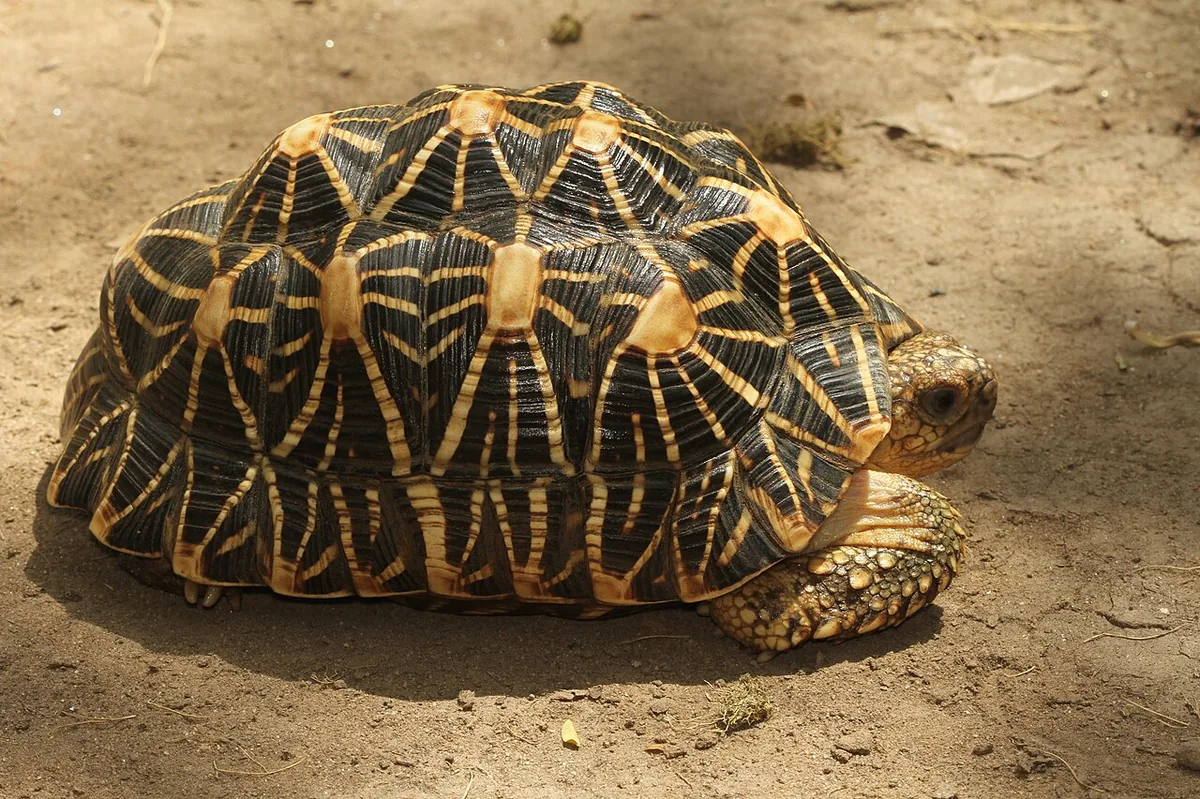
The short answer
Indian star tortoises are grazing herbivores. Grasses, weeds and leafy greens form the diet, with no animal protein and little or no fruit. Their one departure from the usual arid-tortoise pattern is humidity: they need more of it than their desert appearance suggests, particularly as juveniles.
Feeding schedule by age
| Life stage | Diet balance | How often | Notes |
|---|---|---|---|
| Hatchling / juvenile | Chopped grasses, weeds, greens | Daily | Higher humidity and calcium during growth |
| Adult | Grass and weed led | Daily graze | Outdoor grazing where climate allows |
| All ages | Flowers, small vegetable amounts | Minor | Variety only |
Intervals and ratios here follow the sources listed at the foot of this page, checked September 20, 2026. Where those sources differ, the disagreement is set out in Where good sources disagree rather than averaged into a single number. Figures resting on keeper consensus rather than a published source are labelled as such where they appear.
What to feed
| Food | Role | Why |
|---|---|---|
| Grazing grasses | Staple | The natural diet |
| Timothy, Bermuda, orchard hay | Staple fibre | Year-round base |
| Dandelion, clover, plantain | Weeds | Forage if pesticide-free |
| Collard greens, endive, escarole | Greens | Alongside grasses |
| Opuntia cactus pad (despined) | Rotation | Well accepted |
| Shredded squash, bell pepper | Vegetables | Small amounts for variety |
| Cuttlebone | Calcium | Left available; replace every 1-2 months |
What never to feed
Items in this table are either outright toxic or cause predictable long-term harm. This is the part of the page worth reading twice.
| Do not feed | Why |
|---|---|
| Any animal protein | Causes pyramiding and kidney damage in grazing tortoises. |
| Fruit as a regular food | Not part of a grazing tortoise's natural diet. |
| Avocado | Toxic. |
| Rhubarb | Toxic. |
| Onion and garlic | Toxic. |
| Iceberg lettuce | No meaningful nutrition. |
| Spinach as a staple | Oxalates bind calcium. |
| Pesticide-treated plants or lawn clippings | Chemical exposure risk. |
| Commercial pellets as the whole diet | Too low in fibre for a grazer. |
Where good sources disagree
Care sheets do not all say the same thing, and pretending otherwise helps nobody. These are the real points of difference between the sources cited at the foot of this page, and what we think the safe reading is.
How much humidity they actually need.
Published ranges run from roughly 40% to 75%, which is wide. The variation reflects that juveniles need considerably more than adults, and that the species occupies seasonally variable habitat. What sources agree on is that they need more than a sulcata or a Russian tortoise, and that too-dry conditions harm growing animals.
What most indian star tortoise feeding advice gets wrong
The star pattern does not mean desert diet rules change.
Indian star tortoises are striking enough that keepers sometimes treat them as a special case. Dietarily they are not: like other grazing tortoises they need high fibre and low protein, with grasses and weeds forming the bulk. Animal protein causes the same pyramiding and renal problems here as in any grazer.
Humidity is where they differ from other arid tortoises.
This is the genuine exception. Indian star tortoises need moderate humidity, roughly 40 to 75 percent with juveniles at the upper end, which is more than the arid-habitat tortoises they are usually grouped with. Too-dry conditions contribute to respiratory problems and poor shell development in growing animals.
A newly imported animal may not feed at all at first.
Because this species is so heavily trafficked, some animals in circulation are wild-collected and arrive dehydrated, stressed and carrying parasites. Early food refusal is common in those animals. A faecal screen with an exotics vet is a reasonable first step, alongside asking hard questions about provenance.
Common questions
What do Indian star tortoises eat?
Grasses, weeds and leafy greens, with small amounts of safe flowers and vegetables. They are grazing herbivores, so animal protein should never be offered and fruit should be rare or absent, exactly as for other grazing tortoises.
Do Indian star tortoises need more humidity than other tortoises?
Yes. They need moderate humidity of roughly 40 to 75 percent, with juveniles requiring the higher end, which is more than arid-habitat species such as sulcatas or Russian tortoises. Too-dry conditions contribute to respiratory problems and poor shell development.
Can Indian star tortoises eat fruit?
It should be rare at most. They are grazing herbivores whose natural diet is grasses and weeds. As with other grazing tortoises, a fruit-heavy or protein-containing diet contributes to shell pyramiding and kidney problems.