← Eastern Box Turtle care guide
What do box turtles eat?
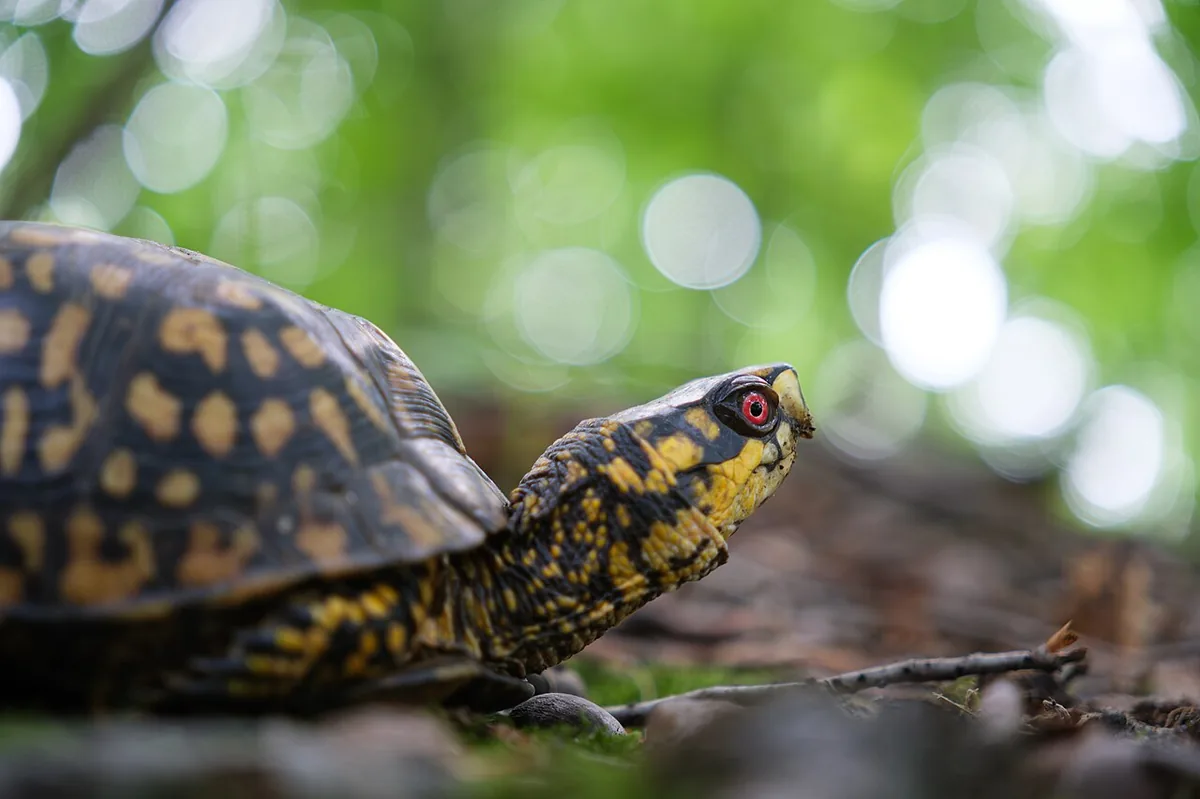
The short answer
Eastern box turtles are among the most varied feeders of any North American reptile. Captive guidance puts adults at roughly 40 to 50% animal protein with the balance plant matter. Young turtles up to about four to six years old are more carnivorous, becoming more herbivorous as they mature.
Feeding schedule by age
| Life stage | Diet balance | How often | Notes |
|---|---|---|---|
| Hatchling to ~4 years | Protein-led | Daily | Primarily carnivorous while growing |
| 4-6 years | Shifting toward plants | Daily | Transitional |
| Adult | ~40-50% protein, rest plants | Most days | Variety is the requirement |
What to feed
| Food | Role | Why |
|---|---|---|
| Earthworms, slugs, snails | Staple protein | Natural and well accepted |
| Crickets, dubia roaches | Protein | Gut-load before offering |
| Whole prey (pinky mice) | Occasional protein | Liver content supplies vitamin A |
| Dark leafy greens | Plant | Collard, dandelion, mustard |
| Carrot, sweet potato, squash | Plant | Beta-carotene for vitamin A |
| Berries, melon, tomato | Fruit | Box turtles do take fruit, unlike grazing tortoises |
| Cuttlebone | Calcium | Left available; replace every 1-2 months |
What never to feed
Items in this table are either outright toxic or cause predictable long-term harm. This is the part of the page worth reading twice.
| Do not feed | Why |
|---|---|
| A plant-only diet | Box turtles are omnivores; plants alone cause deficiency. |
| A protein-only diet | Causes shell and kidney problems in adults. |
| Avocado | Toxic. |
| Rhubarb | Toxic. |
| Dog or cat food as a staple | Far too rich. |
| Monotonous diets | The commonest route to vitamin A deficiency in this species. |
Where good sources disagree
Care sheets do not all say the same thing, and pretending otherwise helps nobody. These are the real points of difference between the sources cited at the foot of this page, and what we think the safe reading is.
The exact adult protein percentage.
Sources give anywhere from 50/50 to 40-50% animal protein for adults. The variation is small and the practical guidance identical: box turtles need substantial animal protein for life, unlike tortoises, and need it reduced as they mature.
What most eastern box turtle feeding advice gets wrong
Do not feed a box turtle like a tortoise.
Box turtles are terrestrial and shell-shaped like tortoises, and are routinely fed like them. They are omnivores that require substantial animal protein for life. A box turtle on a tortoise diet of greens and weeds is being underfed in a way that shows up slowly.
Variety is the specific defence against vitamin A deficiency.
Hypovitaminosis A is common in captive box turtles and is a direct consequence of monotonous feeding. Liver in whole prey, orange vegetables such as carrot, sweet potato and squash, and dark leafy greens are all good sources. A turtle eating the same two items indefinitely is the one that develops swollen eyes.
Common questions
What do box turtles eat?
They are omnivores. Adults need roughly 40 to 50% animal protein such as earthworms, slugs, snails and insects, with the balance made up of dark leafy greens, orange vegetables and some fruit. Young box turtles are more carnivorous and become more herbivorous with age.
Do box turtles need meat?
Yes. Unlike tortoises, box turtles require substantial animal protein throughout life. Earthworms, slugs, snails and gut-loaded insects are the usual sources, with occasional whole prey. A plant-only diet leads to deficiency.
Why does my box turtle have swollen eyes?
Swollen eyelids in a box turtle commonly indicate vitamin A deficiency, usually caused by a monotonous diet lacking orange vegetables, dark leafy greens or whole prey. It needs veterinary diagnosis because infections look similar, and the diet must be corrected.