Rosy Boa Enclosure and Habitat
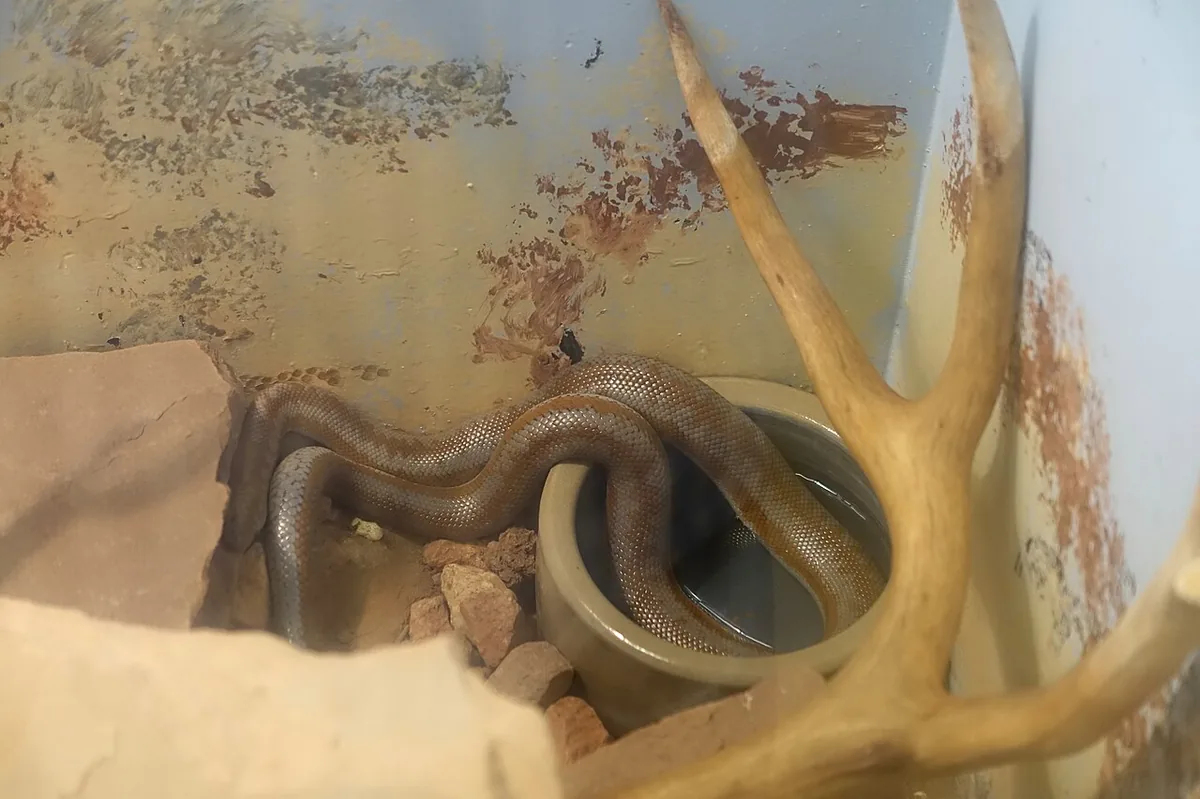
Rosy boas are small, slow desert snakes, and their enclosure needs reflect that: modest size, genuinely dry conditions, and a lid that actually latches, because they are surprisingly determined escapers for such an unhurried animal.
What published sources give
| Figure | Size | Notes |
|---|---|---|
| Size | Small boa; modest enclosures appropriate | They are slow and not space-hungry |
| Conditions | Dry, arid-type setup | Excess humidity is a risk rather than a benefit |
| Security | Secure fastenings | They have a strong escape reputation |
Checked September 20, 2026. Where sources differ the range is shown rather than averaged. These are the figures published as minimums; none of them is a maximum.
What changes as they grow
Juvenile
Small enclosures with good cover. As with other small snakes, gaps around lids are the usual escape route.
Adult
Still a small snake. The enclosure priorities are dryness, hides at both ends, and a lid that holds.
Enclosure mistakes specific to this species
A lid that is not genuinely secure
Snakes test every seam, and a determined animal will lift an unweighted glass lid or push through a warped one. An escaped snake is a lost snake in most homes, and a thermally stranded one. Locking lids or a front-opening enclosure with a proper catch.
Adding humidity out of habit
Keepers arriving from ball pythons raise humidity reflexively. Rosy boas are arid-habitat animals, and a damp enclosure contributes to scale rot and respiratory problems. Dry substrate, fresh water, good ventilation.
Mistaking slowness for contentment
Rosy boas are famously deliberate, which makes it easy to miss a problem. Body condition and shed quality tell you more than activity level does in this species.
Enclosure hazards that apply to almost every setup
Five hazards come up across nearly every species on this site: contact burns from unguarded heat, UVB that never reaches the animal, cutting ventilation to hold humidity, unsecured decor, and trusting a bulb's wattage instead of a thermometer. They are set out in full, with sources, on our enclosure hazards page, which is worth reading once against any setup including one that looks finished.
Signs the enclosure is wrong
Animals tell you about their housing through behaviour before they tell you through illness. None of these is a diagnosis; each is a reason to look at the enclosure and, where noted, to call a vet.
| What you see | What it can mean |
|---|---|
| Escaping despite a closed lid | They are persistent and strong for their size; check every fastening. |
| Scale rot or blistering on the belly | Usually a damp enclosure. Veterinary attention. |
| Retained shed | In an arid species this usually means the animal needs a humid hide rather than a humid enclosure. |
| Weight gain with no change in feeding | Slow metabolism; lengthen the interval. |
Common questions
What size enclosure does a rosy boa need?
They are a small boa and modest enclosures are appropriate. The priorities are dry conditions, hides at both the warm and cool ends, and a genuinely secure lid rather than raw volume.
Do rosy boas need high humidity?
No, the opposite. They come from arid habitat and damp conditions contribute to scale rot and respiratory problems. If the animal has shedding difficulty, a humid hide is a better answer than raising enclosure humidity.
Do rosy boas escape?
They have a strong reputation for it despite being slow-moving. They are persistent and strong for their size, and will work at a lid that is not properly fastened.