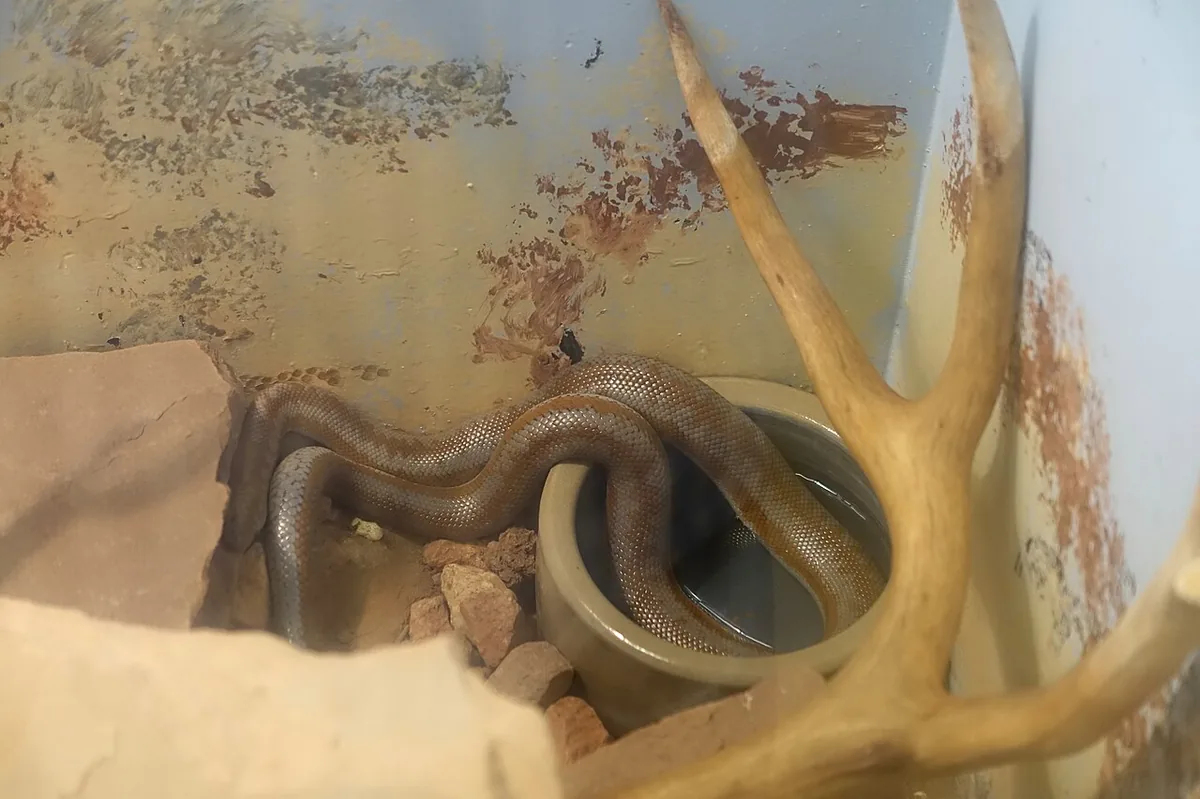
Rosy boa (Lichanura trivirgata)
Overview
Rosy boas are underrated. They're smaller than corn snakes and ball pythons, exceptionally docile, and easier to keep than either. Their main downside is also their main appeal, they're slow-moving and quiet, which some keepers find boring and others find perfect.
Native to the deserts of Southern California, Arizona, and Baja California, they're well adapted to dry, warm conditions and tolerate room temperature variation better than tropical species.
Enclosure
- Adult enclosure: 30×12×12 inches minimum, larger preferred
- Substrate: aspen shavings, paper substrate, or bioactive desert mix
- Hides: two hides minimum, one warm side, one cool side
- Water: small bowl, not over-large (rosy boas are not soakers)
- Climbing: light branches optional; rosy boas climb occasionally
Temperature and humidity
- Warm side: 85-90°F
- Cool side: 72-78°F
- Nighttime drop: can drop to 65°F
- Humidity: 30-50%, desert species, do not overhydrate
- Heating: overhead heat lamp or radiant heat panel, thermostat-controlled
- Lighting: low-output UVB optional but supports natural cycles
Diet
- Hatchlings: pinky mice every 5-7 days
- Juveniles: fuzzies every 7-10 days
- Adults: small adult mouse every 10-14 days
- Frozen-thawed prey only, never live
- Brumation period in winter (50-60°F for 6-8 weeks) is healthy for adults
Handling
Among the most handle-tolerant snakes. Rosy boas rarely bite, move slowly when held, and tolerate handling sessions well. Ideal for keepers who want a snake to hold without dealing with the higher feeding maintenance of a ball python or the higher activity of a corn snake.
Health concerns
- Respiratory infections from over-humidification, keep enclosure dry
- Obesity from overfeeding, rosy boas have slow metabolism
- Mites and parasites: standard quarantine for new acquisitions
Lifespan
20-30 years with proper care.
Who this species is right for
- First-time snake keepers who want a small docile snake
- Keepers who want a smaller adult size than corn snakes
- Keepers in warm dry climates (low humidity is a feature, not a bug)
- NOT for keepers who want a visibly active snake