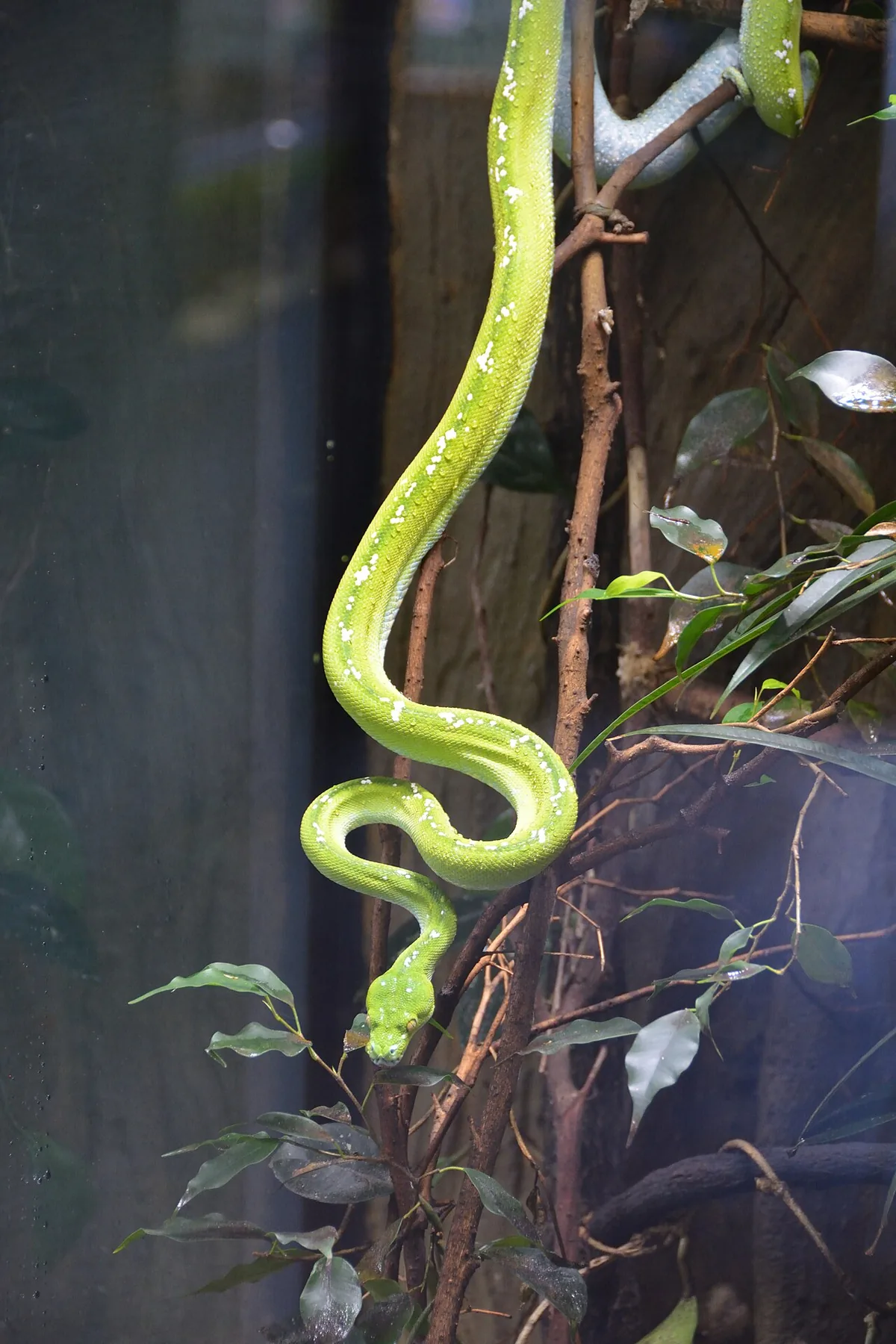
Green tree python (Morelia viridis)
Overview
Green tree pythons are one of the most photographed snakes in the hobby. The classic adult posture, coiled in a tight saddle around a horizontal perch with the head resting in the center, is iconic. They occupy a similar visual niche to emerald tree boas (the South American convergent counterpart) and many keepers who want one consider both.
What new keepers often don't realize: green tree pythons are largely defensive, rarely tolerate handling well, and require precise environmental conditions to thrive. They are display animals first and foremost, and the joy of keeping one is mostly watching it from outside the enclosure.
Enclosure
- Adult size: 36×24×36 inches minimum (vertical orientation)
- Juvenile: smaller enclosure to start (18×18×24 inches), too much space is stressful for juveniles
- Perching: minimum 2-3 horizontal perches at varying heights, smooth and approximately the diameter of the snake's body
- Substrate: coconut fiber, cypress mulch, or bioactive substrate, humidity-retentive but not waterlogged
- Plants and visual barriers: live or artificial foliage for security; green tree pythons are anxious without cover
- Water: large bowl, deep enough for soaking; place on the floor
Temperature and humidity
- Daytime ambient: 82-86°F
- Basking perch (under heat source): 88-90°F surface temperature
- Nighttime drop: 75-78°F
- Humidity: 70-80%, raised during shed to 90%+
- Heating source: overhead radiant heat panel or low-wattage ceramic heat emitter, thermostat-controlled. Avoid heat mats, these snakes don't bask on the ground.
- Lighting: low-output UVB (Arcadia ShadeDweller or T5 HO 6%) is modern care recommendation, though debate continues. Daytime ambient light is essential for circadian rhythm.
Diet
- Juveniles: appropriately-sized frozen-thawed mice every 7-10 days
- Adults: small to medium rats every 14-21 days
- Feeding from tongs: use long tongs and approach from below the snake's perch level
- Prey size: the prey should be no thicker than the snake at its widest body point
Feeding strikes are powerful and accurate. Keep hands far from the snake's strike radius (about 1/3 of its body length).
Handling
Most green tree pythons object to handling. Defensive strikes are common, particularly from juveniles and from animals not handled regularly. They are also delicate, improper handling can damage their long, thin bodies and their hooked teeth.
When handling is necessary (vet visits, enclosure deep cleans), support the snake fully along its length and let it move through your hands rather than restraining it. Use a snake hook to lift them off perches before handling, never grab a perched green tree python directly.
Health concerns
- Respiratory infections from low temperatures or stagnant air, manifest as open-mouth breathing and mucus
- Stuck shed from low humidity, particularly around the tail and eye caps
- Stargazing or neurological symptoms from low temperatures or other stressors, emergency vet visit
- Internal parasites: annual fecal exams recommended
Lifespan
15-20 years with proper care. Some individuals reach 25 years.
Who this species is right for
- Experienced reptile keepers with arboreal husbandry experience
- Keepers who want a display animal, not a handling animal
- Keepers committed to precise temperature and humidity control
- NOT for first-time snake keepers
- NOT for keepers who want a snake to hold and interact with