What do emerald tree boas eat?
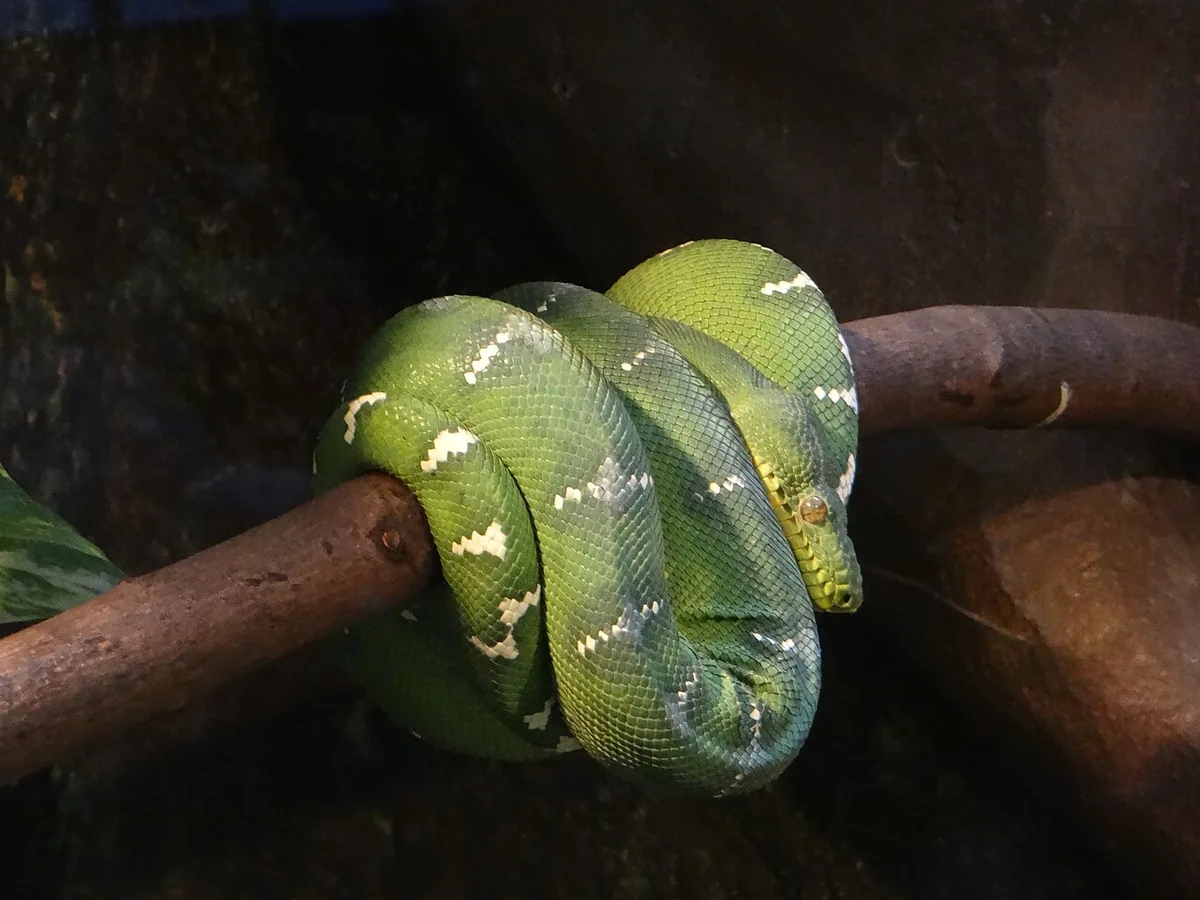
The short answer
Emerald tree boas have a notably slow metabolism and need far less food than their size suggests. Published guidance is a small to medium rat roughly every two weeks for females and every four for males. Feeding this species on a ball python's schedule produces obesity, regurgitation and long-term organ damage.
Feeding schedule by age
| Life stage | Diet balance | How often | Notes |
|---|---|---|---|
| Neonate | Small prey | Every 7-10 days | Growing |
| Adult female | Small to medium rat | About every 2 weeks | Per published guidance |
| Adult male | Small to medium rat | About every 4 weeks | Males need less |
What to feed
| Food | Role | Why |
|---|---|---|
| Frozen-thawed rodents | Staple | Safer than live; thaw in the fridge, warm in warm not hot water |
| Rats | Staple | Small to medium sizes |
| Mice | Juveniles | While small |
What never to feed
Items in this table are either outright toxic or cause predictable long-term harm. This is the part of the page worth reading twice.
| Do not feed | Why |
|---|---|
| Live prey left unattended | Rodents bite and can seriously wound or kill a snake. |
| Prey wider than the snake's thickest point | Regurgitation and injury risk. |
| Wild-caught rodents | Parasite, disease and rodenticide risk. |
| Meat, eggs or other substitutes | Snakes need whole prey for complete nutrition. |
| A ball python feeding schedule | Far too frequent for this species; causes obesity. |
| Handling at feeding time | Long teeth and a strong defensive strike. |
Where good sources disagree
Care sheets do not all say the same thing, and pretending otherwise helps nobody. These are the real points of difference between the sources cited at the foot of this page, and what we think the safe reading is.
Whether males and females really differ this much.
The two-week and four-week figures come from species care guidance and reflect the size difference between the sexes. Some keepers feed both on a single intermediate schedule and monitor condition. Nobody recommends feeding either sex weekly.
What most emerald tree boa feeding advice gets wrong
This is the species where overfeeding does the damage.
Emerald tree boas are among the slowest feeders commonly kept. Because they are large and impressive, keepers instinctively feed them like a large python. The result is a fat, frequently regurgitating snake. If you are unsure, err toward the longer interval and judge by body condition.
Red babies are normal.
Neonates are typically born red, orange or brick coloured and become green over roughly their first year. It surprises new buyers regularly and is not a defect or a health problem.
Common questions
What do emerald tree boas eat?
Appropriately sized whole rodents, usually small to medium rats for adults, offered frozen-thawed with long tongs at perch height. They eat nothing else, and the portions are modest relative to their length.
How often should I feed an emerald tree boa?
Published guidance is roughly every two weeks for females and every four weeks for males. Their metabolism is slow, and overfeeding is a far more common mistake than underfeeding. Adjust by body condition rather than by a fixed calendar.
Why is my baby emerald tree boa red?
That is normal. Neonates are usually born red, orange or brick coloured and transition to the adult green over roughly the first year of life. The change is gradual and is not a sign of illness.