← Children's Python care guide
Children's Python Enclosure and Habitat
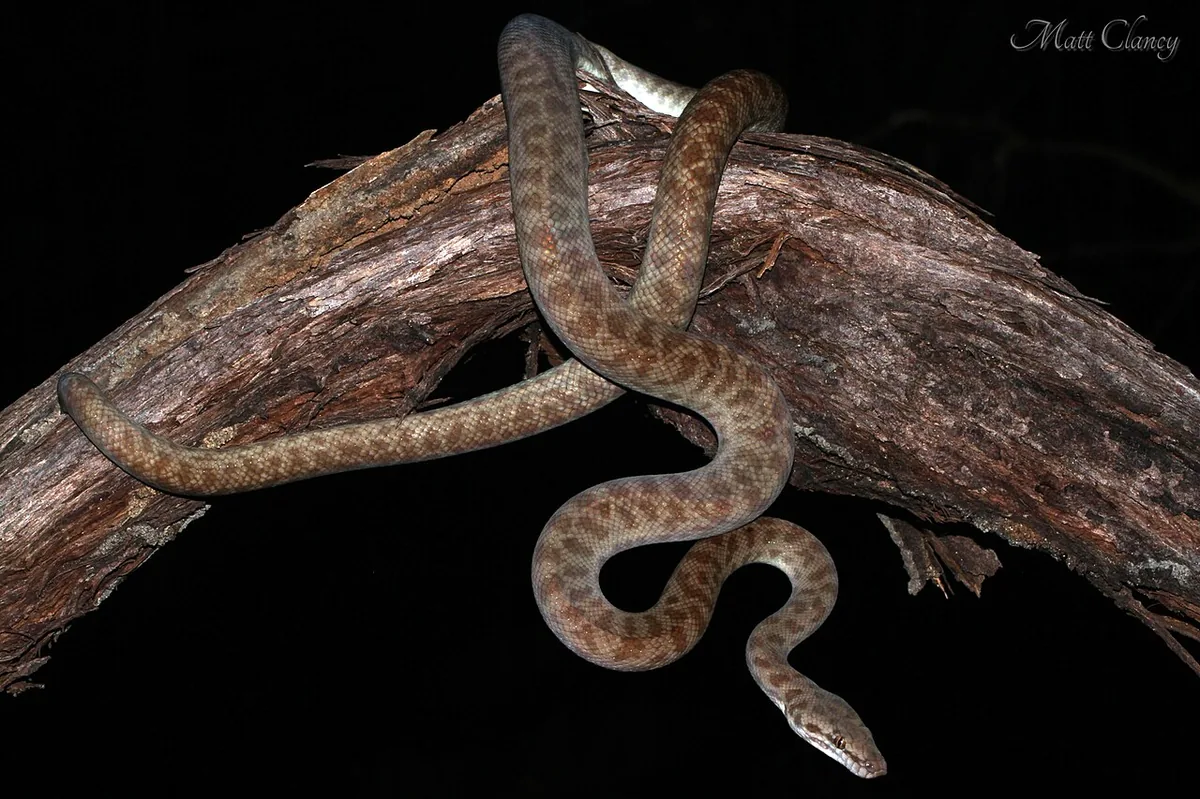
Children's pythons are among the smallest pythons kept, and their enclosure needs are correspondingly modest. The things that matter are cover and security rather than volume.
What published sources give
| Figure | Size | Notes |
|---|---|---|
| Adult | 30 x 12 x 12 in | From this site's care guide |
| Size context | One of the smallest pythons kept | Antaresia are small-bodied |
| Cover | Hides at both warm and cool ends | As for any python |
Checked September 20, 2026. Where sources differ the range is shown rather than averaged. These are the figures published as minimums; none of them is a maximum.
What changes as they grow
Hatchling
Very small, and small snakes exploit small gaps. Lid security matters more than enclosure size at this stage.
Adult
30 x 12 x 12 inches as a published figure, with larger being reasonable. This is a small snake and a large empty enclosure is worse for it than a modest furnished one.
Enclosure mistakes specific to this species
Any heat source without a thermostat
Snakes coil against warmth and do not move away from it, which is why belly heat is the classic cause of thermal burns. Every mat, cable and emitter on a thermostat, probe where the animal contacts the heat.
Scaling up because it is a python
Keepers arriving from larger pythons overestimate what Antaresia need, and an underfurnished large enclosure leaves a small snake feeling exposed. Furnish first, enlarge second.
Assuming the name means it suits children
Children's pythons are named for the naturalist John George Children. They are a reasonable small python for a beginner, but that is about size and temperament rather than anything the name implies.
Enclosure hazards that apply to almost every setup
Five hazards come up across nearly every species on this site: contact burns from unguarded heat, UVB that never reaches the animal, cutting ventilation to hold humidity, unsecured decor, and trusting a bulb's wattage instead of a thermometer. They are set out in full, with sources, on our enclosure hazards page, which is worth reading once against any setup including one that looks finished.
Signs the enclosure is wrong
Animals tell you about their housing through behaviour before they tell you through illness. None of these is a diagnosis; each is a reason to look at the enclosure and, where noted, to call a vet.
| What you see | What it can mean |
|---|---|
| Hiding constantly in one spot only | Often too little cover elsewhere in the enclosure. |
| Escape attempts at seams | Small and strong; check fastenings. |
| Cannot stretch out | Even a small python needs to extend fully. |
| Burns | Unregulated heat. Veterinary attention. |
Common questions
What size enclosure does a Children's python need?
Around 30 by 12 by 12 inches is the figure given for an adult, with larger being reasonable. They are among the smallest pythons kept, so cover and security matter more than volume.
Are Children's pythons good for children?
The name refers to the naturalist John George Children, not to suitability for young keepers. Their small size and generally manageable temperament do make them a reasonable small python with adult supervision.
Can a Children's python live in a large enclosure?
Yes, provided it is well furnished. A small snake in a large bare enclosure feels exposed, so add hides and cover before adding space.