Ball Python Enclosure and Habitat
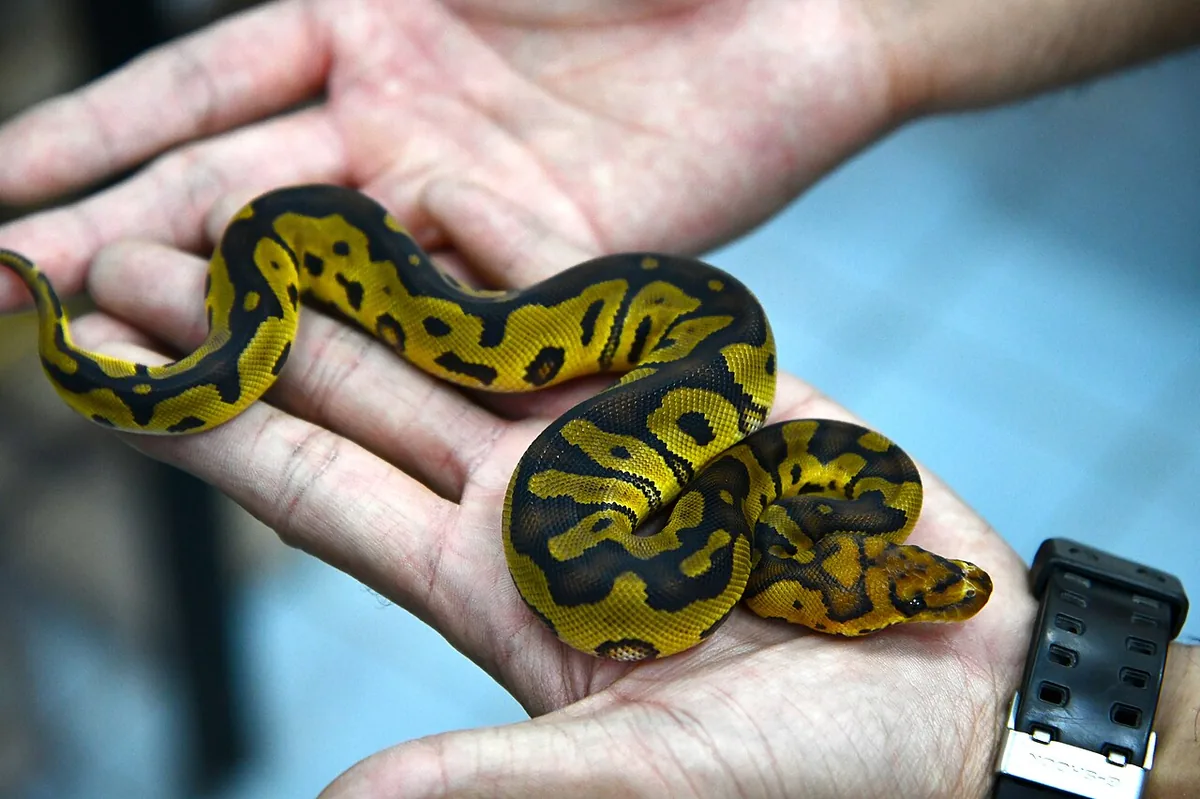
The published adult minimum for a ball python is 4 x 2 x 2 feet. The more useful thing to understand is that with this species enclosure problems usually present as a feeding problem, because a ball python that feels exposed simply stops eating.
What published sources give
| Figure | Size | Notes |
|---|---|---|
| Adult minimum, commonly published | 4 x 2 x 2 ft | PVC enclosures are the usual recommendation for holding humidity |
| Juvenile figures seen in care sheets | 36 x 18 x 12 in, or a 20-40 gal equivalent | Offered as appropriate for hatchlings and juveniles, provided it is heavily cluttered |
| Warm and cool ends | Warm 88-92°F · cool 76-80°F | Humidity commonly given as 60-80% |
Checked September 20, 2026. Where sources differ the range is shown rather than averaged. These are the figures published as minimums; none of them is a maximum.
What changes as they grow
Hatchling and juvenile
Care sources describe smaller enclosures of roughly 20 to 40 gallons as appropriate at this stage, with the explicit condition that they are heavily cluttered with hides and decor. The stated reason is direct: a baby ball python in a large, empty enclosure feels exposed and stressed, which leads to feeding refusal.
Adult
4 x 2 x 2 ft as the published floor. The clutter requirement does not go away with size. An adult in a large bare enclosure has the same problem as a hatchling in one.
Enclosure mistakes specific to this species
Treating enclosure size as the whole question
With ball pythons, cover matters as much as dimensions. A big enclosure with two hides and nothing else is a worse home than a smaller one packed with cover. Add hides at both ends, foliage, and things to move under.
Chasing humidity by sealing the enclosure
Ball pythons need relatively high humidity, and the instinctive fix is to block ventilation. Merck's husbandry guidance specifically warns that reducing ventilation to maintain humidity frequently causes skin and respiratory disease. Use substrate, a larger water bowl and enclosure design instead.
Unregulated heat mats
Belly heat without a thermostat is a recognised cause of thermal burns in snakes, which coil against the heat source and do not move away. Every heat source on a thermostat, without exception.
Enclosure hazards that apply to almost every setup
Five hazards come up across nearly every species on this site: contact burns from unguarded heat, UVB that never reaches the animal, cutting ventilation to hold humidity, unsecured decor, and trusting a bulb's wattage instead of a thermometer. They are set out in full, with sources, on our enclosure hazards page, which is worth reading once against any setup including one that looks finished.
Signs the enclosure is wrong
Animals tell you about their housing through behaviour before they tell you through illness. None of these is a diagnosis; each is a reason to look at the enclosure and, where noted, to call a vet.
| What you see | What it can mean |
|---|---|
| Refusing food for weeks with no other symptom | Often an enclosure problem: too exposed, too cool, or too few hides. Check the setup before assuming illness. |
| Spending all its time in one hide and never emerging | Can indicate there is nowhere else that feels safe. |
| Pressing against the glass or roaming persistently at night | Worth reading as feedback about temperature, humidity or cover. |
| Burns on the belly or sides | Almost always an unregulated heat mat or unguarded bulb. Veterinary attention. |
Common questions
What size enclosure does a ball python need?
The commonly published adult minimum is 4 feet long by 2 feet wide by 2 feet tall. PVC is usually recommended over glass because it holds humidity better. Clutter inside the enclosure matters as much as the dimensions.
Do baby ball pythons need a small tank?
They need a cluttered one. Care sources describe roughly 20 to 40 gallon enclosures as appropriate for hatchlings and juveniles, specifically on the condition that they are heavily furnished. A baby in a large, bare enclosure feels exposed and commonly stops feeding.
Why won't my ball python eat?
Enclosure factors are among the most common causes: too few hides, an enclosure that feels exposed, temperatures outside the correct range, or a recent move. Ball pythons also fast seasonally. Check the setup first, and see a vet if refusal persists with weight loss.
Is a 4x2x2 enough for an adult ball python?
It is the commonly published minimum rather than a generous size, and it is widely regarded as adequate provided the enclosure is properly furnished with hides and cover at both the warm and cool ends.