← Jackson's Chameleon care guide
How Long Do Jackson's Chameleons Live?
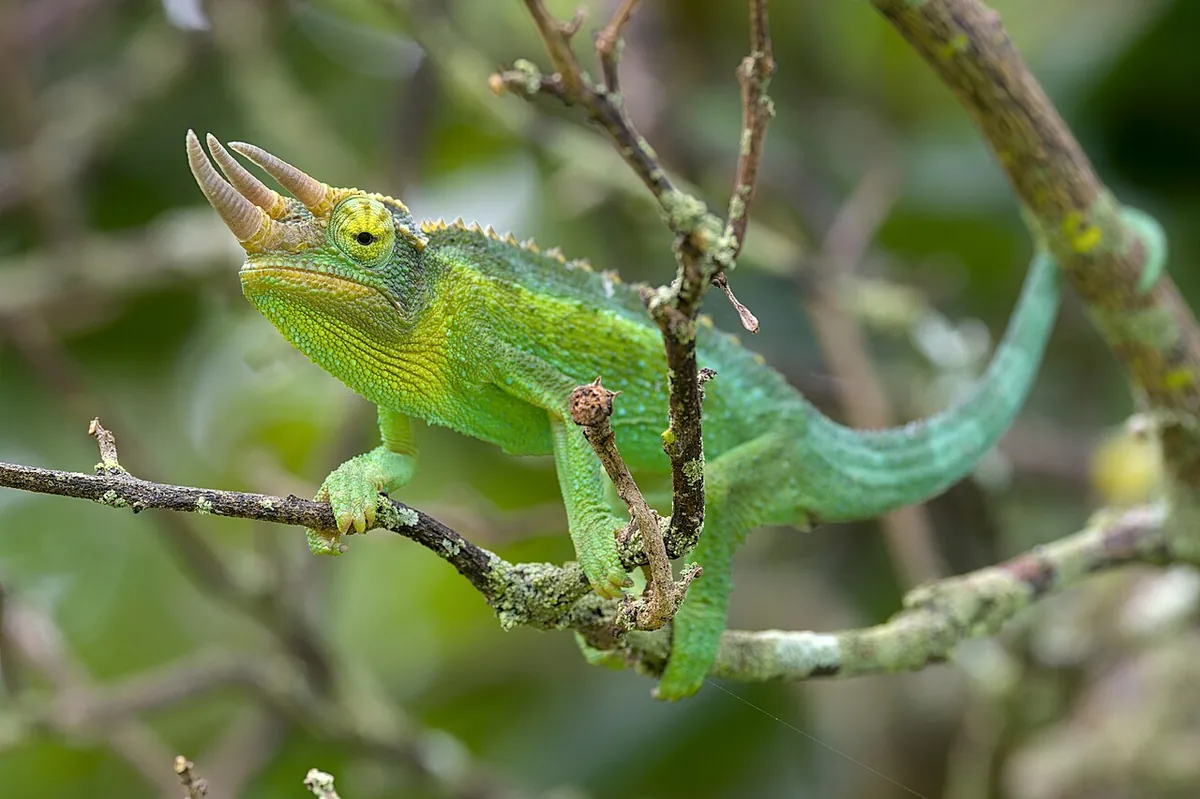
Male Jackson's chameleons are commonly published at around 10 years and females around 5, which makes males among the longest-lived chameleons kept. They are also highland animals, so heat is the main hazard.
Published lifespan figures
| Figure | Value | Notes |
|---|---|---|
| Males, commonly published | Around 10 years | Longer than most chameleons |
| Females, commonly published | Around 5 years | Shorter |
| Live-bearing | Yes | Unusual among chameleons |
Checked September 20, 2026 against the sources at the foot of this page. Where sources differ the range is shown rather than averaged.
What actually shortens it
Published lifespans describe well-kept animals. The gap between the figure above and what a jackson's chameleon actually lives is almost entirely husbandry, and these are the levers that matter most.
Reproductive cost in females
Jackson's chameleons give birth to live young rather than laying eggs, which is unusual. The cost to the female is still substantial and is the main reason female lifespans run about half male ones.
Temperatures kept too high
The species-specific one. They come from cool Kenyan and Tanzanian highlands and overheat at temperatures other chameleons tolerate. Sustained warmth above the mid-eighties is a real risk.
Metabolic bone disease
The leading husbandry cause of death in captive lizards, and a lighting failure more often than a diet one. UVB bulbs lose useful output within 6 to 12 months while still looking lit, and glass filters UVB out entirely.
Common questions
How long do Jackson's chameleons live?
Males are commonly published at around 10 years and females around 5. Males are among the longest-lived chameleons commonly kept.
Do Jackson's chameleons lay eggs?
No, they give birth to live young, which is unusual among chameleons. The reproductive cost to females is still substantial and is why their lifespans run shorter.
What temperature do Jackson's chameleons need?
Cooler than most chameleons. They come from Kenyan and Tanzanian highlands and overheat at temperatures other species tolerate, so sustained warmth is the main husbandry risk.