← Jackson's Chameleon care guide
Jackson's Chameleon Enclosure and Habitat
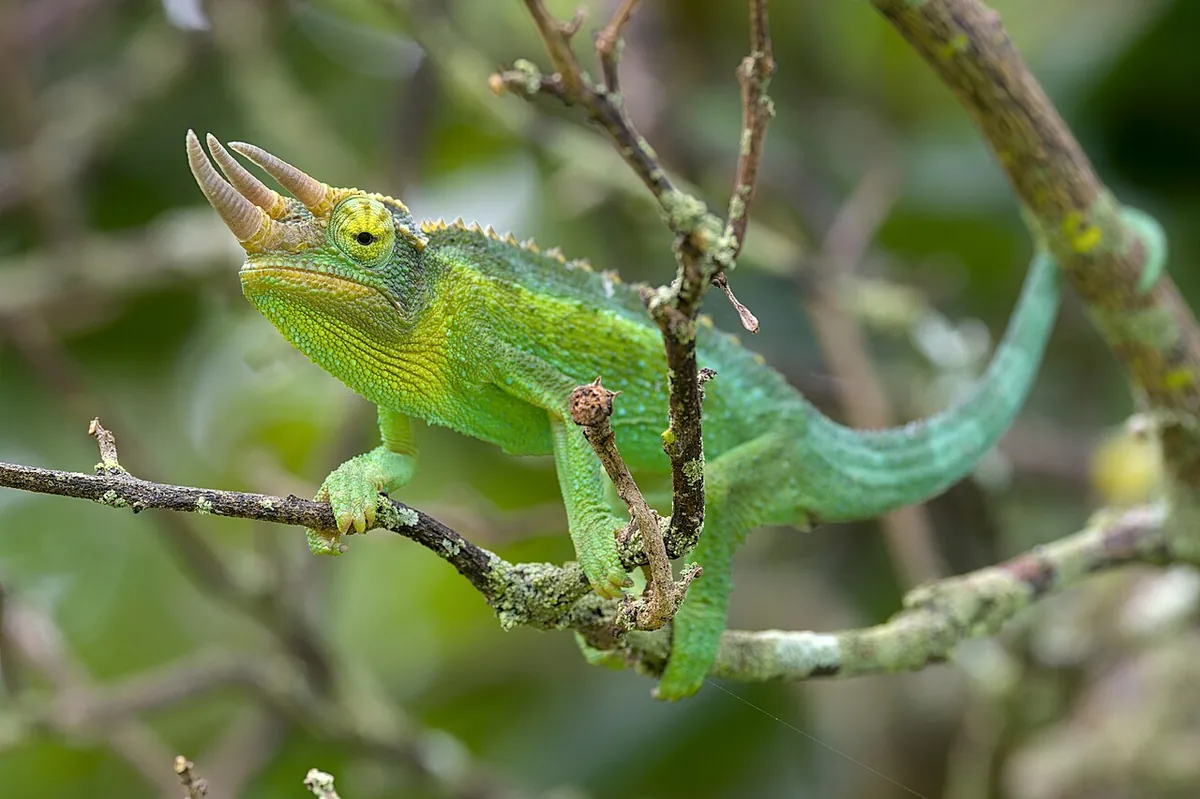
Jackson's chameleons come from montane East Africa and run cooler than the lowland chameleons they sit beside in shops. The enclosure is a tall planted screen cage, but the temperatures inside it are different.
What published sources give
| Figure | Size | Notes |
|---|---|---|
| Minimum | 24 x 24 x 48 in screen, vertical | From this site's care guide |
| Temperature | Cooler than other commonly kept chameleons | Montane species |
| Water | Dripper or misting | They drink moving droplets |
| Planting | Dense, for cover and drinking surfaces | Functional |
Checked September 20, 2026. Where sources differ the range is shown rather than averaged. These are the figures published as minimums; none of them is a maximum.
What changes as they grow
Juvenile
Smaller screen enclosures while small. They are live-bearing, so a gravid female is a consideration rather than an egg-laying setup.
Adult
24 by 24 by 48 inches screen, planted. Gravid females have higher demands and benefit from being undisturbed.
Enclosure mistakes specific to this species
Screen enclosures in a dry room
Screen sides give the ventilation chameleons need and lose humidity fast. In a dry home that combination dehydrates the animal, and the fix is misting and planting rather than closing the enclosure in.
Unguarded bulbs, especially for climbers
Contact burns from bulbs are among the most common reptile injuries, and burn guidance singles out arboreal species because they climb toward the heat. Guard every bulb and emitter the animal can reach.
Running them at lowland chameleon temperatures
This is the Jackson's-specific error. They are montane animals and tolerate heat poorly. An enclosure set up for a panther chameleon is likely to be too warm.
No hydration system
As with other chameleons, they drink moving droplets and ignore bowls. Dehydration suppresses appetite early and is a common cause of decline.
Enclosure hazards that apply to almost every setup
Five hazards come up across nearly every species on this site: contact burns from unguarded heat, UVB that never reaches the animal, cutting ventilation to hold humidity, unsecured decor, and trusting a bulb's wattage instead of a thermometer. They are set out in full, with sources, on our enclosure hazards page, which is worth reading once against any setup including one that looks finished.
Signs the enclosure is wrong
Animals tell you about their housing through behaviour before they tell you through illness. None of these is a diagnosis; each is a reason to look at the enclosure and, where noted, to call a vet.
| What you see | What it can mean |
|---|---|
| Sunken eyes or orange-tinted urates | Dehydration. Check the misting or dripper. |
| Gaping or seeking the coolest corner | Too warm for a montane species. |
| Persistent dark colouration | Stress. Check temperature, sightlines and disturbance. |
| Soft jaw or rubbery limbs | Metabolic bone disease. Veterinary attention. |
Common questions
How big an enclosure does a Jackson's chameleon need?
Around 24 by 24 by 48 inches in a planted screen enclosure, oriented vertically. The dimensions match other chameleons; the temperatures inside should not.
Do Jackson's chameleons need cooler temperatures?
Yes. They come from montane East Africa and run cooler than lowland chameleons such as panthers and veileds. An enclosure set up for those species is likely to be too warm.
How do Jackson's chameleons drink?
From moving droplets on foliage, supplied by a dripper or misting system. They generally ignore standing water, so hydration equipment is core rather than optional.