Green Anole Enclosure and Habitat
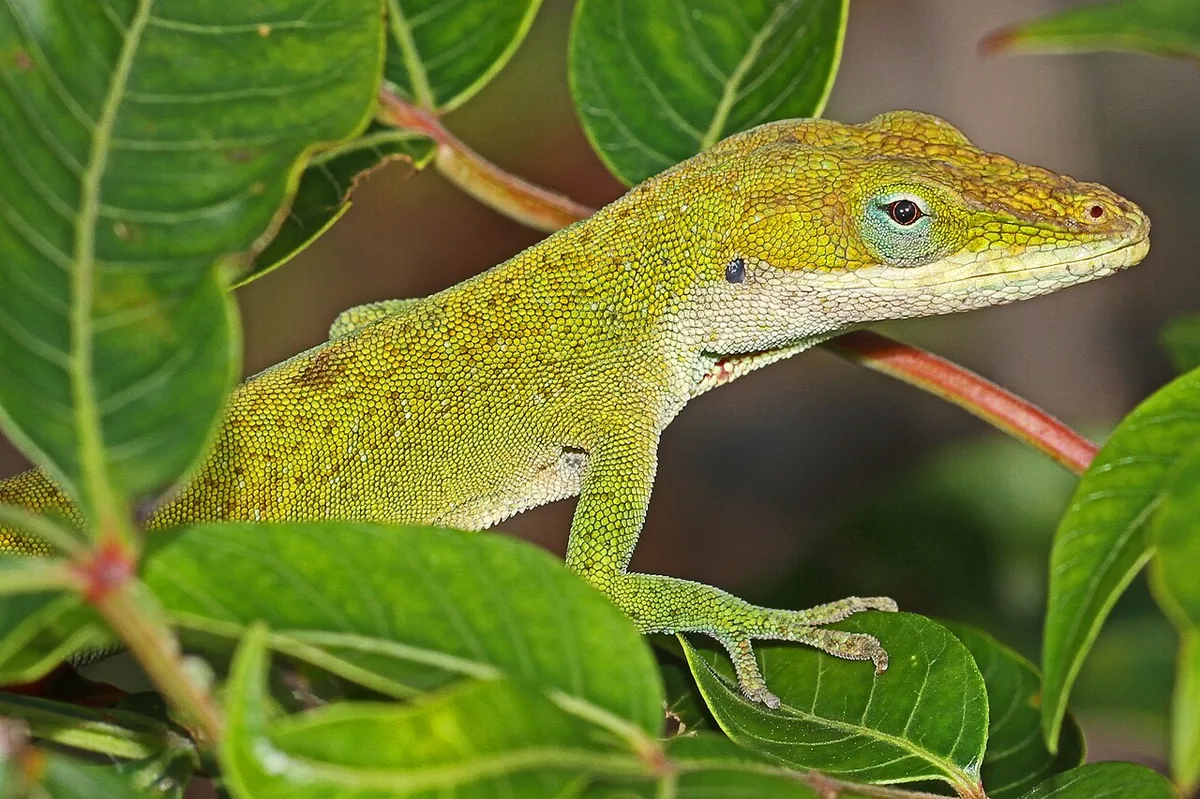
Green anoles need a tall planted enclosure and a misting routine, because they drink droplets from leaves rather than from a bowl. The published figure on this site is a 20-gallon vertical tank.
What published sources give
| Figure | Size | Notes |
|---|---|---|
| Enclosure | 20-gallon vertical tank | From this site's care guide |
| Orientation | Arboreal; height and foliage used | They climb and perch |
| Water | Misting; they drink droplets | A bowl alone leaves them dehydrated |
| UVB | Required; diurnal basker | Small and easily under-provisioned |
Checked September 20, 2026. Where sources differ the range is shown rather than averaged. These are the figures published as minimums; none of them is a maximum.
What changes as they grow
Juvenile
Tiny. Dense planting helps them feel secure and find very small prey.
Adult
A 20-gallon vertical with live or artificial foliage at several heights. Height is the usable dimension.
Enclosure mistakes specific to this species
Unguarded bulbs, especially for climbers
Contact burns from bulbs are among the most common reptile injuries, and burn guidance singles out arboreal species because they climb toward the heat. Guard every bulb and emitter the animal can reach.
A water bowl as the only water source
Anoles largely ignore standing water and drink droplets from leaves and glass. Without misting they are chronically under-hydrated, which suppresses appetite.
Sparse planting
Foliage is cover, basking site and drinking surface at once. A bare tall tank gives a small prey species nowhere to feel safe.
Housing multiple males together
Males are territorial and display at each other constantly, which is a chronic stressor in a small enclosure.
Enclosure hazards that apply to almost every setup
Five hazards come up across nearly every species on this site: contact burns from unguarded heat, UVB that never reaches the animal, cutting ventilation to hold humidity, unsecured decor, and trusting a bulb's wattage instead of a thermometer. They are set out in full, with sources, on our enclosure hazards page, which is worth reading once against any setup including one that looks finished.
Signs the enclosure is wrong
Animals tell you about their housing through behaviour before they tell you through illness. None of these is a diagnosis; each is a reason to look at the enclosure and, where noted, to call a vet.
| What you see | What it can mean |
|---|---|
| Persistent brown colouration | Often stress: check cohabitation, sightlines and temperature. |
| Sunken eyes or lethargy | Dehydration; check misting rather than the bowl. |
| Constant glass-climbing | Too little planting or cover. |
| Soft jaw or rubbery limbs | Metabolic bone disease. Veterinary attention. |
Common questions
How big an enclosure does a green anole need?
A 20-gallon vertical tank is the figure used here, planted with foliage at several heights. They are arboreal, so height and cover matter more than floor area.
Do green anoles drink from a water bowl?
Usually not. They drink droplets from leaves and enclosure walls, so twice-daily misting is the practical water source. A bowl alone commonly results in a dehydrated anole that also stops eating well.
Can green anoles be kept together?
Males should not be housed together. They are territorial and display at each other constantly, which is a chronic stressor in a small enclosure.