What do green anoles eat?
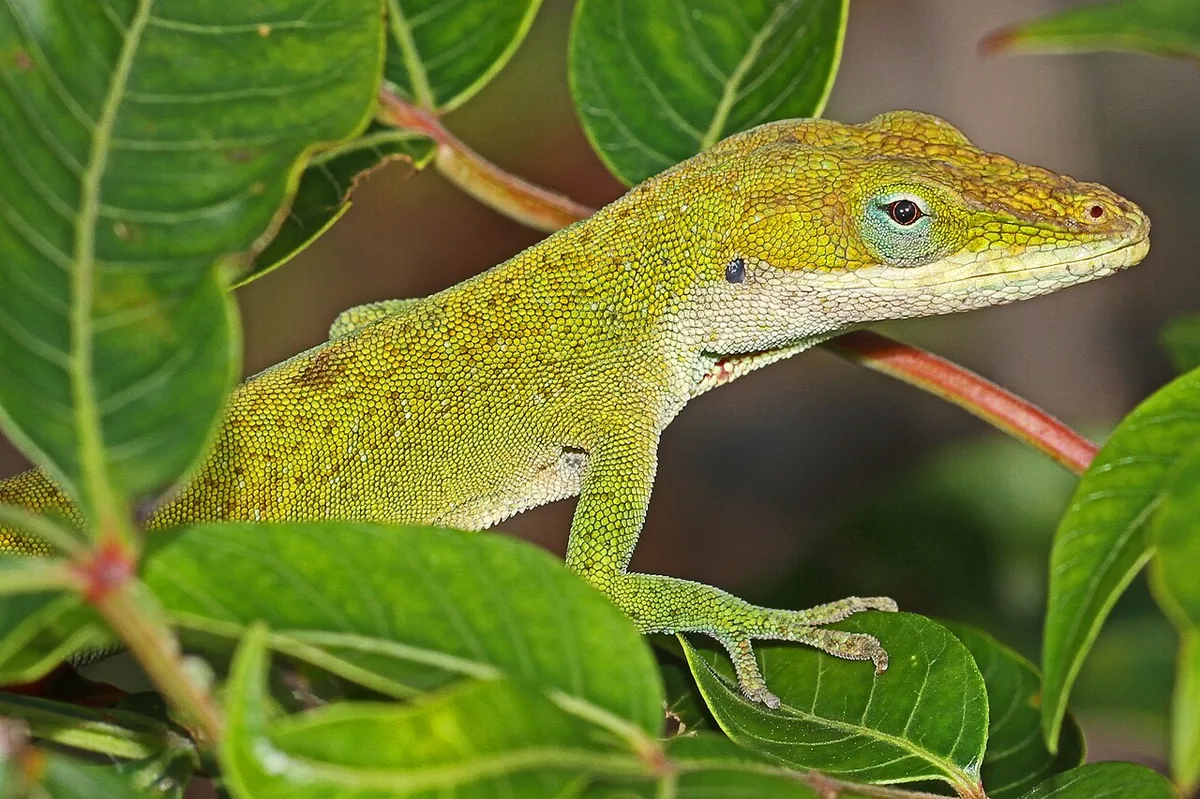
The short answer
Green anoles are small, active, diurnal insectivores. Everything about their feeding scales down: prey must be genuinely small, meals are frequent rather than large, and they drink water droplets from leaves rather than from a standing bowl, which makes misting part of feeding rather than separate from it.
Feeding schedule by age
| Life stage | Diet balance | How often | Notes |
|---|---|---|---|
| Juvenile | Fruit flies, pinhead crickets | Daily | Very small prey |
| Adult | Small crickets and roaches | Daily to every other day | 2-3 appropriately sized items |
| All ages | Misting | Twice daily | Their drinking method, and it matters |
What to feed
| Food | Role | Why |
|---|---|---|
| Small crickets | Staple | Sized well below the head width |
| Flightless fruit flies | Staple for juveniles | Ideal small prey |
| Bean beetles, small roaches | Rotation | Good variety |
| Dubia roaches | Staple | Good protein and ratio, low chitin |
| Crickets | Staple | Cheap and active; gut-load first |
| Black soldier fly larvae | Staple | Naturally calcium-rich |
| Hornworms, silkworms | Rotation | Hydrating and low fat |
| Waxworms, superworms | Treat only | High fat |
| Gut-loaded insects | Requirement | Feed the insects 24-48h before offering |
| Calcium dusting | Requirement | Insects are calcium-poor and phosphorus-rich |
What never to feed
Items in this table are either outright toxic or cause predictable long-term harm. This is the part of the page worth reading twice.
| Do not feed | Why |
|---|---|
| A standing water bowl as the only water | Anoles usually will not drink from one. |
| Fruit and vegetables as a food group | Not usable by an insectivore. |
| Wild-caught insects | Pesticide, parasite and toxicity risk. |
| Fireflies / lightning bugs | Toxic to reptiles. |
| Prey larger than the space between the eyes | Standard feeder-size rule; impaction risk. |
| Relying on one feeder species | Variety covers what a single insect cannot. |
Where good sources disagree
Care sheets do not all say the same thing, and pretending otherwise helps nobody. These are the real points of difference between the sources cited at the foot of this page, and what we think the safe reading is.
Whether anoles need UVB.
Unlike nocturnal geckos, green anoles are diurnal baskers and the case for UVB is strong and widely accepted. The remaining discussion concerns output level rather than whether to provide it at all.
What most green anole feeding advice gets wrong
Misting is feeding infrastructure, not decoration.
Green anoles drink water droplets from leaves and glass, largely ignoring standing bowls. A keeper who provides a dish and no misting has an animal that is chronically under-hydrated, which suppresses appetite. Twice-daily misting is standard and directly affects whether the anole eats.
Small means smaller than you think.
Anoles are frequently offered crickets sized for a bigger lizard. Prey should be comfortably narrower than the anole's head. Several small items across the day suits them far better than one large one.
Common questions
What do green anoles eat?
Small live insects: appropriately sized crickets, flightless fruit flies, bean beetles and small roaches, gut-loaded and dusted with calcium. They are active hunters and generally prefer prey that moves.
How often should I feed a green anole?
Daily to every other day, in small amounts. Two or three appropriately sized insects per feeding suits an adult. They eat small and often rather than large and rarely.
Do green anoles drink from a water bowl?
Usually not. They drink droplets from leaves and enclosure walls, so twice-daily misting is the practical way to keep them hydrated. A standing bowl alone often results in a dehydrated anole that also stops eating well.