What do day geckos eat?
The short answer
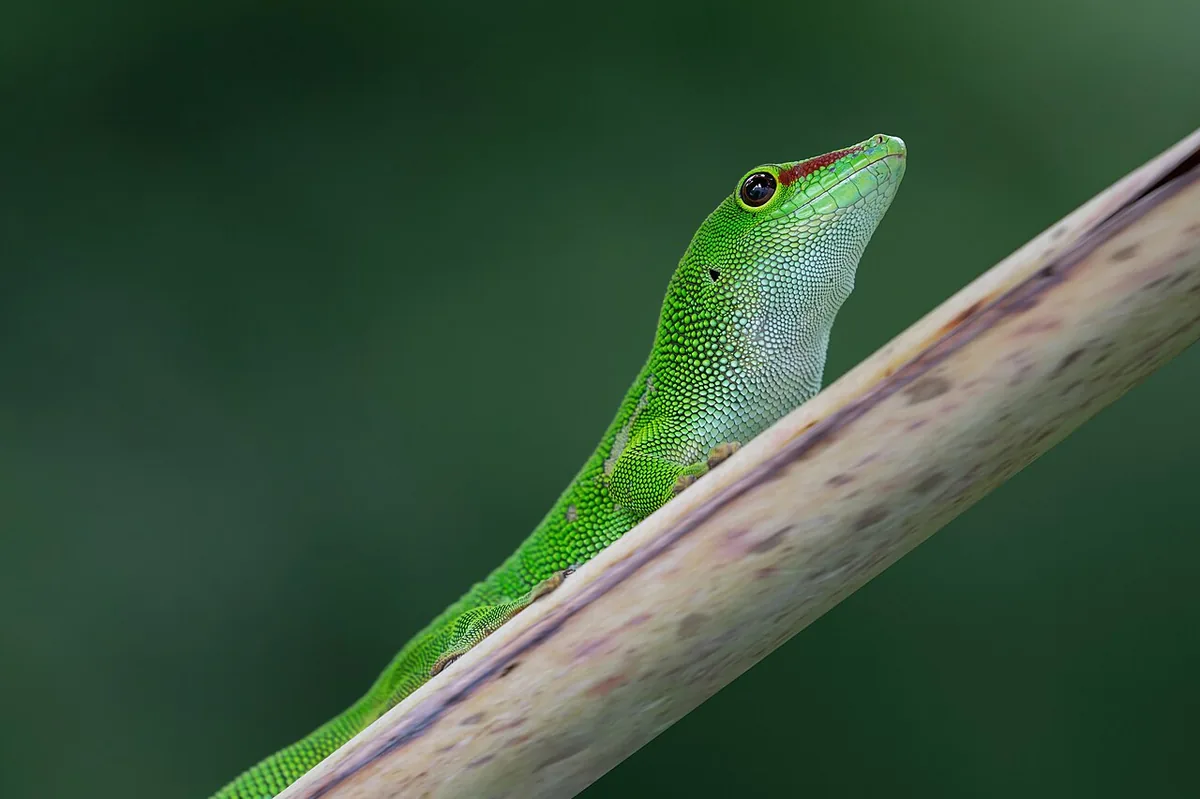
Day geckos eat insects and, unusually for insect-eating geckos, a real fruit and nectar component. Commercial gecko diets designed for crested geckos work well as that sweet half. They are diurnal baskers, which means UVB genuinely matters here in a way it does not for nocturnal species.
Feeding schedule by age
| Life stage | Diet balance | How often | Notes |
|---|---|---|---|
| Juvenile | Small insects plus CGD | Daily | Fruit flies and pinhead crickets |
| Adult | Insects 2-3x weekly, CGD 2-3x weekly | Alternating | Both halves matter |
| All ages | Misting | Daily | Hydration and nectar licking |
What to feed
| Food | Role | Why |
|---|---|---|
| Commercial gecko diet (Pangea, Repashy) | Staple sweet component | 2-3 times weekly |
| Small crickets and fruit flies | Staple insects | Sized for a small gecko |
| Fruit purees | Occasional | Supplement to CGD, not a replacement |
| Dubia roaches | Staple | Good protein and ratio, low chitin |
| Crickets | Staple | Cheap and active; gut-load first |
| Black soldier fly larvae | Staple | Naturally calcium-rich |
| Hornworms, silkworms | Rotation | Hydrating and low fat |
| Waxworms, superworms | Treat only | High fat |
| Gut-loaded insects | Requirement | Feed the insects 24-48h before offering |
| Calcium dusting | Requirement | Insects are calcium-poor and phosphorus-rich |
What never to feed
Items in this table are either outright toxic or cause predictable long-term harm. This is the part of the page worth reading twice.
| Do not feed | Why |
|---|---|
| A pure insect diet | Misses the nectar and fruit half this genus genuinely uses. |
| Handling | Their skin tears easily and they are extremely fast. |
| Fruit and vegetables as a food group | Not usable by an insectivore. |
| Wild-caught insects | Pesticide, parasite and toxicity risk. |
| Fireflies / lightning bugs | Toxic to reptiles. |
| Prey larger than the space between the eyes | Standard feeder-size rule; impaction risk. |
| Relying on one feeder species | Variety covers what a single insect cannot. |
Where good sources disagree
Care sheets do not all say the same thing, and pretending otherwise helps nobody. These are the real points of difference between the sources cited at the foot of this page, and what we think the safe reading is.
Whether commercial crested gecko diet is ideal for Phelsuma.
Those diets are formulated for crested geckos rather than day geckos, and some keepers prefer Phelsuma-specific products or fruit purees with supplementation. All approaches accept that a fruit or nectar component belongs in the diet; the argument is about which product delivers it best.
What most day gecko feeding advice gets wrong
Half the diet is the half people forget.
Day geckos are commonly fed like small insectivores, and they will survive on insects alone for a while. Phelsuma species genuinely take nectar, pollen and soft fruit in the wild, and a commercial gecko diet two or three times a week fills that role easily. Leaving it out is the most common dietary gap in this genus.
Diurnal means UVB matters.
Unlike leopard geckos and other nocturnal species where UVB is debated, day geckos are active baskers and the case for UVB is straightforward. It also reduces the amount of dietary D3 they need.
Common questions
What do day geckos eat?
Both insects and a fruit or nectar component. Small crickets, fruit flies and roaches make up the insect half, while a commercial gecko diet of the type made for crested geckos serves as the sweet half, typically two to three times a week.
Can day geckos eat crested gecko food?
Yes, commercial gecko diets are widely used for Phelsuma as the fruit and nectar portion of the diet. Some keepers prefer day-gecko-specific products, but the principle is agreed: these geckos need more than insects alone.
Do day geckos need UVB?
Yes. Unlike nocturnal geckos, day geckos are diurnal baskers, and UVB supports calcium metabolism directly while reducing how much dietary D3 they need. It is one of the clearer UVB cases among pet geckos.