What do caiman lizards eat?
The short answer
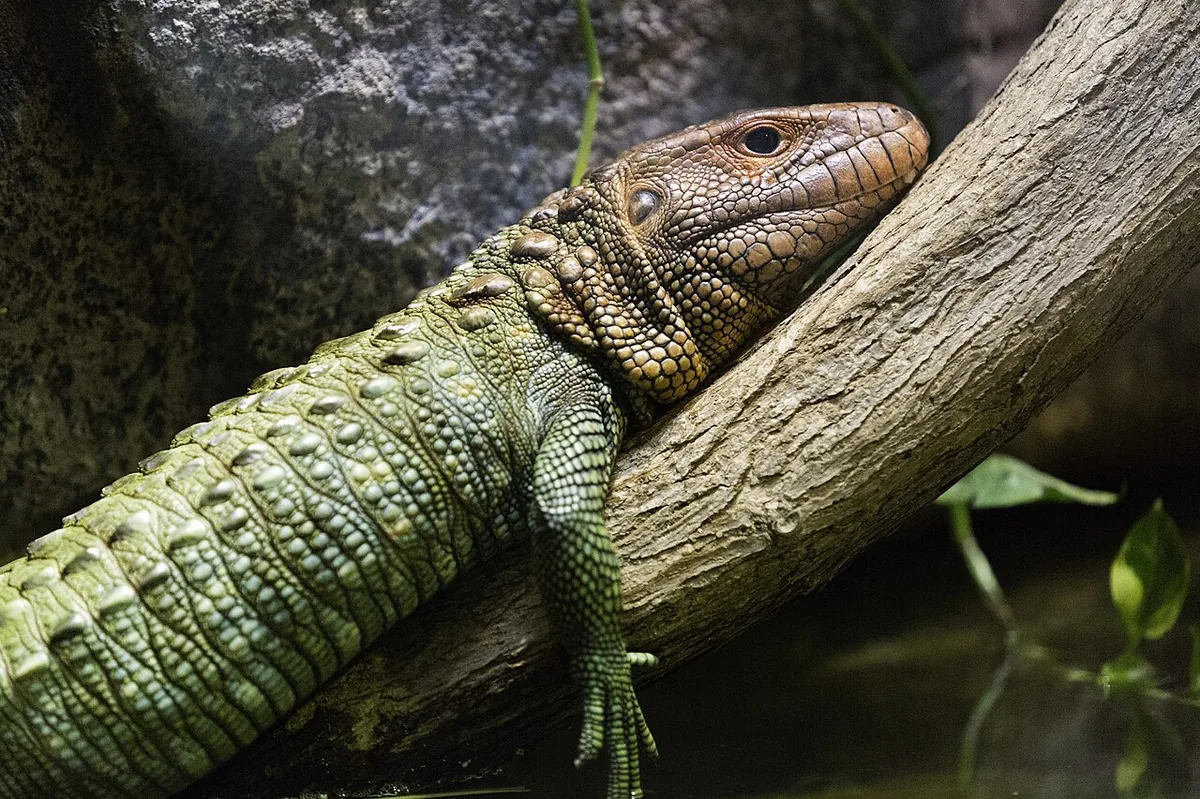
Caiman lizards eat aquatic snails, and that is not a quirk of taste. Their teeth are rounded and molar-like and their jaw and neck muscles are built to crush shells. Crayfish and other shellfish round out the diet. Attempting to run one on insects and ground meat ignores what the animal is built to process.
Feeding schedule by age
| Life stage | Diet balance | How often | Notes |
|---|---|---|---|
| Hatchling | 2-3 small snails | 2-3 times daily | High demand while growing |
| Juvenile (1-2 years) | Snails and crayfish | Once daily | Growing steadily |
| Adult | Snails, crayfish, seafood | Every 1-2 days | Judge by body condition |
What to feed
| Food | Role | Why |
|---|---|---|
| Aquatic snails | Staple | What the teeth and jaws are built for |
| Frozen snails | Staple | Practical bulk supply |
| Crayfish | Staple | Shelled prey, well accepted |
| Canned seafood | Supplement | Used by many keepers; watch sodium |
| Calcium powder | Supplement | Twice weekly |
| Multivitamin | Supplement | Weekly |
What never to feed
Items in this table are either outright toxic or cause predictable long-term harm. This is the part of the page worth reading twice.
| Do not feed | Why |
|---|---|
| An insect-only diet | Ignores the anatomy; insufficient for a large shell-crushing lizard. |
| Ground or muscle meat as a staple | Nutritionally incomplete and inappropriate. |
| Dog or cat food | Not appropriate. |
| Untreated wild-collected snails | Parasite risk. |
| Dirty water | They feed in it and defecate in it; filtration is part of the diet plan. |
Where good sources disagree
Care sheets do not all say the same thing, and pretending otherwise helps nobody. These are the real points of difference between the sources cited at the foot of this page, and what we think the safe reading is.
How much non-snail food is acceptable.
Keepers supplement with crayfish, prawns and other seafood to manage cost and availability, and the species does well on that. What no source supports is replacing shelled prey entirely with insects or meat, because the feeding anatomy is specifically adapted for crushing.
What most caiman lizard feeding advice gets wrong
The diet is anatomy, not preference.
Caiman lizards have rounded, almost bead-like molar teeth and heavy jaw and neck musculature evolved to crush the shells of aquatic snails. A keeper who decides snails are inconvenient and substitutes insects is not making a small compromise; they are feeding an animal in a way its skull is not built for.
Budget the food before buying the lizard.
Snails in the quantity a growing caiman lizard needs are a genuine recurring expense, and unlike most reptile diets they are not available cheaply at a supermarket. This is one of the two costs, along with the enclosure, that catch out impulse buyers of this species.
Feeding and water quality are the same problem.
They eat in and around water and defecate in it. Canister filtration is not a luxury for a caiman lizard; it is the thing that stops the feeding area becoming the health problem.
Common questions
What do caiman lizards eat?
Primarily aquatic snails, which their rounded molar-like teeth and powerful jaw muscles are built to crush. Crayfish and other shellfish supplement this, along with some seafood. Insects and meat are not adequate substitutes.
Why do caiman lizards need snails?
Because their feeding anatomy is specialised for shelled prey. Their teeth are rounded and bead-like rather than pointed, and their jaw and neck musculature is built for crushing. This is a structural adaptation rather than a taste preference.
How often should I feed a caiman lizard?
Hatchlings need two to three small snails two to three times a day, juveniles around once daily, and adults every one to two days. They are large, active lizards with substantial appetites while growing.
Is a caiman lizard expensive to feed?
Yes, comparatively. Snails in the quantity required are a real recurring cost and are not available cheaply from a supermarket. Along with the large filtered semi-aquatic enclosure, food is one of the ongoing expenses that surprises new keepers.