← Blue-Tongued Skink care guide
What do blue-tongued skinks eat?
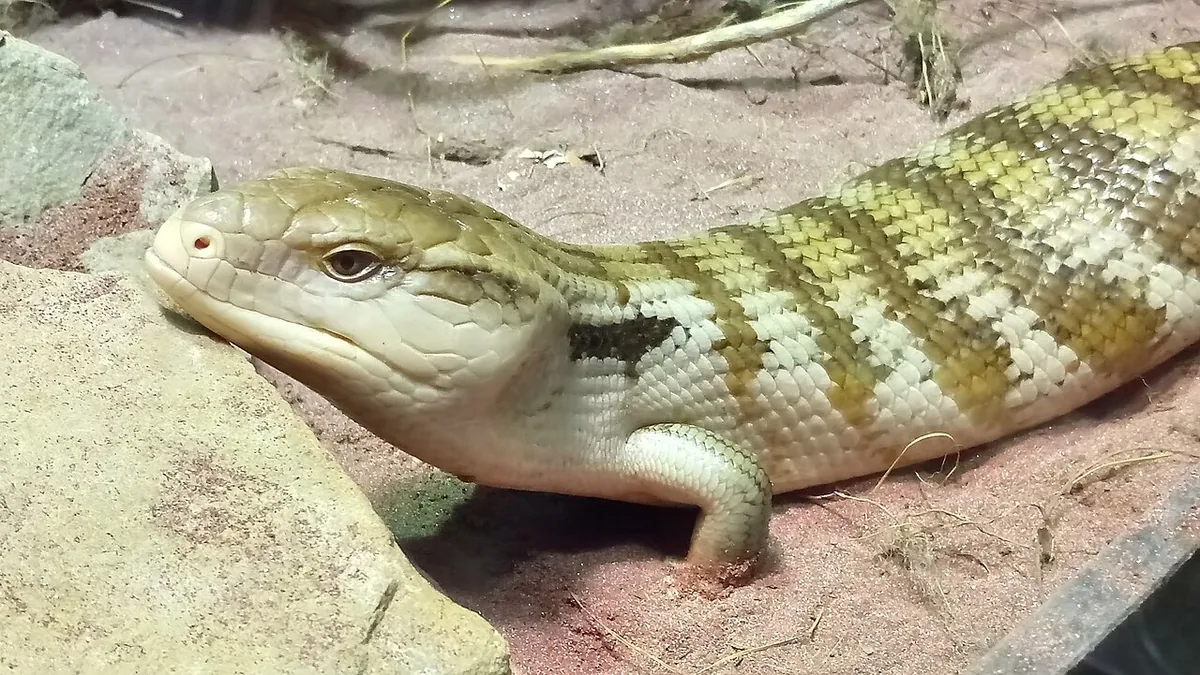
The short answer
Blue-tongued skinks are genuine omnivores and one of the more straightforward lizards to feed, provided the balance is right. A common working split is roughly half vegetables, a substantial protein share and a small amount of fruit. They are enthusiastic, food-motivated animals, which makes obesity the usual captive problem.
Feeding schedule by age
| Life stage | Diet balance | How often | Notes |
|---|---|---|---|
| Juvenile | Protein-led with vegetables | Daily | Growing quickly |
| Adult | ~50% vegetables, ~40% protein, ~10% fruit | 2-3 times weekly | Do not free-feed |
| All ages | Calcium | Most feedings | Especially during growth |
What to feed
| Food | Role | Why |
|---|---|---|
| Snails | Staple protein | Natural prey and excellent calcium |
| Dubia roaches, crickets | Protein | Gut-loaded |
| Lean cooked meat or high-quality wet dog food | Protein | Used by many keepers in moderation |
| Collard, dandelion, mustard greens | Vegetables | The bulk of the plant share |
| Squash, green beans, carrot | Vegetables | Variety and vitamin A |
| Berries, melon | Fruit | Small share only |
| Calcium powder | Supplement | Dusted on food |
What never to feed
Items in this table are either outright toxic or cause predictable long-term harm. This is the part of the page worth reading twice.
| Do not feed | Why |
|---|---|
| Free-feeding | They will keep eating; obesity is the standard captive outcome. |
| Avocado | Toxic. |
| Rhubarb | Toxic. |
| Onion and garlic | Toxic. |
| A protein-only diet | Causes renal strain; they need the plant share. |
| Insects alone | Insufficient for an omnivore this size. |
Where good sources disagree
Care sheets do not all say the same thing, and pretending otherwise helps nobody. These are the real points of difference between the sources cited at the foot of this page, and what we think the safe reading is.
The exact protein-to-plant ratio.
Published splits range from roughly 60/40 plants-to-protein to nearer 50/50, and juveniles sit higher on protein than adults in every version. The disagreement is modest; what all sources share is that both components are genuinely required.
What most blue-tongued skink feeding advice gets wrong
They are persuasive, and it is a problem.
Blue-tongued skinks are food-motivated, bold and quick to associate their keeper with meals. Most captive blue-tongues are overweight. Feed on a schedule of two to three times weekly as adults rather than in response to the animal's interest, which is constant.
Do not feed them like a bearded dragon.
Both are commonly kept Australian omnivores, but blue-tongues need considerably more animal protein throughout life, and they do not make the strong shift to a plant-led adult diet that bearded dragons do. A blue-tongue on an adult bearded dragon diet is under-fed on protein.
Common questions
What do blue-tongued skinks eat?
They are omnivores. A common working balance is around half vegetables, a substantial protein share from snails, insects and lean meat or quality wet dog food, and a small amount of fruit. Juveniles need proportionally more protein than adults.
How often should I feed a blue-tongued skink?
Juveniles daily while growing, and adults roughly two to three times weekly. They are enthusiastic feeders that readily become overweight, so feed on a schedule rather than in response to their apparent appetite.
Can blue-tongued skinks eat dog food?
High-quality wet dog food is used by many keepers as part of the protein share, in moderation. It should not be the whole protein component or the whole diet, and low-quality products with high fat and filler content are best avoided.