← Asian Water Dragon care guide
Asian Water Dragon Enclosure and Habitat
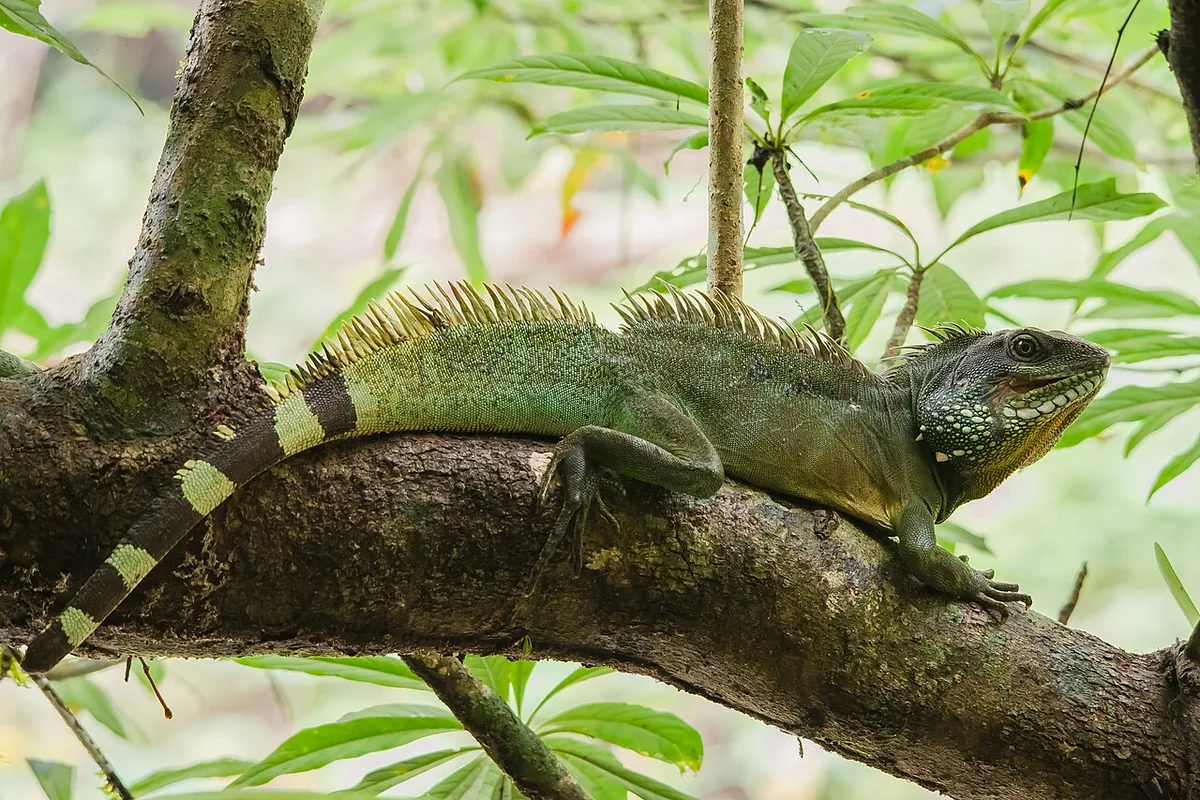
Asian water dragons need a tall enclosure with a water section, and they need it not to be see-through at nose height. Rostral abrasion, where the animal rubs its snout raw against glass, is the species' signature welfare problem.
What published sources give
| Figure | Size | Notes |
|---|---|---|
| Minimum | 4 x 2 x 6 ft, vertical, with a water section | From this site's care guide |
| Orientation | Vertical; arboreal and semi-aquatic | Height is used |
| Water | A section they can enter | They soak and defecate in it |
| Walls | Visual barriers needed | Rostral abrasion is very common |
Checked September 20, 2026. Where sources differ the range is shown rather than averaged. These are the figures published as minimums; none of them is a maximum.
What changes as they grow
Juvenile
Nervous and fast. Visual barriers matter from the start, because the habit of running into glass establishes early.
Adult
4 by 2 by 6 feet vertical with a water section. Height and planting both reduce the stress that drives wall-running.
Enclosure mistakes specific to this species
Unguarded bulbs, especially for climbers
Contact burns from bulbs are among the most common reptile injuries, and burn guidance singles out arboreal species because they climb toward the heat. Guard every bulb and emitter the animal can reach.
UVB through glass, or left in past its life
Glass and most transparent plastics filter UVB out, and output falls within 6 to 12 months while the bulb still looks lit. In lizards this shows up as metabolic bone disease, which is why MBD is usually a lighting failure rather than a diet failure.
Transparent walls at nose height
This is the defining enclosure problem for the species. Water dragons repeatedly attempt to walk through glass and rub their snouts raw. Backing, banding or planting the lower walls so they read as solid is the standard fix.
A water bowl instead of a water section
They are semi-aquatic and soak. A bowl too small to enter misses a genuine behaviour, though the water then needs keeping clean.
Enclosure hazards that apply to almost every setup
Five hazards come up across nearly every species on this site: contact burns from unguarded heat, UVB that never reaches the animal, cutting ventilation to hold humidity, unsecured decor, and trusting a bulb's wattage instead of a thermometer. They are set out in full, with sources, on our enclosure hazards page, which is worth reading once against any setup including one that looks finished.
Signs the enclosure is wrong
Animals tell you about their housing through behaviour before they tell you through illness. None of these is a diagnosis; each is a reason to look at the enclosure and, where noted, to call a vet.
| What you see | What it can mean |
|---|---|
| Raw or scabbed snout | Rostral abrasion. An enclosure design problem, and it needs addressing not treating. |
| Repeatedly running into the walls | The behaviour that causes the above. Add visual barriers. |
| Never using the water | Check depth, temperature and ease of entry. |
| Soft jaw or rubbery limbs | Metabolic bone disease. Veterinary attention. |
Common questions
How big an enclosure does an Asian water dragon need?
A minimum of about 4 feet by 2 by 6 tall, oriented vertically, with a water section they can enter. They are arboreal and semi-aquatic, so height and water both matter.
Why does my water dragon rub its nose raw?
Rostral abrasion is very common in this species and is caused by repeatedly trying to walk through transparent walls. It is an enclosure design problem: back, band or plant the lower walls so they read as solid.
Do Asian water dragons need a water section?
Yes. They are semi-aquatic and soak regularly, so a section they can actually enter is preferable to a bowl. It needs keeping clean, since they also defecate in it.