African Fat-Tailed Gecko Care Guide
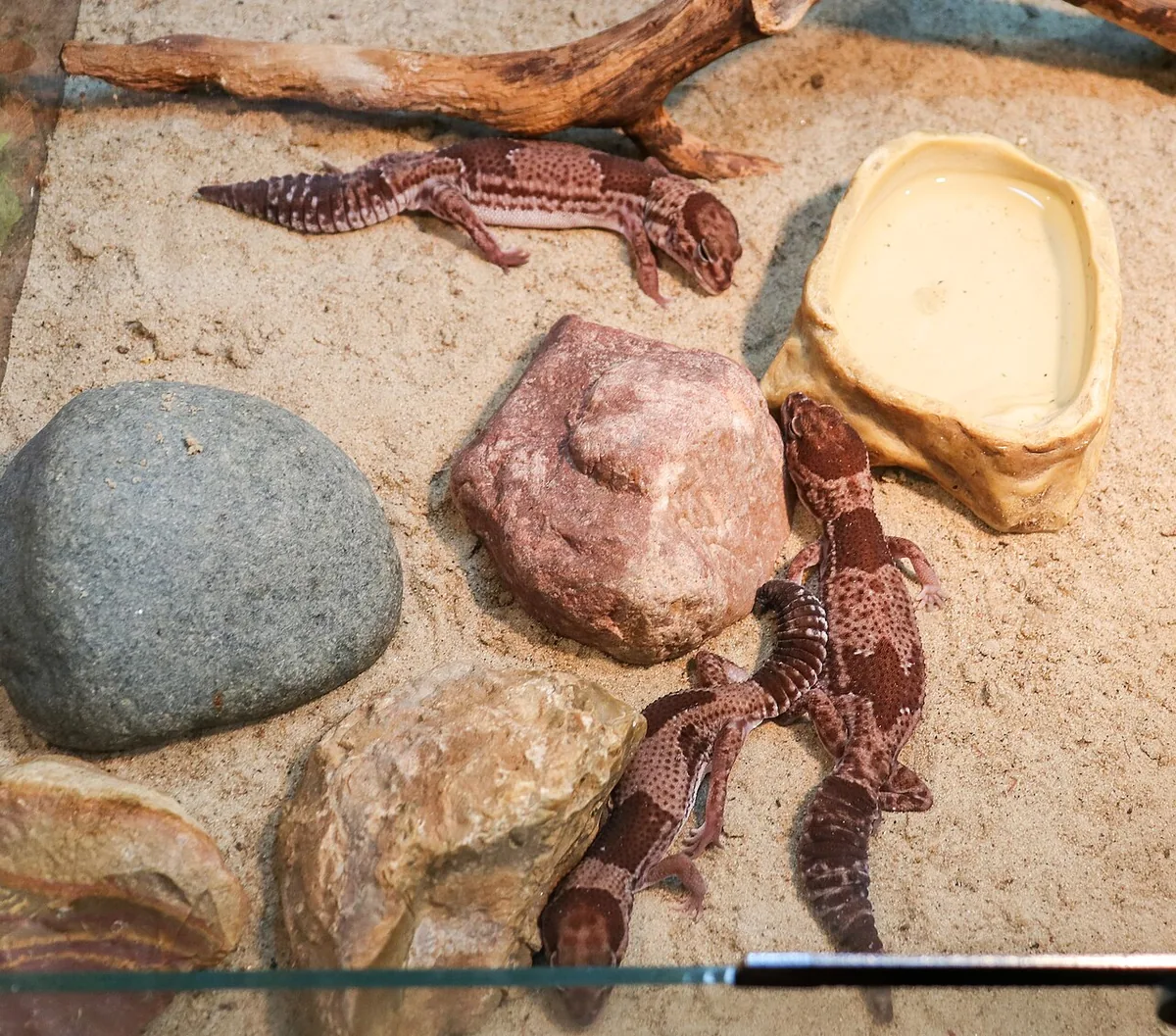
African fat-tailed vs leopard gecko
Very similar species, both nocturnal ground geckos, similar size, similar insect diet, similar handling tolerance. Three key differences:
- Humidity: Fat-tailed needs 50-70% (leopard 30-50%). The most important husbandry distinction.
- Temperament: Fat-tailed often slightly more docile and slower-moving than leopards.
- Appearance: Distinctive thick tail and broader head pattern.
Enclosure
Adult minimum 36" × 18" × 12" (90 × 45 × 30 cm). Standard ground-gecko setup with three hides (warm, cool, humid). Humid hide is especially important.
Temperature
- Basking surface: 88-92°F
- Ambient warm: 80-85°F
- Cool: 72-78°F
- Night: 70-75°F
Humidity, the key difference
50-70% baseline. They come from more humid environments than leopard geckos. Provide a humid hide and mist lightly daily. Inadequate humidity causes shed problems and skin issues.
UVB
Same as leopard gecko, low-output UVB (Arcadia ShadeDweller, Reptisun 5.0) recommended though not strictly required if dietary D3 is adequate.
Diet
Insectivore: dubia roaches, crickets, BSFL, hornworms, the occasional waxworm as treat. Same approach as leopard gecko.
Calcium dust at most feedings; multivitamin weekly.
Handling
Tolerate handling well, similar to leopard geckos. Don't grab the tail. Fat-tails autotomize tails under stress; tails regrow imperfectly.