← White's Tree Frog care guide
What do White's tree frogs eat?
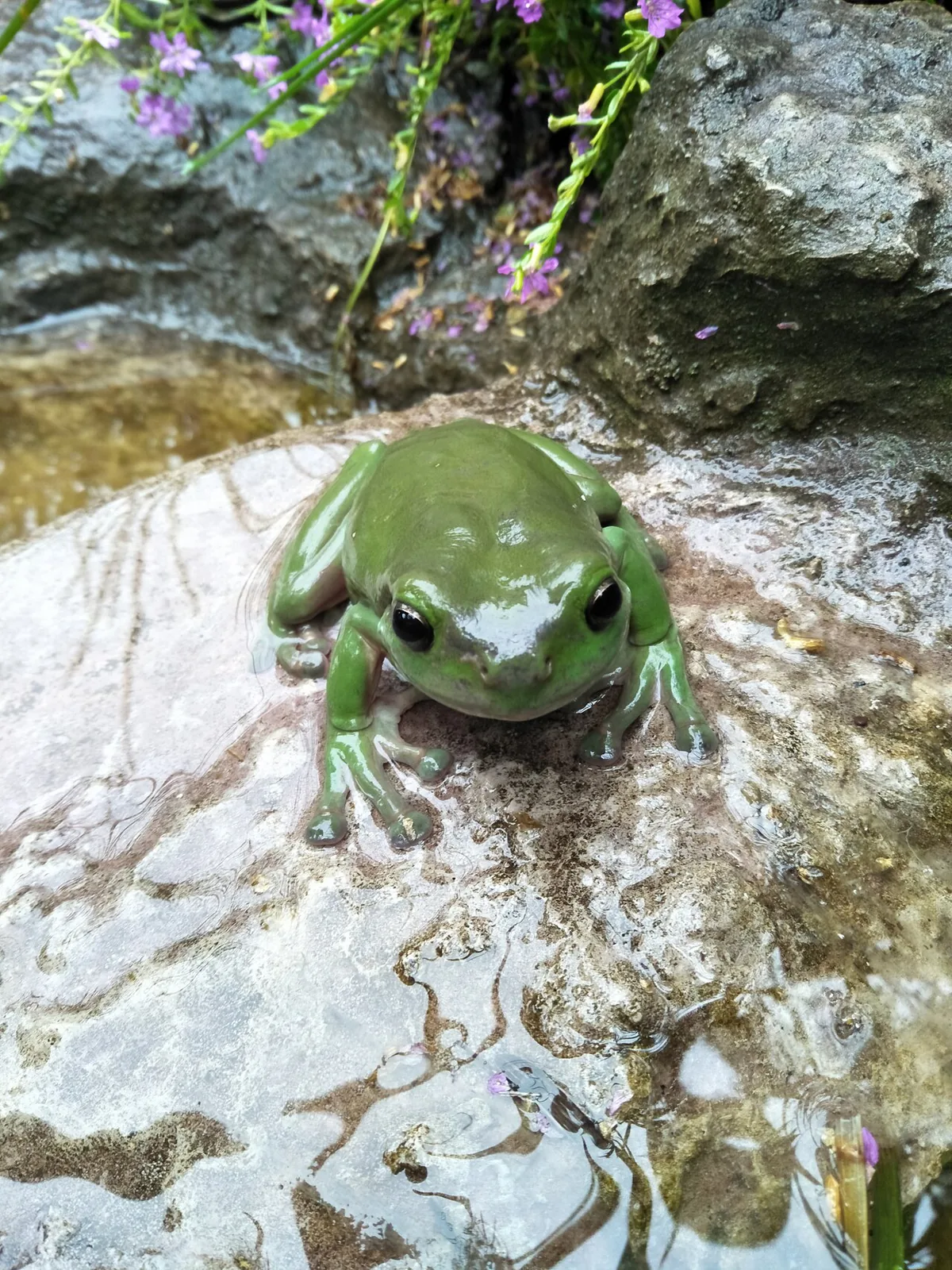
The short answer
White's tree frogs eat insects, and the hard part is not what to feed but how much. They are nicknamed dumpy tree frogs, and the rolls of fat that name describes are widely mistaken for the healthy adult appearance. They are among the most consistently overfed amphibians kept.
Feeding schedule by age
| Life stage | Diet balance | How often | Notes |
|---|---|---|---|
| Juvenile | Small insects | Daily | Growing; higher demand |
| Adult | Appropriately sized insects | 2-3 times weekly | Not daily, despite the begging |
| Overweight adult | Reduced portions | Twice weekly | Reduce frequency, not just size |
What to feed
| Food | Role | Why |
|---|---|---|
| Crickets | Staple | Gut-load before offering |
| Dubia roaches | Staple | Good protein |
| Earthworms | Rotation | Well accepted |
| Black soldier fly larvae | Rotation | Calcium-rich |
| Waxworms | Treat only | Very high fat; a frequent contributor to obesity |
| Gut-loaded insects | Requirement | Feed the insects 24-48h before offering |
| Calcium dusting | Requirement | Insects are calcium-poor as bought |
What never to feed
Items in this table are either outright toxic or cause predictable long-term harm. This is the part of the page worth reading twice.
| Do not feed | Why |
|---|---|
| Daily feeding of adults | The direct cause of the obesity this species is known for. |
| Waxworms as a staple | High fat; they will take them indefinitely. |
| Rodents | Not needed, and a fast route to an obese frog. |
| Wild-caught insects | Pesticide, parasite and toxicity risk. |
| Prey wider than the gap between the eyes | Standard amphibian feeder-size rule. |
| Handling with dry or unwashed hands | Permeable skin absorbs oils, salts and residues. |
Where good sources disagree
Care sheets do not all say the same thing, and pretending otherwise helps nobody. These are the real points of difference between the sources cited at the foot of this page, and what we think the safe reading is.
How often adults should eat.
Published guidance ranges from twice to three times weekly for adults, and some keepers stretch it further for animals already carrying weight. Nobody recommends daily feeding for an adult. The range exists because the correct answer depends on the individual frog's condition.
What most white's tree frog feeding advice gets wrong
The nickname is describing a health problem.
White's tree frogs are commonly called dumpy tree frogs, and photographs of very heavy animals with pronounced fat ridges circulate as though that is the species looking its best. It is not. Fat deposits over the eyes, to the point of forming an overhang, indicate an overweight frog. A healthy adult is round but not lumpy, with the eyes unobstructed.
They will beg indefinitely.
This is a bold, interactive frog that quickly learns to associate its keeper with food and responds enthusiastically every time. That behaviour is charming and is not information about hunger. Feed on a schedule of two to three times weekly as an adult and ignore the performance.
Common questions
What do White's tree frogs eat?
Live insects: crickets, dubia roaches, earthworms and black soldier fly larvae, gut-loaded and dusted with calcium. Prey should be no wider than the gap between the frog's eyes. Waxworms are a high-fat treat rather than a staple.
How often should I feed a White's tree frog?
Adults roughly two to three times a week, not daily. Juveniles eat daily while growing. This species is among the most consistently overfed amphibians in the hobby, and obesity is the predictable result of feeding to appetite.
Is my White's tree frog overweight?
Look at the eyes. Fat deposits that form a visible ridge or overhang above the eyes are a classic sign of an overweight White's tree frog. A healthy adult is rounded but smooth, with the eyes unobstructed by folds of tissue.
Can White's tree frogs eat mice?
They can physically take pinky mice, and they should not be fed them routinely. Rodents are far higher in fat than insects and contribute directly to the obesity this species is prone to. Insects should be the entire diet.