← Fire-Bellied Toad care guide
Fire-Bellied Toad Enclosure and Habitat
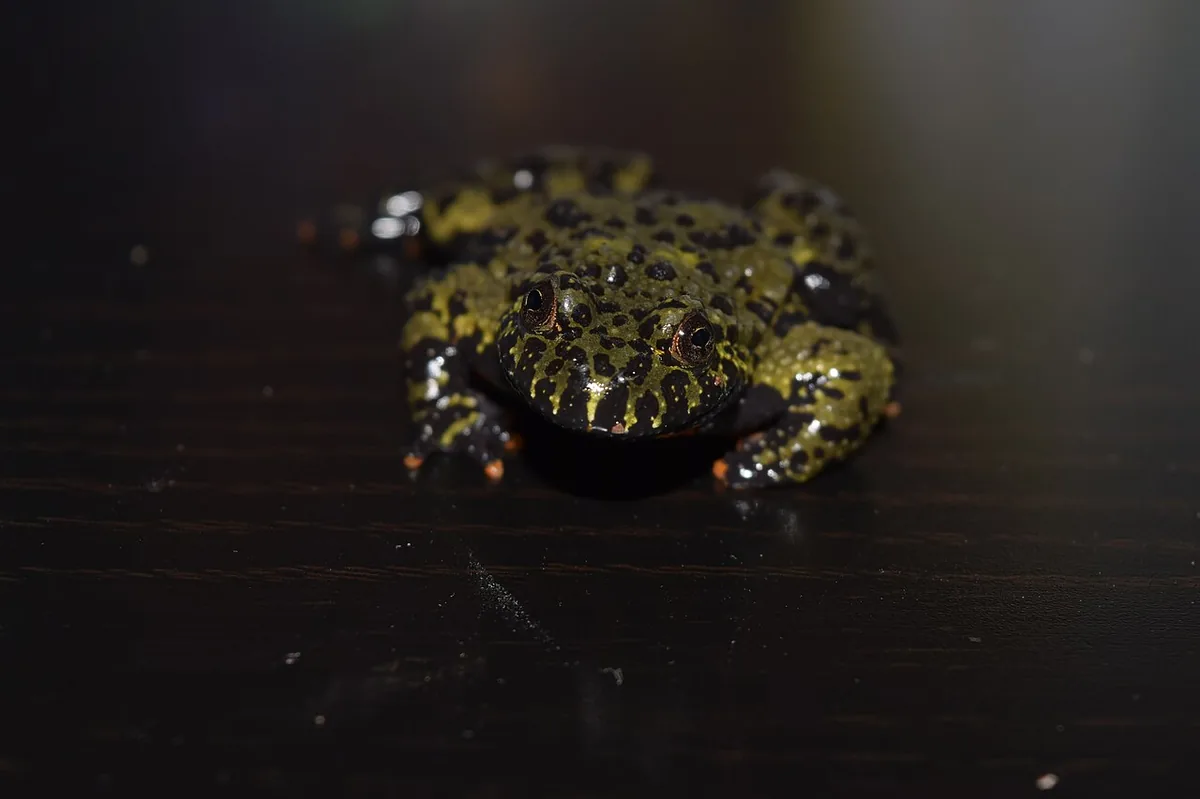
Fire-bellied toads are semi-aquatic and communal, which makes their enclosure unusual on two counts: it needs both a real land section and a real water section, and it usually houses several animals.
What published sources give
| Figure | Size | Notes |
|---|---|---|
| 2-3 toads | 20-gallon long, paludarium setup | From this site's care guide |
| Arrangement | Genuine land section plus water section | Semi-aquatic; both halves used |
| Occupancy | Communal, unlike most frogs | 3-5 in appropriate space |
| Water | Kept clean; they defecate in it | Filtration or frequent changes |
Checked September 20, 2026. Where sources differ the range is shown rather than averaged. These are the figures published as minimums; none of them is a maximum.
What changes as they grow
Juvenile
Small and quick. The same paludarium arrangement applies, scaled down.
Adult
A 20-gallon long for two or three in a paludarium layout. Group size drives the enclosure more than individual size does.
Enclosure mistakes specific to this species
Untreated tap water, or residue on anything that goes in
Amphibian skin is highly permeable and absorbs what it touches. Chlorine and chloramine in tap water, soap residue on decor, and hand lotion on a keeper's fingers all reach the bloodstream in a way they never would with a reptile. Dechlorinate everything and rinse anything new.
A lid that does not latch
Frogs are better escapers than most people expect, and a dried-out amphibian dies quickly. Lids need to latch rather than rest, particularly on climbing species.
Treating it as an aquarium with a rock
Fire-bellied toads use both halves genuinely. A water-dominated tank with a token land area, or a land tank with a bowl, both miss what the species does.
Letting the water section foul
They defecate in the water and uneaten insects end up there. In a small volume that degrades fast, and water quality reaches the animals through permeable skin.
One feeding station for a group
Communal housing means competitive feeding. Spreading food across the land section lets less assertive animals eat.
Enclosure hazards that apply to almost every setup
Five hazards come up across nearly every species on this site: contact burns from unguarded heat, UVB that never reaches the animal, cutting ventilation to hold humidity, unsecured decor, and trusting a bulb's wattage instead of a thermometer. They are set out in full, with sources, on our enclosure hazards page, which is worth reading once against any setup including one that looks finished.
Signs the enclosure is wrong
Animals tell you about their housing through behaviour before they tell you through illness. None of these is a diagnosis; each is a reason to look at the enclosure and, where noted, to call a vet.
| What you see | What it can mean |
|---|---|
| Cloudy or smelly water | Fouling in a small volume; change it and reconsider the layout. |
| One animal consistently thinner than the others | Feeding competition. Spread the food out. |
| Skin irritation on the keeper's hands | Their secretions are mildly toxic. Wash after any contact. |
| Reluctance to enter the water | Check water quality and that exit from it is easy. |
Common questions
What enclosure do fire-bellied toads need?
A 20-gallon long in a paludarium arrangement is the published figure for two or three adults, with a genuine land section and a genuine water section. They are semi-aquatic and use both.
Can fire-bellied toads be kept in a group?
Yes, and this is unusual among the frogs on this site. Groups of three to five in appropriate space are commonly kept, which makes group size rather than individual size the main driver of enclosure dimensions.
How do you keep the water clean for fire-bellied toads?
Frequent changes or light filtration. They defecate in the water and uneaten insects end up there, and in a small volume that degrades quickly. Water quality reaches them through permeable skin.