← Fire-Bellied Toad care guide
What do fire-bellied toads eat?
The short answer
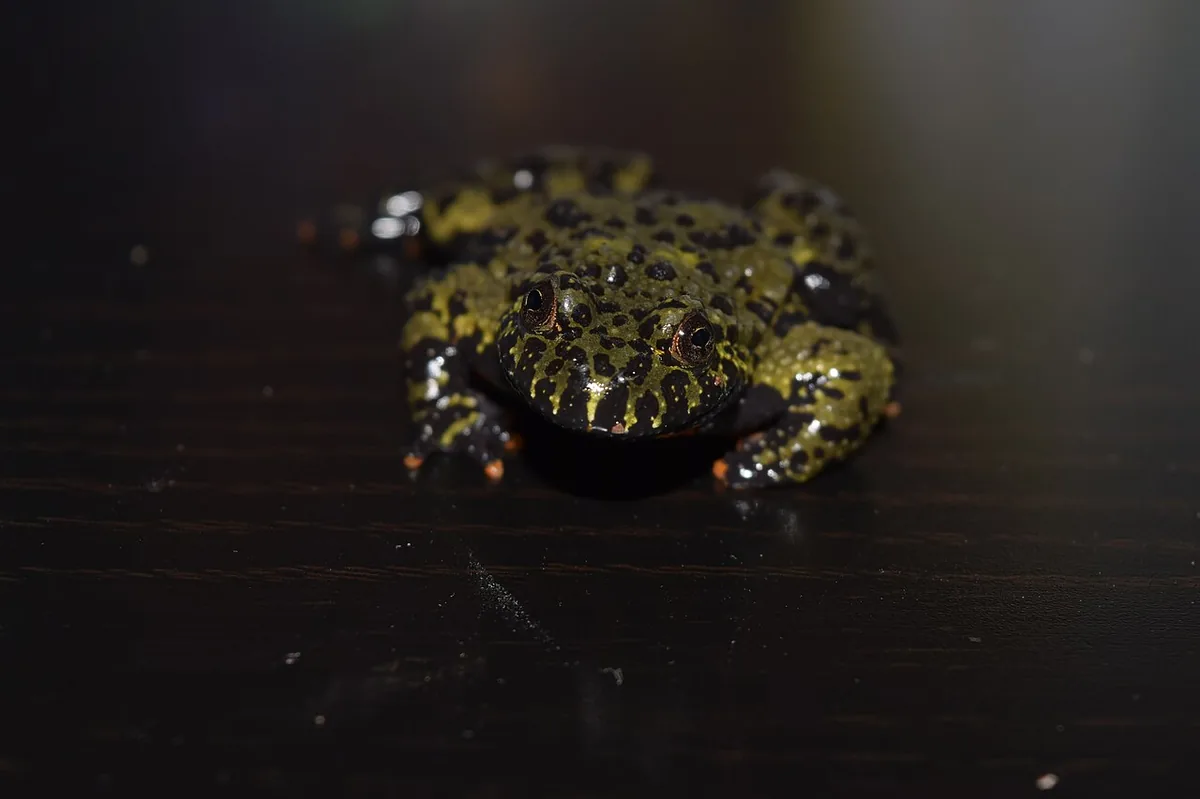
Fire-bellied toads are small semi-aquatic insectivores usually kept in groups. Feeding them is straightforward, with two wrinkles: prey has to be genuinely small, and in a group the food needs spreading out so that bolder individuals do not take everything.
Feeding schedule by age
| Life stage | Diet balance | How often | Notes |
|---|---|---|---|
| Juvenile | Small crickets, fruit flies | Daily | Growing |
| Adult | Small crickets, roaches, isopods | Every 1-2 days | 3-5 items each |
| Group | Multiple feeding spots | Each feeding | Prevents competition |
What to feed
| Food | Role | Why |
|---|---|---|
| Small crickets | Staple | Sized well below head width |
| Dubia roach nymphs | Staple | Good protein |
| Isopods | Rotation | Natural and self-sustaining in bioactive setups |
| Earthworm pieces | Rotation | Well accepted |
| Bloodworms | Occasional | Variety |
| Gut-loaded insects | Requirement | Feed the insects 24-48h before offering |
| Calcium dusting | Requirement | Insects are calcium-poor as bought |
What never to feed
Items in this table are either outright toxic or cause predictable long-term harm. This is the part of the page worth reading twice.
| Do not feed | Why |
|---|---|
| Feeding into the water section | Uneaten insects foul water quickly. |
| A single feeding spot in a group | Bolder individuals take everything. |
| Prey wider than the gap between the eyes | Standard size rule. |
| Wild-caught insects | Pesticide, parasite and toxicity risk. |
| Handling then touching eyes or mouth | Mildly toxic secretions irritate. |
Where good sources disagree
Care sheets do not all say the same thing, and pretending otherwise helps nobody. These are the real points of difference between the sources cited at the foot of this page, and what we think the safe reading is.
How many to keep together.
Group sizes from three to five upward are commonly recommended for a suitably sized paludarium. The disagreement is about space per animal rather than about whether they can be communal, which they clearly can, unlike most frogs on this site.
What most fire-bellied toad feeding advice gets wrong
Feed on land, in several places.
Fire-bellied toads are communal, which is unusual and part of their appeal, but it means feeding is competitive. Scattering insects across the land section in several spots lets the less assertive animals eat. Dropping food into the water instead fouls it and is wasted.
Wash your hands afterwards.
The bright belly is a warning signal and it is honest: these toads produce mildly toxic skin secretions. They are not dangerous to keep, but the secretions irritate, particularly if transferred to the eyes. Wash after any contact with the animals or their water.
Common questions
What do fire-bellied toads eat?
Small live insects: appropriately sized crickets, dubia roach nymphs, isopods and earthworm pieces, gut-loaded and dusted with calcium. Prey should be no wider than the gap between the toad's eyes.
How often should I feed fire-bellied toads?
Adults every one to two days, with roughly three to five appropriately sized items each. Juveniles eat daily. In a group, offer food in several places so that bolder individuals do not take everything.
Are fire-bellied toads toxic?
They produce mildly toxic skin secretions, which is what the bright belly advertises. They are not dangerous to keep, but the secretions irritate skin and especially eyes, so wash your hands after handling them or their water.