Axolotl Enclosure and Habitat
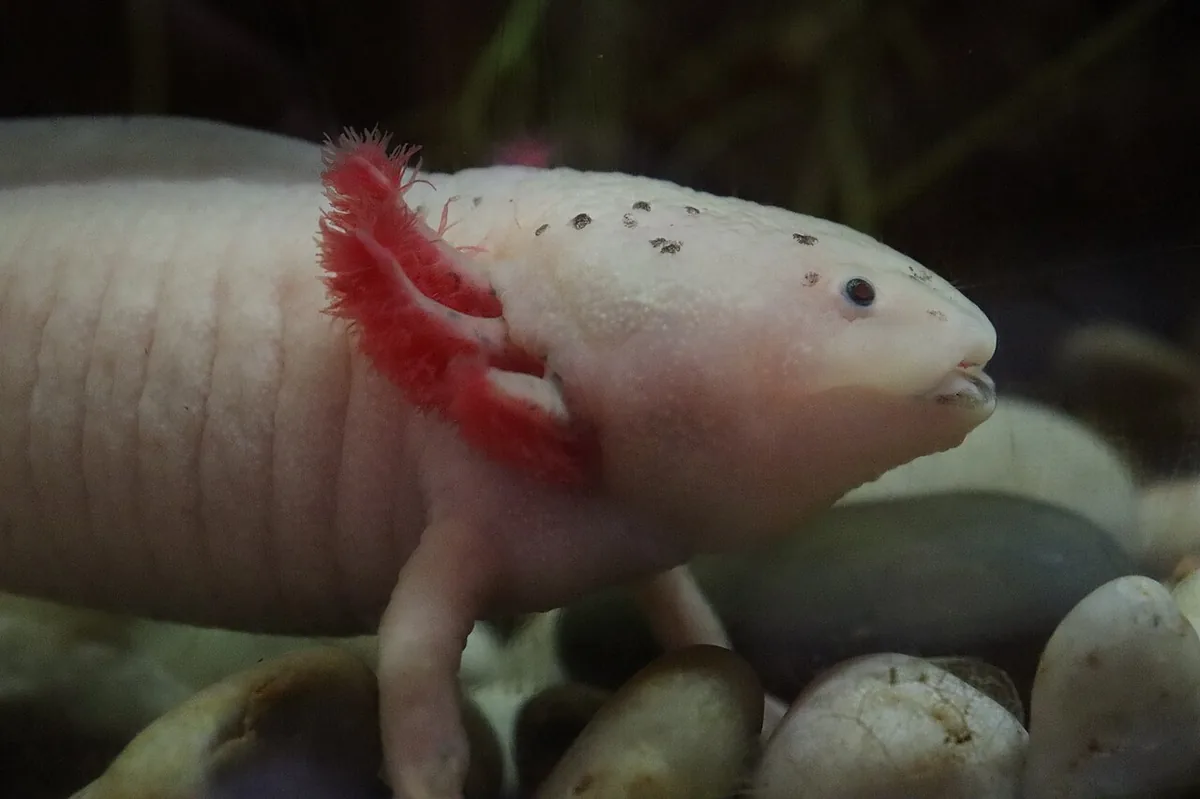
Axolotl tank guidance gives a 20-gallon long as a minimum for a single adult, with floor space mattering far more than height because they are bottom-dwellers. Temperature, though, is the thing that decides whether an axolotl thrives.
What published sources give
| Figure | Size | Notes |
|---|---|---|
| Single adult minimum | 20-gallon long | Floor space matters more than height |
| Why 20 gallons | Stable water parameters | Smaller volumes swing in ammonia and nitrite |
| Orientation | Bottom-dwelling; they do not use vertical space | Unlike fish |
Checked September 20, 2026. Where sources differ the range is shown rather than averaged. These are the figures published as minimums; none of them is a maximum.
What changes as they grow
Juvenile
Smaller volumes are workable but swing faster in water chemistry, which is the argument for starting at 20 gallons.
Adult
A 20-gallon long as the published minimum for one animal. More volume buys stability rather than swimming room, since axolotls walk the bottom.
Enclosure mistakes specific to this species
Untreated tap water, or residue on anything that goes in
Amphibian skin is highly permeable and absorbs what it touches. Chlorine and chloramine in tap water, soap residue on decor, and hand lotion on a keeper's fingers all reach the bloodstream in a way they never would with a reptile. Dechlorinate everything and rinse anything new.
Letting the tank run warm
This is the axolotl-defining problem. They are cold-water animals, and a tank in a heated room drifts into temperatures that cause real physiological stress. Cooling, not heating, is the equipment question with this species.
Fine gravel substrate
Axolotls feed by suction and swallow substrate along with food. Gravel small enough to ingest is a recognised impaction risk; bare bottom or fine sand are the usual alternatives.
Strong filter flow
They come from still water and are poor swimmers. A filter producing noticeable current stresses them, so output needs baffling even when the filtration itself is appropriate.
Enclosure hazards that apply to almost every setup
Five hazards come up across nearly every species on this site: contact burns from unguarded heat, UVB that never reaches the animal, cutting ventilation to hold humidity, unsecured decor, and trusting a bulb's wattage instead of a thermometer. They are set out in full, with sources, on our enclosure hazards page, which is worth reading once against any setup including one that looks finished.
Signs the enclosure is wrong
Animals tell you about their housing through behaviour before they tell you through illness. None of these is a diagnosis; each is a reason to look at the enclosure and, where noted, to call a vet.
| What you see | What it can mean |
|---|---|
| Curled or forward-swept gills | Classic stress signal: check temperature, flow and water quality first. |
| Floating persistently, or refusing to settle | Often water quality or temperature. |
| Reduced appetite in a settled animal | Temperature is the usual cause before anything else. |
| Substrate visible in the mouth after feeding | Change the substrate or feed from a dish. |
Common questions
How big a tank does an axolotl need?
A 20-gallon long is the commonly published minimum for a single adult. Floor space matters far more than height, because axolotls are bottom-dwellers that do not use vertical swimming room the way fish do.
Why does tank size matter for axolotls?
Beyond space, volume buys stability. Larger volumes resist sudden ammonia and nitrite spikes from an animal that produces a lot of waste, which is a large part of why 20 gallons is given as the floor.
What substrate is safe for axolotls?
Bare bottom or fine sand are the usual recommendations. Gravel small enough to be swallowed is a recognised impaction risk, because axolotls feed by suction and take in whatever is around the food.