Pancake Tortoise Care Guide
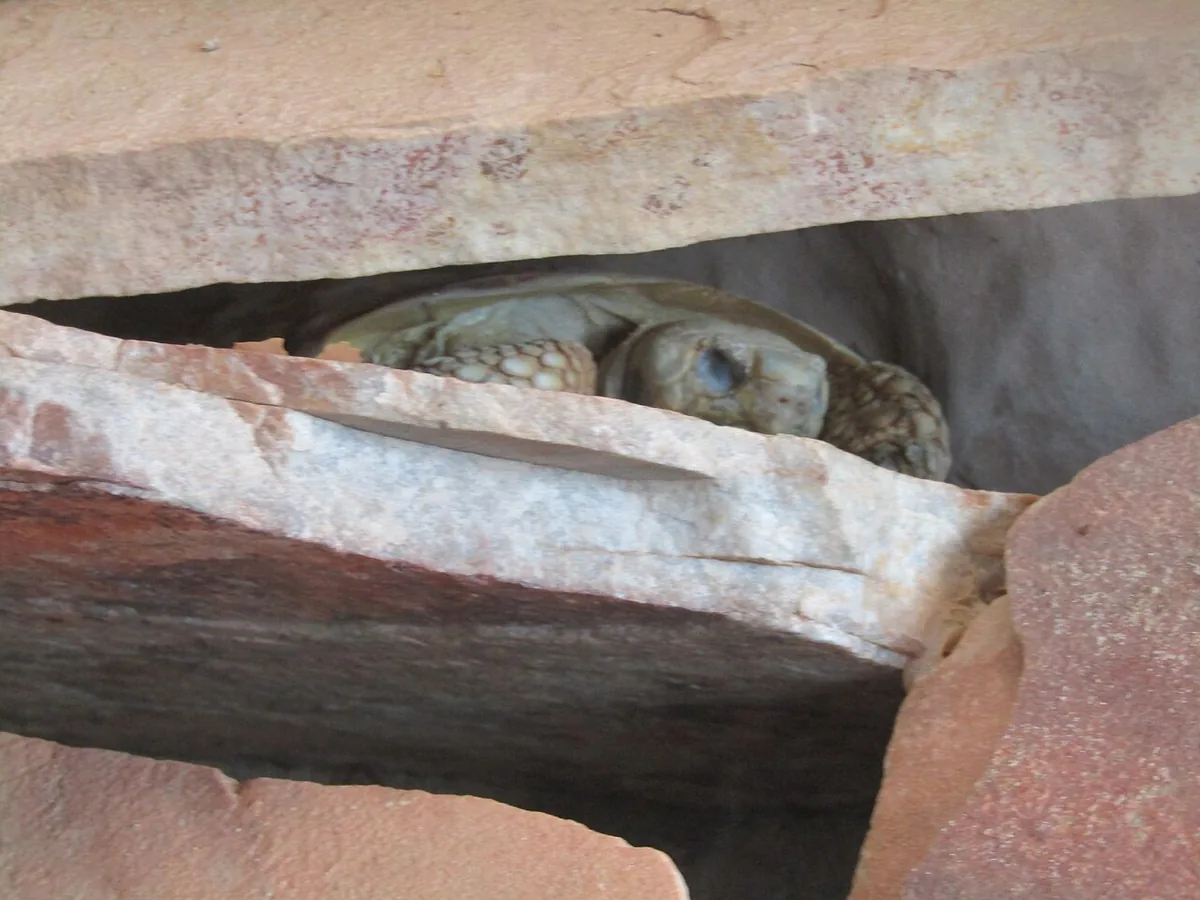
A small East African tortoise built for one job: wedging into rock crevices. The shell is flat and genuinely flexible, which is normal anatomy rather than a deficiency. It climbs, it hides in tight gaps, and almost everything about keeping it differs from keeping a grazing tortoise.
Pancake Tortoise at a glance
| Adult size | Carapace about 17-18 cm (7 in) |
| Adult weight | Rarely over 500 g |
| Lifespan | 25+ years |
| Enclosure | Minimum about 4 x 2 ft for a pair, walls at least 12 in |
| Furnishing | Stacked flat rock, secured, with crevices the animal can wedge into |
| Diet | Grasses and weeds; a high-fibre, low-protein grazing diet |
| Legal status | CITES Appendix I |
| Experience | Intermediate |
What most pancake tortoise care sheets get wrong
These are the errors that show up most often in secondary care sheets and forum advice. Each one is a real welfare issue, not a preference.
Most care sheets still call it CITES Appendix II. That changed in 2019.
The pancake tortoise was transferred from Appendix II to Appendix I at the eighteenth Conference of the Parties, on a proposal from Kenya and the United States, accepted on 26 August 2019. Appendix I is the strictest tier and commercial international trade in wild-caught animals is prohibited. A great deal of published care content predates that decision and still describes the older status, including reference accounts written in 2018. Check the paperwork on any animal offered to you.
The soft, flexible shell is the point, not a defect.
New keepers see a tortoise shell that gives under light pressure and reasonably assume metabolic bone disease. In this species the flattened, pliable shell is the defining adaptation: it lets the animal compress into narrow gaps between exfoliating rock slabs, which no other tortoise can do. Knowing the difference matters, because real MBD does occur in captive tortoises and the two need telling apart by a vet rather than by feel.
It is a rock specialist, so a flat open pen is the wrong enclosure.
The standard tortoise setup is floor space and a grazing area. A pancake tortoise wants stacked, stable flat rock with crevices it can wedge into, and it will climb. Rockwork has to be bedded so it cannot shift or topple onto the animal, and anything it can climb it can also fall from, so height needs thinking about rather than ignoring.
Why keep a pancake tortoise
- Nothing else in the hobby looks or moves like it
- Small adult size for a tortoise, so the footprint is manageable
- Genuinely active and a capable climber, unlike most tortoises
- Long-lived without reaching the multi-decade commitment of a sulcata
Why you might not want one
- CITES Appendix I paperwork is real, and provenance must be documented
- A climbing animal in a tortoise pen will fall; height and rock stability have to be managed
- Its specialised habitat makes it less forgiving of a generic tortoise setup
- Wild populations are Critically Endangered, so where your animal came from matters
Common questions
How big does a pancake tortoise get?
The carapace reaches roughly 17 to 18 centimetres, about seven inches, and adults rarely weigh more than 500 grams. That makes it one of the smaller tortoises kept, and the flat profile makes it look smaller still.
Why is a pancake tortoise's shell soft?
Because that is its main adaptation. The flattened, flexible shell lets it wedge into narrow crevices between rock slabs, an escape route no other tortoise can use. It is normal anatomy for this species, unlike shell softness in other tortoises, which can indicate metabolic bone disease and needs a vet.
Is the pancake tortoise endangered?
Yes. The IUCN lists it as Critically Endangered, and CITES moved it from Appendix II to Appendix I at CoP18 in a decision accepted on 26 August 2019. Populations are severely fragmented across Kenya, Tanzania and Zambia, and collection for trade is a documented pressure.
How long do pancake tortoises live?
Over 25 years in captivity has been reported, with wild estimates in a similar range and beyond. They reach sexual maturity at roughly 5 to 9 years depending on sex and growth rate, so this is a long commitment even though the animal stays small.
What do pancake tortoises eat?
A high-fibre, low-protein grazing diet of grasses and weeds, much like other arid-habitat tortoises. The difference between this species and the others is where it lives and how it shelters, not what it eats.