Rough Green Snake Care Guide
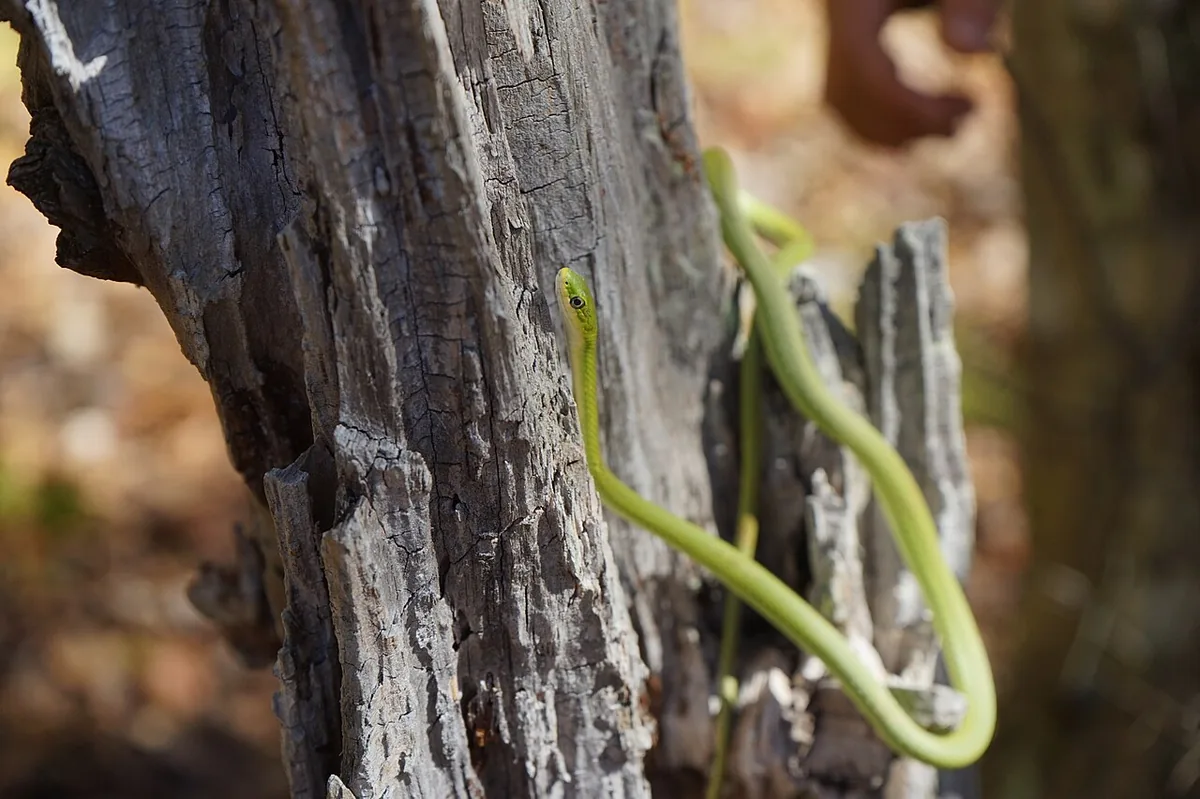
A slender, vivid green North American native and one of very few commonly kept colubrids that does not eat rodents. It is an insectivore. It is also mostly sold wild-caught, which is the single biggest reason these snakes fail in captivity.
Rough Green Snake at a glance
| Adult size | 22-36 in (56-91 cm), very slender |
| Lifespan | 8-15 years captive bred; often under 2 years wild caught |
| Enclosure | Tall and planted; vertical space and thin perches matter more than floor area |
| Diet | Soft-bodied invertebrates: crickets, small roaches, silkworms, caterpillars |
| Humidity | Moderate, with regular misting and good ventilation |
| Handling | Minimal; it is a display species |
| Experience | Intermediate |
What most rough green snake care sheets get wrong
These are the errors that show up most often in secondary care sheets and forum advice. Each one is a real welfare issue, not a preference.
This is not a beginner snake because it is cheap and small.
Rough green snakes are inexpensive and often sold alongside beginner colubrids, which puts them in the hands of keepers expecting corn-snake husbandry. They are not corn snakes. They eat insects, they stress easily, they are too slender to carry much reserve if feeding stops, and the commonly sold animals are wild caught. Low price is a function of collection cost, not of how easy the animal is to keep.
Wild caught versus captive bred changes the lifespan by years.
Published keeping accounts put captive-bred animals at roughly 8 to 15 years, while wild-caught individuals frequently do not survive their first two years in captivity. The usual causes are the same each time: capture stress, dehydration, internal parasites and a refusal to feed in an unfamiliar setup. Ask where the animal came from before anything else, and treat an unclear answer as a wild-caught answer.
A rodent-feeding plan does not apply here.
Nearly every care guide a new snake keeper reads assumes frozen-thawed rodents. This species eats soft-bodied invertebrates: crickets, small roaches, silkworms and caterpillars. That means a live feeder routine, gut-loading, and supplementation decisions that rodent-fed snakes never require.
Why keep a rough green snake
- A genuinely insectivorous snake, so no rodent feeding and no freezer full of mice
- Striking colour and a slender, graceful build
- Small footprint for a snake of its length
- Active and visible by day in a well-planted enclosure
Why you might not want one
- Most available animals are wild caught and arrive stressed, dehydrated and parasitised
- Feeder insects are an ongoing routine, not an occasional errand
- Nervous and easily stressed; not a handling snake
- The slender build leaves very little margin when an animal goes off food
Common questions
What do rough green snakes eat?
Soft-bodied invertebrates. In captivity that typically means appropriately sized crickets, small roaches, silkworms and similar captive-produced feeders. They are insectivorous specialists and one of very few colubrids kept in the hobby that does not take rodents at all.
How big do rough green snakes get?
Adults reach roughly 22 to 36 inches, around 56 to 91 centimetres, and females run larger than males. They are extremely slender for that length, which is why a small drop in condition shows quickly.
How long do rough green snakes live?
Captive-bred animals commonly reach 8 to 15 years. Wild-caught animals frequently die within the first two years, usually from a combination of capture stress, dehydration, parasites and failure to start feeding. The gap between those two numbers is the most important fact about this species.
Are rough green snakes good for handling?
Not really. They are nervous, very slender and easily stressed, and they do better as a display animal in a planted enclosure than as a snake handled regularly. Keepers who want a snake to hold are better served by a sturdier species.
Are rough green snakes wild caught?
Most of the ones offered for sale are. Captive-bred animals exist but are less common and cost more, and the price difference buys a dramatically better survival rate. Ask the seller directly, and if the answer is vague, assume wild caught.