What do milk snakes eat?
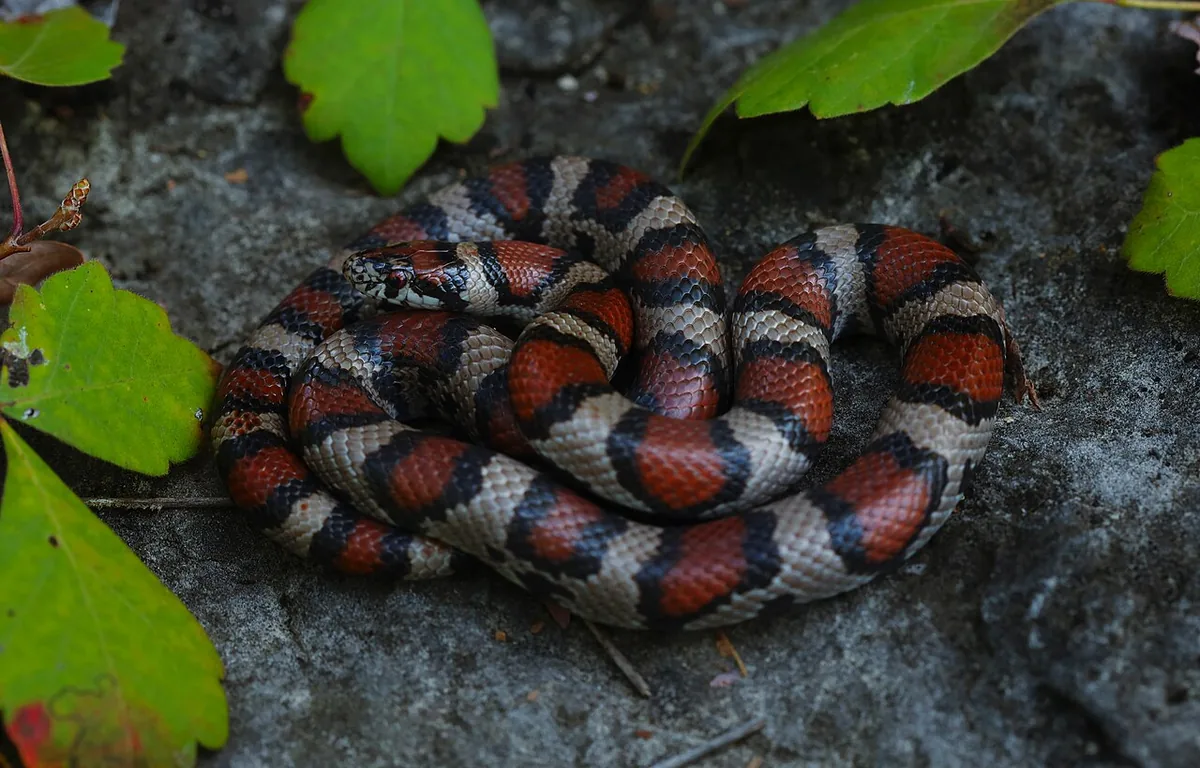
The short answer
Milk snakes eat whole rodents in captivity. They belong to the genus Lampropeltis alongside kingsnakes, and while they are less committed snake-eaters than a California kingsnake, they can still show cannibalistic behaviour when housed together. Adult size varies a great deal by subspecies, which changes what an appropriate meal looks like.
Feeding schedule by age
| Life stage | Diet balance | How often | Notes |
|---|---|---|---|
| Hatchling | Pinky mouse | Every 5-7 days | Hatchlings can be small and delicate |
| Juvenile | Fuzzy to hopper | Every 7 days | Size up by girth |
| Adult | Mouse, or small rat in larger subspecies | Every 7-14 days | Depends heavily on subspecies |
What to feed
| Food | Role | Why |
|---|---|---|
| Frozen-thawed rodents | Staple | Safer than live; thaw in the fridge, warm in warm not hot water |
| Mice | Staple | Suits most subspecies for life |
| Small rats | Larger subspecies | For the bigger milk snakes only |
What never to feed
Items in this table are either outright toxic or cause predictable long-term harm. This is the part of the page worth reading twice.
| Do not feed | Why |
|---|---|
| Live prey left unattended | Rodents bite and can seriously wound or kill a snake. |
| Prey wider than the snake's thickest point | Regurgitation and injury risk. |
| Wild-caught rodents | Parasite, disease and rodenticide risk. |
| Meat, eggs or other substitutes | Snakes need whole prey for complete nutrition. |
| Housing two milk snakes together | Cannibalism risk within Lampropeltis. |
| Assuming one adult size for all milk snakes | Subspecies differ enormously. |
Where good sources disagree
Care sheets do not all say the same thing, and pretending otherwise helps nobody. These are the real points of difference between the sources cited at the foot of this page, and what we think the safe reading is.
How cannibalistic milk snakes actually are.
Kingsnakes are the committed snake-eaters of the genus and milk snakes are less so, which leads some keepers to treat cohabitation as lower risk. Reports of cannibalism in cohoused milk snakes exist regardless, and since the downside is a dead animal, single housing remains the standard recommendation.
What most milk snake feeding advice gets wrong
"Milk snake" covers a lot of different snakes.
Lampropeltis triangulum has historically included many subspecies varying from roughly two feet to over five. A feeding chart written for a Pueblan milk snake does not fit a black milk snake. Find out which one you have before sizing prey, and size by the animal in front of you rather than by the common name.
They are Lampropeltis, so treat housing accordingly.
The genus that gave us the snake-eating kingsnake also gave us milk snakes. Even though they are less committed to it, the safe assumption is the same: one snake, one enclosure, and wash your hands between handling different animals.
Common questions
What do milk snakes eat?
Appropriately sized rodents, usually mice, offered frozen-thawed. Larger subspecies may take small rats as adults. No supplementation is required, and whole prey provides complete nutrition.
Can milk snakes live together?
They should not. Milk snakes belong to the genus Lampropeltis, which includes the snake-eating kingsnakes, and cannibalism among cohoused animals has been reported. Single housing is the standard and safest arrangement.
How big do milk snakes get, and how does that change feeding?
It depends entirely on subspecies, which range from roughly two feet to over five. That range changes appropriate prey size substantially, so size meals against your individual animal's girth and weight rather than against a generic milk snake chart.