← California Kingsnake care guide
What do California kingsnakes eat?
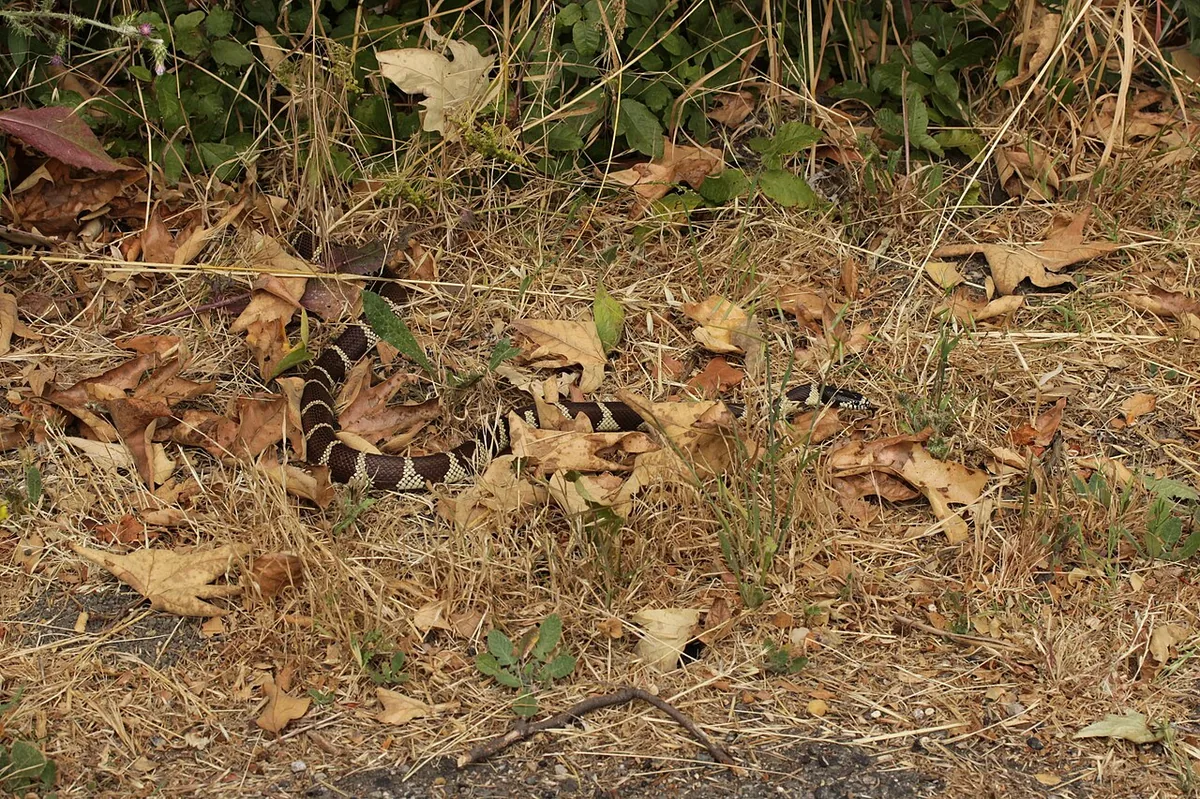
The short answer
California kingsnakes are generalist predators, and in the wild other snakes make up roughly 29% of their diet, alongside mammals, lizards and birds. They are resistant to rattlesnake venom and hunt other snakes readily. In captivity they eat rodents, but that ophiophagy is exactly why two kingsnakes must never share an enclosure.
Feeding schedule by age
| Life stage | Diet balance | How often | Notes |
|---|---|---|---|
| Hatchling | Pinky mouse | Every 5-7 days | Strong feeding response from the start |
| Juvenile | Fuzzy to hopper | Every 7 days | Size up by girth |
| Adult | Adult mouse or small rat | Every 7-14 days | Judge by body condition |
What to feed
| Food | Role | Why |
|---|---|---|
| Frozen-thawed rodents | Staple | Safer than live; thaw in the fridge, warm in warm not hot water |
| Mice | Staple | The usual captive prey across life stages |
| Small rats | Adults | For larger individuals |
| Pre-killed prey | Acceptable | If frozen is unavailable |
What never to feed
Items in this table are either outright toxic or cause predictable long-term harm. This is the part of the page worth reading twice.
| Do not feed | Why |
|---|---|
| Housing two kingsnakes together | Cannibalism risk. This is the species the behaviour is named for. |
| Live prey left unattended | Rodents bite and can seriously wound or kill a snake. |
| Prey wider than the snake's thickest point | Regurgitation and injury risk. |
| Wild-caught rodents | Parasite, disease and rodenticide risk. |
| Meat, eggs or other substitutes | Snakes need whole prey for complete nutrition. |
| Handling two snakes without washing between | Scent transfer can trigger a feeding response. |
Where good sources disagree
Care sheets do not all say the same thing, and pretending otherwise helps nobody. These are the real points of difference between the sources cited at the foot of this page, and what we think the safe reading is.
Whether cohabitation can ever be managed.
Some keepers report housing kingsnakes together without incident for long periods. Against that sits the species' documented ophiophagy and a body of keeper reports of exactly the outcome you would expect. There is no husbandry technique that removes the risk, and the cost of being wrong is one dead snake, so single housing is the standard recommendation.
What most california kingsnake feeding advice gets wrong
Snake-eating is a housing rule, not a feeding instruction.
New keepers sometimes read about ophiophagy and wonder whether they should be offering snakes as food. They should not: a rodent diet is nutritionally complete in captivity. What the behaviour means in practice is that a kingsnake will treat another snake as prey, which makes permanent cohabitation unsafe regardless of enclosure size or how well fed both animals are.
Wash your hands between snakes.
Kingsnakes have a strong feeding response and hunt by scent. If you handle another snake and then reach into a kingsnake's enclosure, you are presenting a prey cue. The same applies to handling rodents before handling the snake.
Common questions
What do California kingsnakes eat?
In captivity, appropriately sized frozen-thawed rodents make a complete diet. In the wild they are generalists: studies put their diet at roughly 29% mammals, 29% other snakes, 25% lizards and 11% birds. They are resistant to rattlesnake venom and hunt other snakes readily.
Can kingsnakes be housed together?
No. Kingsnakes are ophiophagous, meaning they eat other snakes, and cohabitation carries a genuine risk of one constricting, injuring or consuming the other. No enclosure size or feeding schedule removes that risk, so single housing is standard practice for the species.
How often should I feed a California kingsnake?
Hatchlings every five to seven days, juveniles about weekly, and adults every seven to fourteen days. As with other colubrids, judge by body condition rather than appetite, since kingsnakes have a strong feeding response and will readily accept more food than they need.
Do kingsnakes really eat rattlesnakes?
Yes. California kingsnakes are resistant to rattlesnake venom and prey on them in the wild, which is where the name comes from. This has no bearing on captive feeding, where rodents are the appropriate diet, but it explains why the species cannot be trusted with snake tankmates.
What size prey for a kingsnake?
Prey should be no wider than the thickest part of the snake, and roughly 10 to 15% of its body weight. Use both checks together: calculate by weight, then confirm visually against girth before offering.