Leaf-Tailed Gecko Care Guide
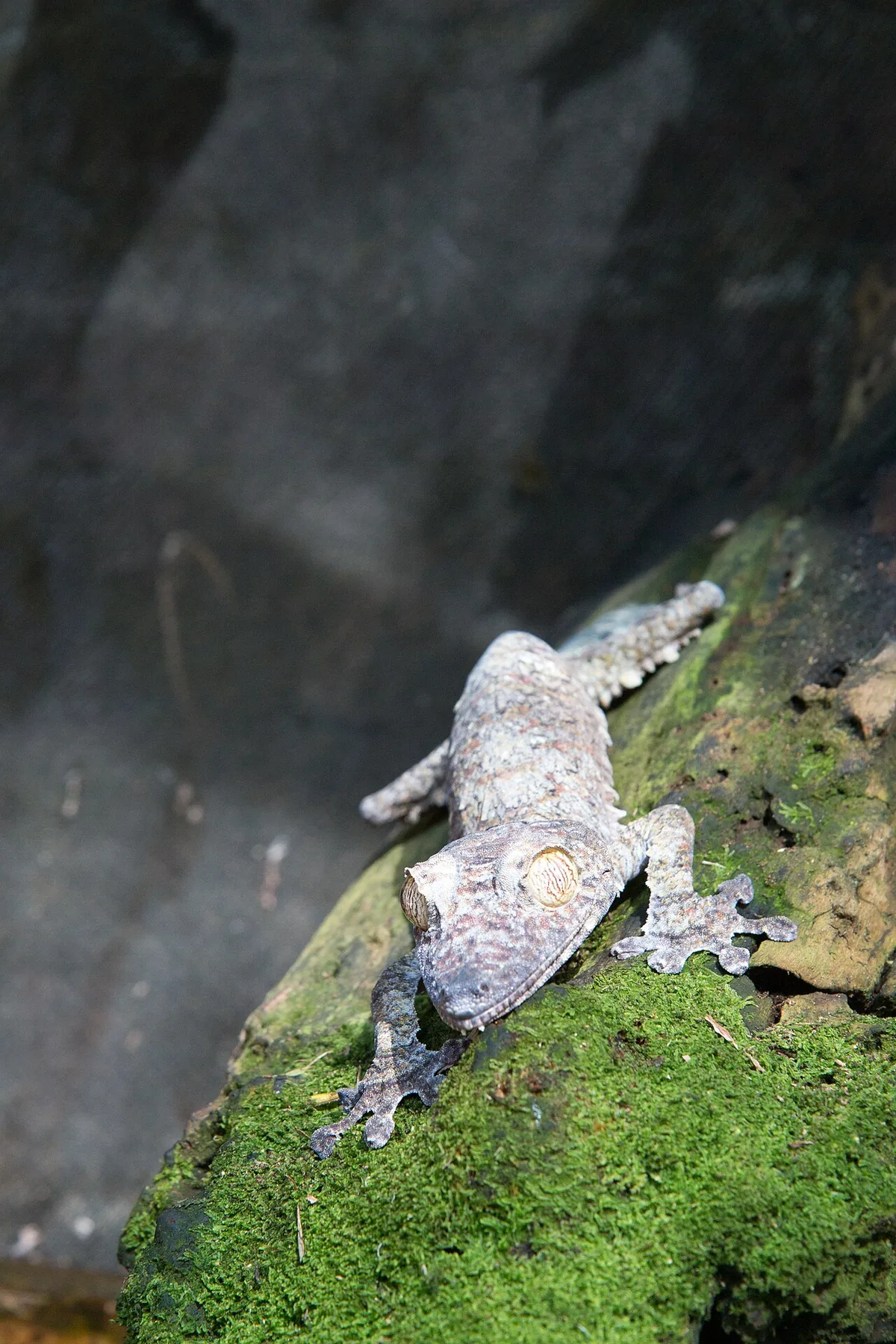
Among the most extraordinary-looking animals kept, and among the least forgiving. Uroplatus is a whole genus with species that differ enormously in size and temperature needs, and most animals offered for sale are wild caught, which roughly halves their life expectancy.
Leaf-Tailed Gecko at a glance
| Adult size | 2.5-3.5 in (U. phantasticus) to 12+ in (U. fimbriatus) |
| Lifespan | Captive bred 7-10 years; wild caught 2-5 |
| Humidity | 75-100% |
| Temperature | Species-specific: ~77-84°F for larger species; 66-78°F for mossy, satanic, Eban's |
| Enclosure | Tall, heavily planted, with vertical bark to rest flat against |
| Water | Night misting; they drink droplets rather than from a bowl |
| Legal status | CITES Appendix II |
| Handling | Display animal only |
| Experience | Advanced |
What most leaf-tailed gecko care sheets get wrong
These are the errors that show up most often in secondary care sheets and forum advice. Each one is a real welfare issue, not a preference.
There is no such thing as leaf-tailed gecko care.
Uroplatus contains species that are not remotely interchangeable. A satanic leaf-tailed gecko is under three and a half inches and wants 72 to 78 degrees by day with a drop to the low sixties at night. A giant leaf-tailed gecko exceeds a foot and tolerates considerably warmer. Buying on appearance and then following a generic genus-level care sheet is how keepers cook a highland species or chill a lowland one. Identify the exact species before anything else.
Wild caught versus captive bred roughly halves the lifespan.
Published keeping accounts put captive-bred Uroplatus at seven to ten years and wild-caught animals at an average of two to five. Most of what is offered for sale, particularly of the larger species, is wild caught. Those animals arrive dehydrated, carrying parasites, and with no experience of a captive enclosure, and the loss rate in the first year reflects it. Captive-bred animals cost more because somebody did the hard part.
They drink from droplets, not a water bowl.
A standing water dish is close to useless for these geckos. They are nocturnal and they drink condensation and misted droplets from leaves and branches, which is why night misting is described as vital rather than optional. A keeper who provides a bowl and a dry enclosure has given the animal no practical way to hydrate.
Why keep a leaf-tailed gecko
- Camouflage unlike anything else kept in the hobby
- A genuine display animal that rewards a well-built planted enclosure
- Captive-bred animals are long-lived at 7 to 10 years
- Enormous variety across the genus in size and appearance
Why you might not want one
- Most animals sold are wild caught, stressed and parasitised
- Humidity has to be high and stable, which is hard in a dry home
- Thin-skinned and fragile; not an animal to handle
- Care requirements differ by species, so a generic care sheet is actively unhelpful
Common questions
How big do leaf-tailed geckos get?
It depends entirely on the species. Uroplatus phantasticus, the satanic leaf-tailed gecko, reaches only about 2.5 to 3.5 inches total length, while Uroplatus fimbriatus, the giant leaf-tailed gecko, exceeds a foot. Treating them as one animal is the commonest error with this genus.
How long do leaf-tailed geckos live?
Captive-bred animals commonly reach seven to ten years. Wild-caught animals average only two to five in captivity, because they arrive stressed, dehydrated and parasitised. The provenance of the animal matters more than almost anything else you will do for it.
Are leaf-tailed geckos wild caught?
Most of what is offered for sale is, particularly among the larger species, where captive-bred animals are rarely available. The genus is listed on CITES Appendix II, so documented captive-bred provenance is both the ethical and the practical choice.
What humidity do leaf-tailed geckos need?
Roughly 75 to 100%, which is high and must be stable. Their skin is thin and they desiccate quickly. Night misting matters as much as the number itself, because that is how they drink.
Are leaf-tailed geckos good for beginners?
No. They are fragile, humidity-critical, species-specific in their temperature needs, and mostly sold wild caught. They are a genuinely advanced animal and a poor first gecko.