What do ackie monitors eat?
The short answer
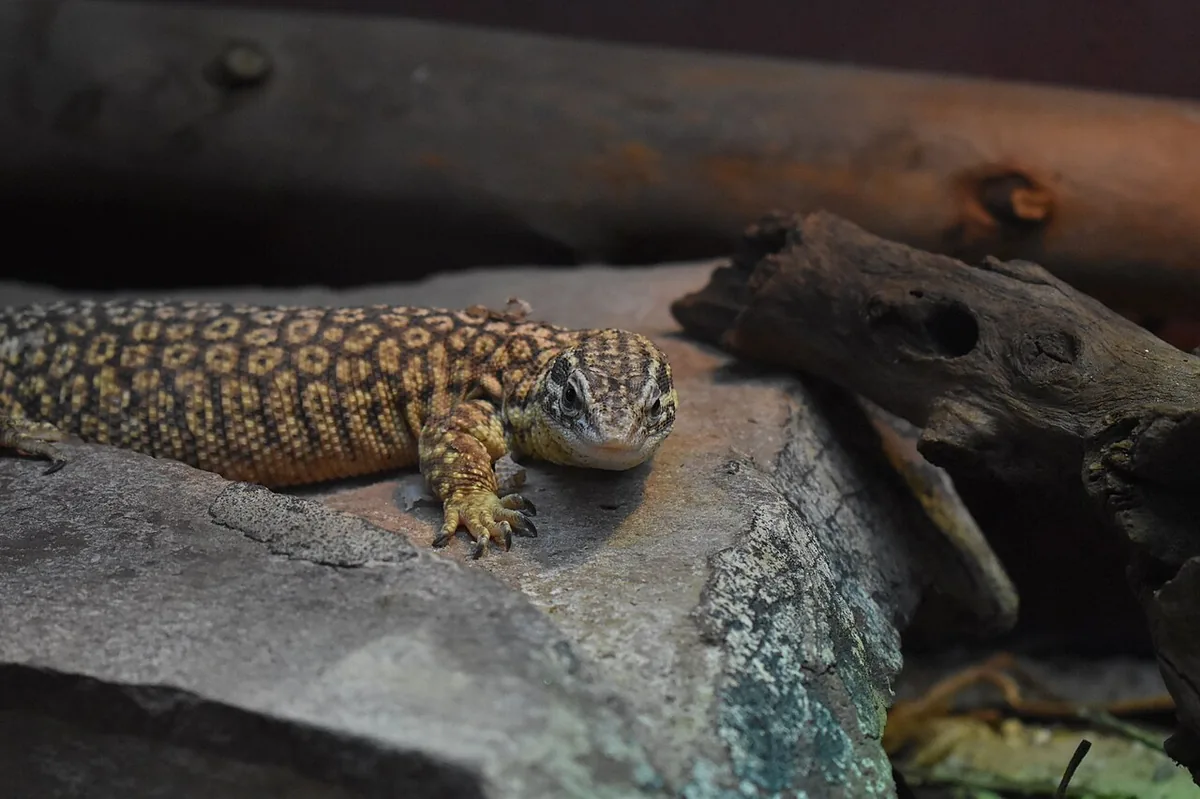
Ackie monitors are small, highly active monitors that remain insectivorous for life. Unlike larger monitors there is no transition to vertebrate prey: crickets, roaches and black soldier fly larvae with regular calcium dusting cover their needs. Their activity level means they eat well and frequently.
Feeding schedule by age
| Life stage | Diet balance | How often | Notes |
|---|---|---|---|
| Juvenile | Insects | Daily | Growing and very active |
| Adult | Insects | Daily to every other day | High activity supports frequent meals |
| All ages | Whole prey | Rarely or never | Not required for this species |
What to feed
| Food | Role | Why |
|---|---|---|
| Dubia roaches | Staple | Excellent protein |
| Crickets and locusts | Staple | Natural prey type; good for scatter-feeding |
| Black soldier fly larvae | Staple | Calcium-rich |
| Snails | Rotation | Good calcium |
| Superworms | Occasional | Higher fat |
| Gut-loaded insects | Requirement | Feed the insects 24-48h before offering |
| Calcium dusting | Requirement | Insects are calcium-poor and phosphorus-rich |
What never to feed
Items in this table are either outright toxic or cause predictable long-term harm. This is the part of the page worth reading twice.
| Do not feed | Why |
|---|---|
| Rodents as a staple | Unnecessary and fattening for a small insectivorous monitor. |
| Wild-caught insects | Pesticide, parasite and toxicity risk. |
| Bowl-only feeding | Misses the foraging enrichment this species clearly benefits from. |
Where good sources disagree
Care sheets do not all say the same thing, and pretending otherwise helps nobody. These are the real points of difference between the sources cited at the foot of this page, and what we think the safe reading is.
Whether adults benefit from occasional whole prey.
Some keepers offer the occasional pinky as variety; many never do and report excellent condition and longevity. Nobody recommends rodents as a staple for this species. Given the fat content issue seen across monitors, the argument for including them at all is weak.
What most ackie monitor feeding advice gets wrong
Do not scale savannah monitor advice down to an ackie.
Larger monitors get fed whole prey, and keepers assume a smaller monitor needs the same on a smaller scale. Ackies stay firmly insectivorous throughout life. A varied, gut-loaded, calcium-dusted insect diet is complete, and adding rodents imports the fat problem without any benefit.
Scatter-feed them.
Ackies are busy, inquisitive foragers. Scattering insects in a substrate-rich enclosure rather than presenting a bowl works with the behaviour, spreads feeding across the day, and keeps a very active animal occupied.
Common questions
What do ackie monitors eat?
Insects, throughout life. Crickets, dubia roaches, locusts and black soldier fly larvae are the staples, gut-loaded and dusted with calcium. Unlike larger monitors, ackies do not need or benefit from a rodent-based diet.
Do ackie monitors need rodents?
No. They remain insectivorous for life, and a varied gut-loaded insect diet with appropriate calcium supplementation is complete. Rodents bring the same high fat content that causes obesity problems in larger monitors, without a nutritional benefit.
How often should I feed an ackie monitor?
Juveniles daily and adults daily to every other day. They are highly active foragers with correspondingly good appetites. Scatter-feeding rather than bowl-feeding suits their behaviour and provides useful enrichment.