American Green Tree Frog Care Guide
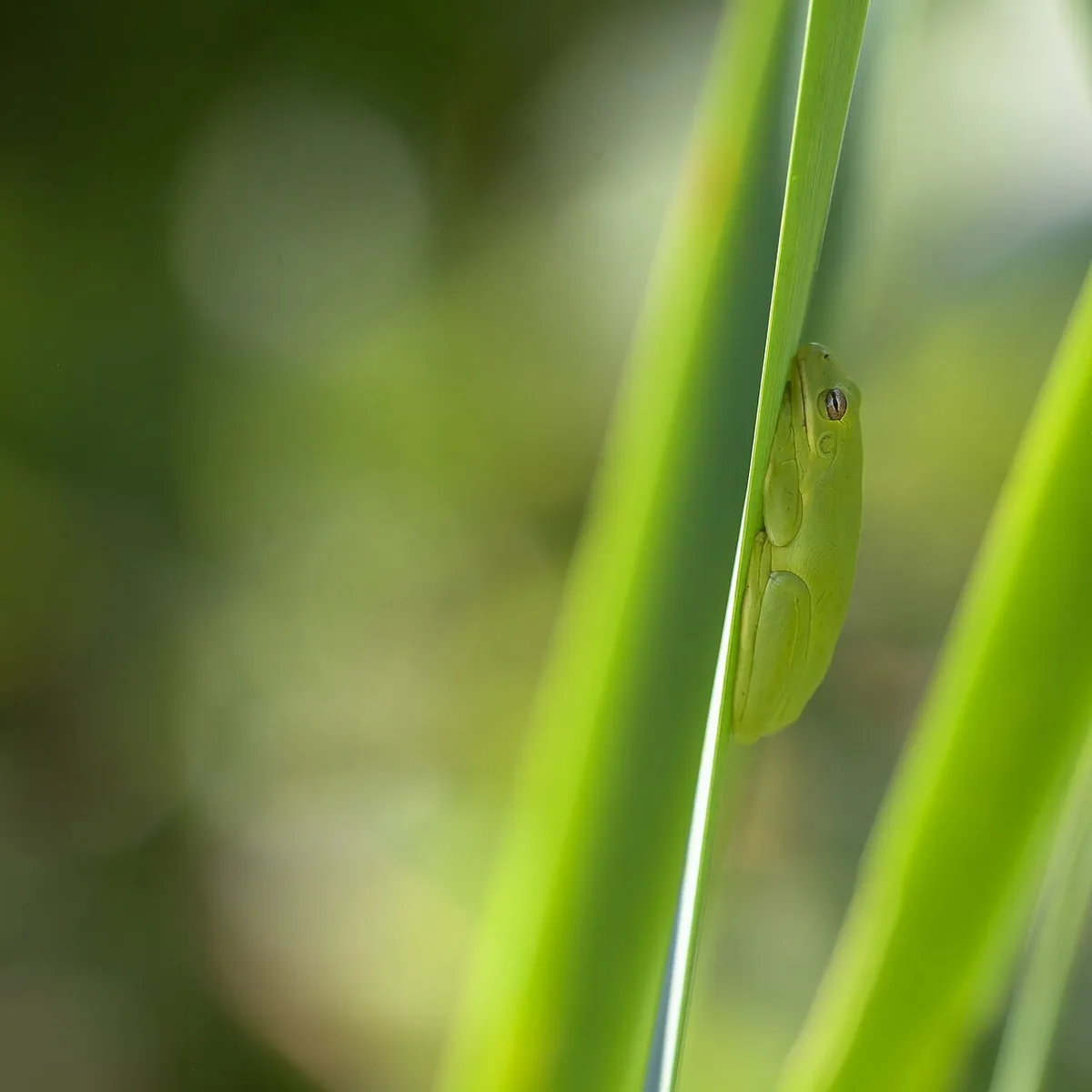
A small, bright green North American native, widely sold and genuinely rewarding in a planted enclosure. It is also tiny, delicate and absorbs what it touches through its skin, which makes the handling question more important here than with most pet amphibians.
American Green Tree Frog at a glance
| Adult size | 1.25-2.5 in (3-6 cm) |
| Lifespan | Commonly 6 years; up to about 10 |
| Enclosure | Tall; roughly 18 x 18 x 24 in for one adult or a small group |
| Day temperature | 72-80°F |
| Night temperature | Down to about 65°F is fine |
| Humidity | About 60-80%, with strong ventilation |
| Diet | Appropriately sized live insects, dusted |
| Handling | Minimal and only with clean, wet, powder-free hands |
| Experience | Beginner to intermediate |
What most american green tree frog care sheets get wrong
These are the errors that show up most often in secondary care sheets and forum advice. Each one is a real welfare issue, not a preference.
The scientific name changed, and both are still in use.
This frog has been reclassified from Hyla cinerea to Dryophytes cinereus. Both names appear across current care sheets, vendor listings and even some reference sites, which makes searching for reliable information harder than it should be. They are the same animal. If you are comparing sources, search both names.
Cheap and common is not the same as low-maintenance.
Green tree frogs are among the least expensive amphibians sold, and the price regularly leads to an animal going home before the enclosure exists. A planted vertical setup holding stable humidity with real ventilation takes time to establish. The frog costs little; the correct enclosure does not, and it should be running before the animal arrives.
Handling is a welfare question, not a preference.
Amphibian skin is permeable and absorbs what it contacts, which means soaps, lotions, residues and salts from human hands all matter. Handling should be rare, brief, and done with clean, wet, powder-free hands or not at all. This is the main reason a frog is a poor choice for someone who wants an animal to interact with physically.
Why keep an american green tree frog
- Bright colour and a classic tree-frog shape at a small adult size
- Suits a planted vertical enclosure, which is enjoyable to build and to look at
- Modest space needs compared with most pet amphibians
- Active and vocal, with a call most people in its range already recognise
Why you might not want one
- Too small and delicate for regular handling
- Live insects are a permanent routine
- Humidity and ventilation have to be balanced, and getting one right while ignoring the other causes problems
- Often sold very cheaply, which invites buying before the enclosure is ready
Common questions
How big do American green tree frogs get?
Adults are small, roughly 1.25 to 2.5 inches, about 3 to 6 centimetres, with females larger and heavier-bodied than males. Their size is the main reason handling is discouraged: there is very little animal to work with.
What temperature and humidity do green tree frogs need?
Daytime temperatures of about 72 to 80 degrees Fahrenheit, dropping to around 65 at night without harm. Humidity should sit roughly between 60 and 80 percent, maintained with misting and paired with strong ventilation, since stagnant humid air causes its own problems.
How long do American green tree frogs live?
Six years is normal in captivity and individuals have reached about ten. They reach adult size and maturity in roughly 10 to 18 months, so most of that lifespan is spent as a full-grown adult.
Can you hold an American green tree frog?
Rarely and briefly, if at all. Amphibian skin is permeable and absorbs residues from human hands, and these frogs are small and easily stressed. Clean, wet, powder-free hands are the minimum if handling is unavoidable. Treat it as a display animal.
Is Hyla cinerea the same as Dryophytes cinereus?
Yes. The species was reclassified, and both names remain in circulation across care sheets and vendor listings. When researching this frog, search both names, because useful sources are split between the two.