← African Dwarf Frog care guide
African Dwarf Frog Enclosure and Habitat
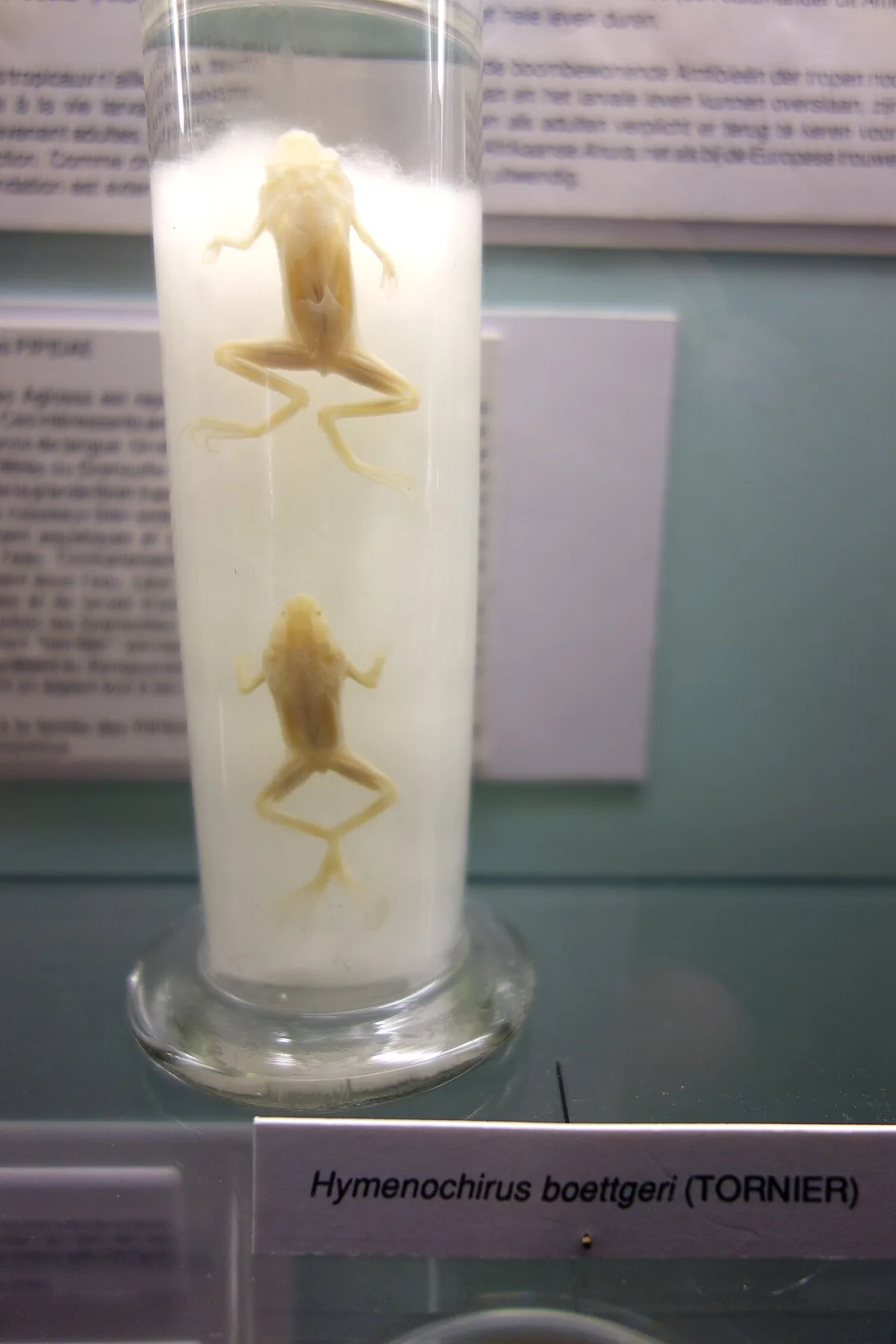
African dwarf frogs are fully aquatic but breathe air, which makes water depth and easy surface access the two things that matter most. The published figure on this site is a 10-gallon for three to five frogs.
What published sources give
| Figure | Size | Notes |
|---|---|---|
| 3-5 frogs | 10 gallon | From this site's care guide |
| Water depth | Shallow enough to surface easily | They are lung-breathers and poor swimmers |
| Tankmates | Problematic | Fish out-compete them for food |
| Filtration | Gentle | Strong flow stresses weak swimmers |
Checked September 20, 2026. Where sources differ the range is shown rather than averaged. These are the figures published as minimums; none of them is a maximum.
What changes as they grow
Juvenile
Tiny and easily out-competed. A species-only setup makes feeding far more reliable.
Adult
A 10-gallon for three to five. Depth and surface access matter more than volume for an air-breathing poor swimmer.
Enclosure mistakes specific to this species
Untreated tap water, or residue on anything that goes in
Amphibian skin is highly permeable and absorbs what it touches. Chlorine and chloramine in tap water, soap residue on decor, and hand lotion on a keeper's fingers all reach the bloodstream in a way they never would with a reptile. Dechlorinate everything and rinse anything new.
Deep water with no easy way up
They breathe air and are not strong swimmers. Deep tanks without plants or decor to climb make surfacing a struggle, and in the worst case a drowning risk.
Keeping them with fish
The most common reason African dwarf frogs die. They are slow and find food by smell, so fish reach it first. Keepers report the frog wasting away for no reason when the cause is simply that it never got fed.
Strong filter flow
Gentle filtration only. A current that a fish enjoys pushes a weak-swimming frog around the tank.
Enclosure hazards that apply to almost every setup
Five hazards come up across nearly every species on this site: contact burns from unguarded heat, UVB that never reaches the animal, cutting ventilation to hold humidity, unsecured decor, and trusting a bulb's wattage instead of a thermometer. They are set out in full, with sources, on our enclosure hazards page, which is worth reading once against any setup including one that looks finished.
Signs the enclosure is wrong
Animals tell you about their housing through behaviour before they tell you through illness. None of these is a diagnosis; each is a reason to look at the enclosure and, where noted, to call a vet.
| What you see | What it can mean |
|---|---|
| Struggling to reach the surface | Water too deep or too little structure. Address immediately. |
| Thinning gradually in a community tank | Almost always feeding competition. |
| Skin lesions or cloudiness | Water quality. Veterinary attention. |
| Being pushed around by filter output | Baffle the flow. |
Common questions
How big a tank do African dwarf frogs need?
A 10-gallon suits three to five frogs. Depth and easy surface access matter more than volume, because they breathe air and are not strong swimmers.
Can African dwarf frogs live with fish?
It usually goes badly. They are slow and find food by smell, so fish reach it first, and the frogs starve gradually while appearing to waste away for no reason. A species-only tank makes feeding far more reliable.
How deep should the water be for African dwarf frogs?
Shallow enough that they can reach the surface easily, with plants or decor to climb. They are lung-breathers and poor swimmers, so deep water without structure is a genuine risk.