Tarantula Care: Start With Sex and Hemisphere
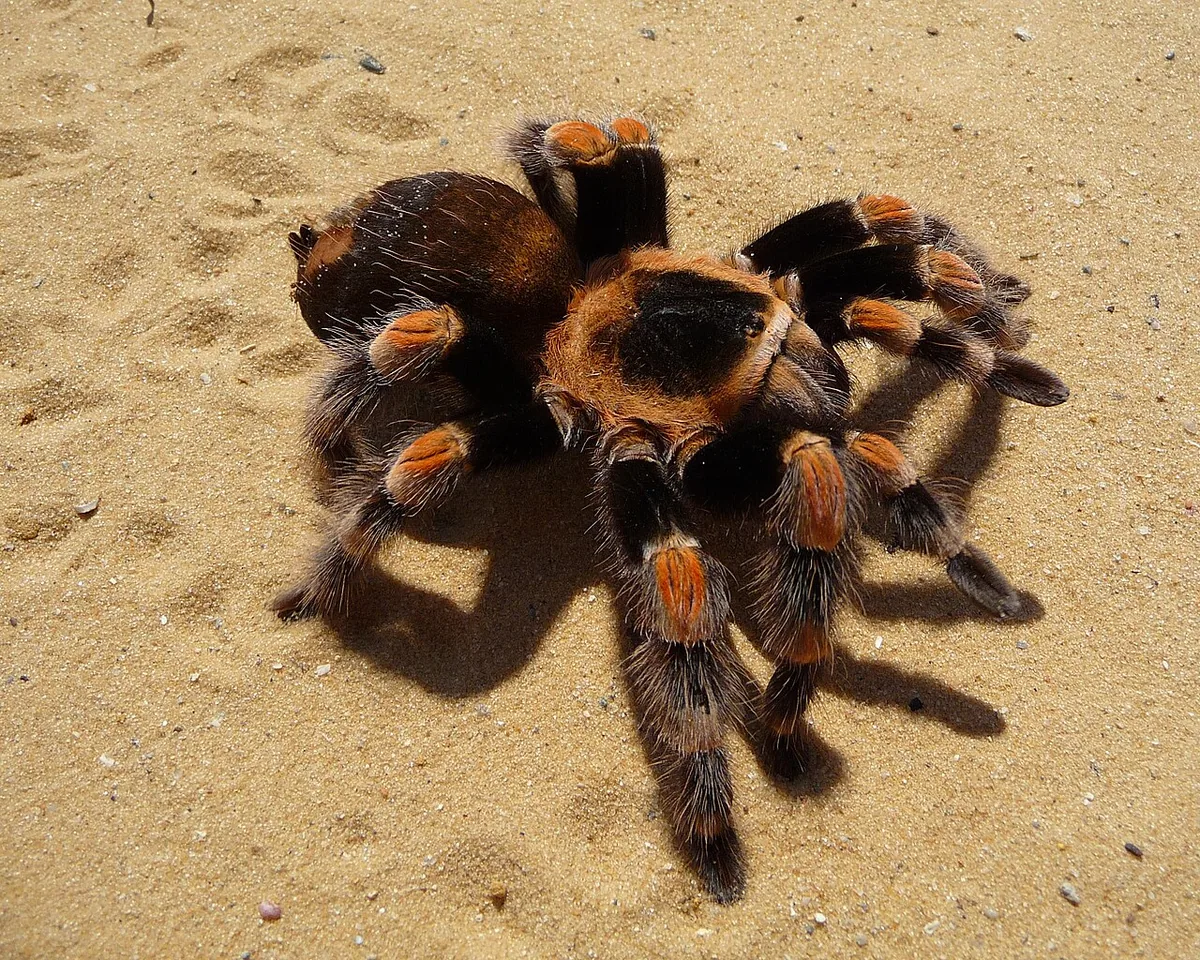
Two questions decide almost everything about keeping a tarantula, and most buyers are not asked either one: is it female or male, and is it New World or Old World.
At a glance
| Lifespan | Females up to ~30 years; males ~7 |
| Humidity | Terrestrial ~50-70%; arboreal ~50-90%, species dependent |
| Enclosure | Terrestrial: floor space and burrowing depth. Arboreal: height and vertical cork |
| Diet | Appropriately sized live insects; adults eat infrequently |
| Molting | Juveniles ~4x/year, adults ~1x/year; no food for 7-10 days after |
| Handling | Not recommended |
| Experience | Beginner for a docile New World terrestrial; advanced for Old World |
Why people keep them
- Genuinely low maintenance once the enclosure is right: adults eat infrequently
- A female is a multi-decade animal, which very few invertebrates are
- Small footprint and no noise, heat lamp or UVB requirement
- Enormous variety across species in colour, size and behaviour
Why you might not want one
- Not an animal to handle, which is the main thing new keepers want to do
- A fall from height can rupture the abdomen and kill an adult
- Old World species are fast, defensive and have medically significant venom
- Molting is a vulnerable period that looks alarming and must not be interfered with
What most care sheets get wrong
The sex of the animal changes the commitment by two decades.
Care sheets quote a lifespan range without saying that it splits almost entirely by sex. Females of many species reach around 30 years with correct care; males commonly reach about 7 and die not long after their final maturing molt. Unsexed spiderlings are sold cheaply and in volume, which means a large share of buyers are making a multi-decade decision or a short one without knowing which. If the lifespan matters to you, buy a sexed female from a seller who will confirm it.
New World and Old World is a safety distinction, not trivia.
New World tarantulas, from the Americas, defend themselves by flicking urticating hairs from the abdomen. Those hairs are irritating, occasionally seriously so if they reach the eyes, but the animal is generally reluctant to bite. Old World species, from Africa and Asia, have no urticating hairs at all. They are faster, more defensive, and they bite, and several have venom that produces genuinely severe effects. A beginner guide that does not make this distinction up front is not a beginner guide.
Terrestrial and arboreal care sheets are not interchangeable.
They get filed together as tarantulas and kept as though the husbandry is one thing. Terrestrial species want floor area and substrate depth to burrow into, at roughly 50 to 70% humidity. Arboreal species want height, vertical cork bark to anchor a tube web, and generally higher humidity, into the 50 to 90% range. Arboreals also tend to be faster and quicker growing. Using a terrestrial setup for an arboreal species produces a stressed animal in the wrong shaped box.
Molting is not illness, and it is the one time to do nothing.
A tarantula approaching a molt goes off food, may develop a bald patch on the abdomen, and eventually lies on its back, which alarms every new keeper who sees it. That is normal. Do not intervene, do not move the animal, and do not offer food for seven to ten days afterwards while the new fangs harden. A live feeder left in the enclosure with a freshly molted, soft-bodied spider is a genuine danger to it.
Common questions
How long do tarantulas live?
It depends almost entirely on sex. Females of many species reach up to about 30 years with correct care, while males commonly live around 7 and die shortly after their final molt. Buying an unsexed spiderling means not knowing which commitment you have made.
Are tarantulas dangerous?
No tarantula bite is considered life-threatening to a healthy adult human, but the risk varies a lot. New World species flick irritating urticating hairs and rarely bite. Old World species have no such hairs, are faster and more defensive, and several produce venom with genuinely severe local and systemic effects. Species choice matters more than the word tarantula.
Can you handle a tarantula?
You can, but there is little reason to and real downside. Handling gains the spider nothing, a startled animal may flick hairs or bite, and a fall from even modest height can rupture the abdomen and kill an adult. Treat it as a display animal.
Why is my tarantula on its back?
It is almost certainly molting, which is normal and not a sign of death. Leave it alone entirely, remove any live feeders from the enclosure, and do not offer food for seven to ten days afterwards while the fangs harden.
What is the difference between New World and Old World tarantulas?
Geography, and with it defence. New World species come from the Americas and have urticating hairs they flick when threatened. Old World species come from Africa and Asia, lack those hairs, and rely on speed and biting. Old World species are generally not a beginner animal.
Sources
- Tarantula care — Tree of Life Exotics (veterinary)
- Terrestrial tarantula care sheet — Petco care sheets
- Arboreal tarantula care sheet — Petco care sheets
- ARAV, find a reptile and amphibian veterinarian
Related reading
All invertebrates · husbandry fundamentals · feeder insect nutrition