Praying Mantis Care: A Pet That Lives Months, Not Years
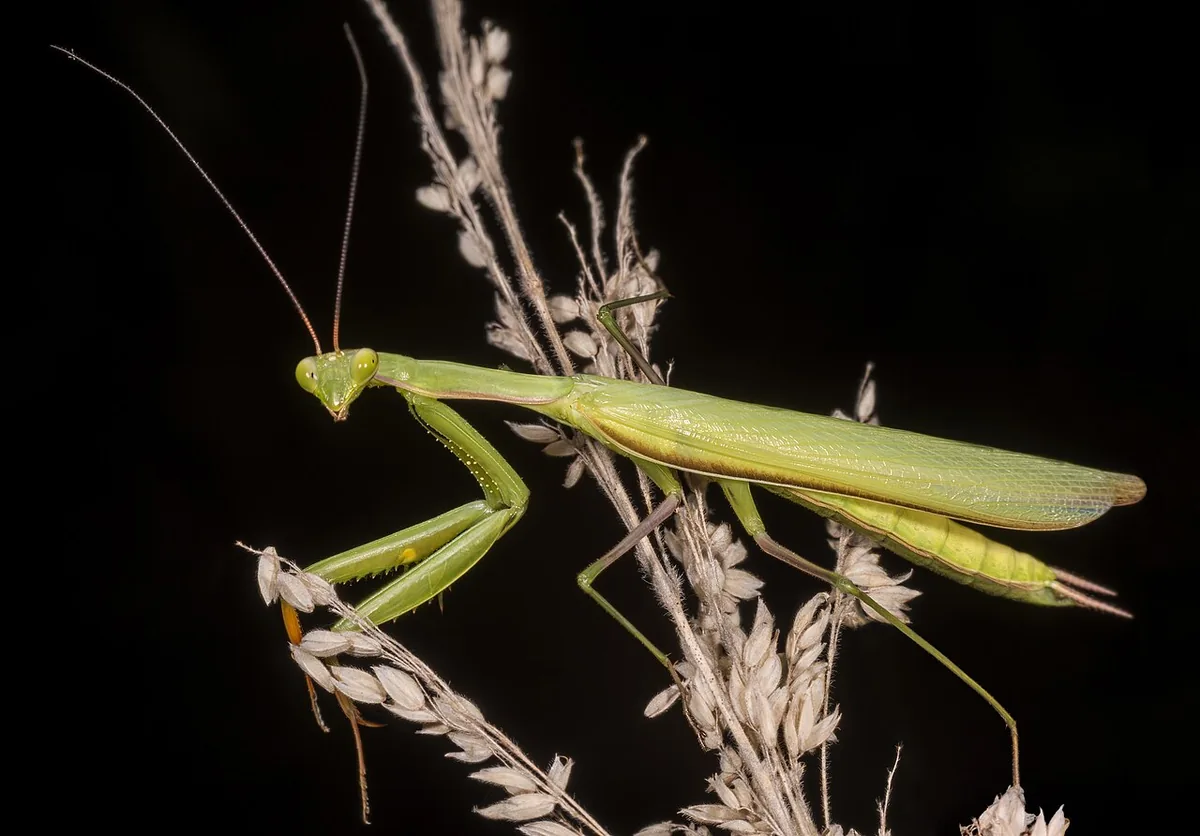
A praying mantis is one of the few animals in this hobby where the honest headline is how short the relationship will be. Most adults live well under a year.
At a glance
| Lifespan | Commonly 6-12 months in captivity; up to ~2 years |
| Enclosure | At least ~3x the mantis's length in height, with mesh or branches to hang from |
| Humidity | ~50-65% for commonly kept species; light daily misting |
| Diet | Live insects every 2 days or so; fruit flies for nymphs |
| Molting | 5-10 nymph molts; needs vertical clearance and stable humidity |
| Handling | Tolerated briefly by many individuals, but they are fragile |
| Experience | Beginner, with the lifespan understood up front |
Why people keep them
- Genuinely engaging to watch: they track movement and hunt visibly
- Tiny footprint and very low cost to house
- Short commitment, which suits someone who cannot promise a decade
- A good first invertebrate for a supervised child, with adult help on feeding
Why you might not want one
- The lifespan is months. For many keepers, and particularly for children, that is the hard part
- Live feeders are required; they will not take dead food
- Fragile, and a failed molt is often fatal and not always preventable
- Most species cannot be housed together without cannibalism
What most care sheets get wrong
The lifespan is the single most under-communicated fact about this animal.
A mantis is sold as a pet insect alongside animals that live for years, and the adult stage commonly lasts a few months. Six to twelve months in captivity is typical, with up to about two years at the outer edge. That is not a flaw, but it should be said before purchase rather than discovered. It matters most when the mantis is bought for a child, who will usually experience the full life cycle within a school year.
Enclosure height is a molting requirement, not a preference.
A mantis molts by hanging upside down and drawing itself out of the old exoskeleton, which needs clear vertical space beneath it and something secure to grip. Enclosures sold as cubes, or set up with the lid too close to the perch, cause the commonest fatal accident in the hobby: a mantis that cannot complete its molt and emerges with bent legs and crumpled wings, or does not emerge at all. Height of roughly three times the animal's body length, with mesh or branches at the top, is the usual guideline.
Humidity failures show up as molting failures.
If an enclosure is too dry the old exoskeleton does not release cleanly. Keepers often diagnose this backwards, treating a bad molt as bad luck and leaving the humidity where it was. Around 50 to 65% for commonly kept species, maintained with a light daily mist rather than a soaking, is the usual target. Stable is more important than high.
Common questions
How long does a pet praying mantis live?
Commonly six to twelve months in captivity, with some individuals reaching around two years. Females consistently outlive males. The short lifespan is the most important thing to understand before buying one, particularly for a child.
What do praying mantises eat?
Live insects, every couple of days. Fruit flies suit nymphs, and the feeder size increases as the mantis grows. They hunt by movement and generally will not take dead prey.
Why did my mantis die during molting?
Failed molts are the usual cause of death in captive mantises, and the two common causes are insufficient vertical space and humidity that is too low. The animal must hang upside down with clear room beneath it, and the old exoskeleton has to release cleanly.
How big should a praying mantis enclosure be?
Height matters more than floor area. A common guideline is at least three times the mantis's body length in height, with mesh or branches at the top to hang from while molting.
Can you keep two praying mantises together?
Generally no. Most species are cannibalistic and will eat each other regardless of how well fed they are. They are kept individually unless you are deliberately breeding and know the procedure.
Sources
- How to care for your Chinese mantis — Reptile Supply
- Praying mantis care — InvertKeeping
- Caring for a praying mantis in captivity — Swell Reptiles
- ARAV, find a reptile and amphibian veterinarian
Related reading
All invertebrates · husbandry fundamentals · feeder insect nutrition