Isopods: Choosing a Clean-Up Crew That Matches Your Enclosure
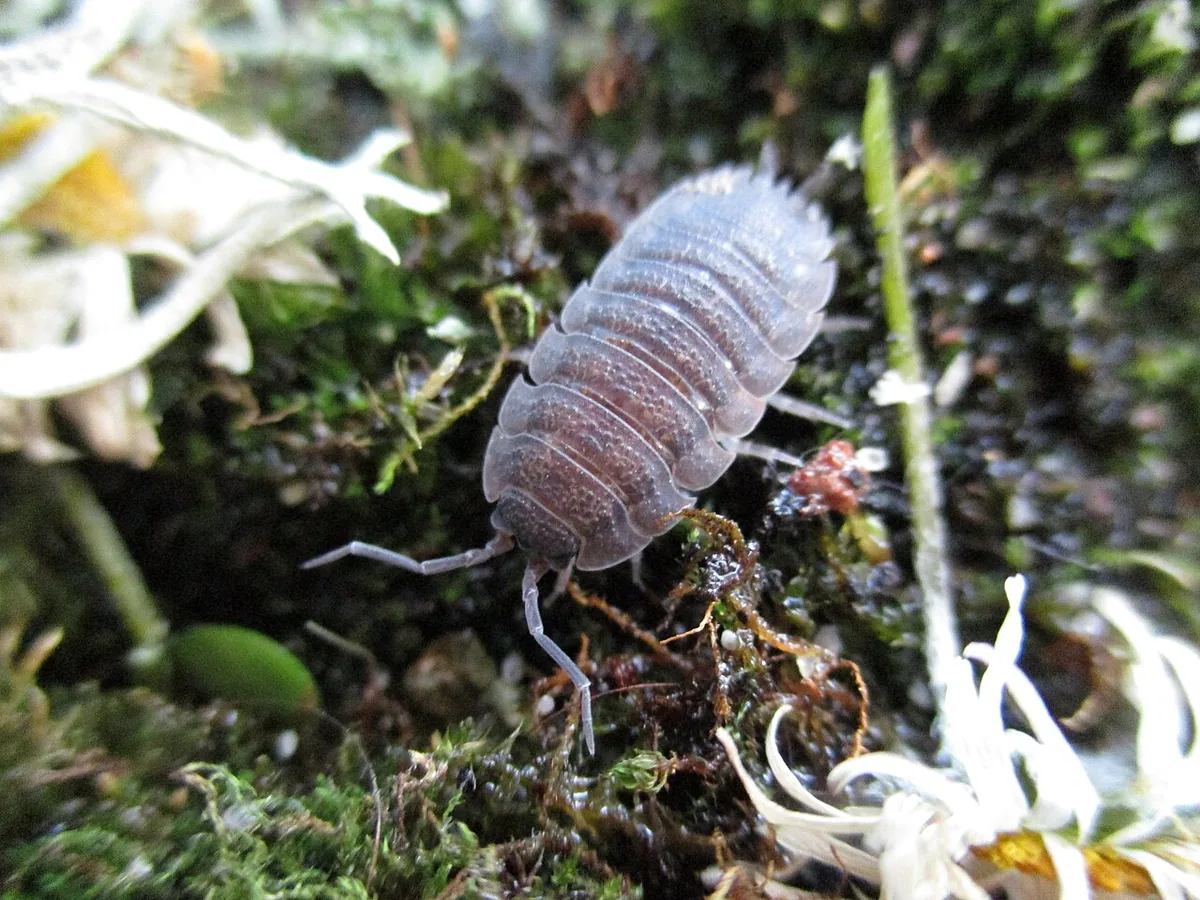
Isopods get sold as a clean-up crew, which makes them sound like equipment. They are animals, the species differ substantially, and the one that works in a humid tropical build will struggle in an arid one.
At a glance
| Role | Break down faeces, shed skin, uneaten food and decaying plant matter |
| Partner species | Springtails (Folsomia candida) for mould and fine debris |
| Humidity | Most species 70-90%; some tolerate drier |
| Food | Leaf litter, decaying wood, enclosure waste; supplement protein for larger species |
| Arid-setup pick | Powder orange (Porcellionides pruinosus) |
| Heavy-duty pick | Dairy cow (Porcellio laevis) |
| Experience | Beginner |
Why people keep them
- They turn a closed enclosure into something that largely cleans itself
- Reduce mould, odour and spot-cleaning once established
- Cheap, self-sustaining, and they reproduce without intervention
- Genuinely interesting to keep in their own right, which is why species cultures sell
Why you might not want one
- They are not instant: a culture takes weeks to establish
- Species choice has to match your humidity, and most want it high
- They do not replace husbandry; they process waste, they do not fix a dirty setup
- Some larger species will sample live plants and shed skin on the animal itself
What most care sheets get wrong
A clean-up crew is a species choice, not a product.
The phrase makes it sound like you buy a bag of cleaners and pour them in. In practice the species you choose has to match the enclosure you already run. Most isopods want 70 to 90% humidity, which is comfortable in a tropical build and wrong for an arid one. Powder orange tolerates drier conditions and reproduces quickly; dairy cow is large and voracious and suits an enclosure producing a lot of waste. Matching the species to the conditions is the whole decision.
Isopods alone are half a clean-up crew.
Isopods process the larger material: faeces, shed skin, uneaten food, decaying plant matter. They do not deal well with surface mould or very fine debris, which is what springtails handle. Bioactive setups seeded with isopods and no springtails commonly develop mould blooms that the keeper then blames on humidity. The two together are the system.
They need to be fed, which surprises people.
A bioactive enclosure is sold on the idea that waste feeds the crew. It does, partly, but a culture needs leaf litter and decaying wood as a base to live in and eat, and larger species benefit from an occasional protein supplement. An enclosure with bare substrate and nothing to break down will not support a population no matter how many you add.
Seed the enclosure before the animal arrives.
A culture takes weeks to establish, and adding isopods on the same day as the reptile means the population is being predated and disturbed before it has built up. Set the enclosure up, seed the crew, let it run, then introduce the animal. This is the same argument as having the enclosure at temperature before the animal comes home, and it is skipped for the same reason.
Common questions
What do isopods do in a bioactive enclosure?
They break down waste: faeces, shed skin, uneaten food and decaying plant material. That is what keeps a closed enclosure from accumulating waste and turning foul, and it is why bioactive setups need far less spot cleaning once established.
Do I need springtails as well as isopods?
In practice yes. Isopods handle larger material but not surface mould or very fine debris, which is exactly what springtails graze. Seeding isopods alone is a common reason bioactive enclosures develop mould blooms.
Which isopods are best for a dry enclosure?
Most isopods want 70 to 90% humidity, so an arid build needs a tolerant species. Powder orange (Porcellionides pruinosus) is the usual recommendation: adaptable, fast breeding, and comfortable at lower humidity than most.
How long does it take for an isopod culture to establish?
Weeks rather than days. Seed the enclosure and let the population build before the animal is introduced, otherwise the crew is being eaten and disturbed before it has established.
Do isopods eat live plants?
Mostly they prefer decaying material, but some larger and more voracious species will sample live plants, particularly if there is not enough leaf litter and wood to work on. Keeping the litter layer topped up is the usual fix.
Sources
- Bioactive terrarium — Wikipedia
- The best bioactive clean-up crews — Exotics Keeper
- Isopod recommendations for bioactive enclosures — Holy Poly Isopods
- ARAV, find a reptile and amphibian veterinarian
Related reading
All invertebrates · husbandry fundamentals · feeder insect nutrition