Emperor Scorpion Care: Big, Calm, and CITES-Listed
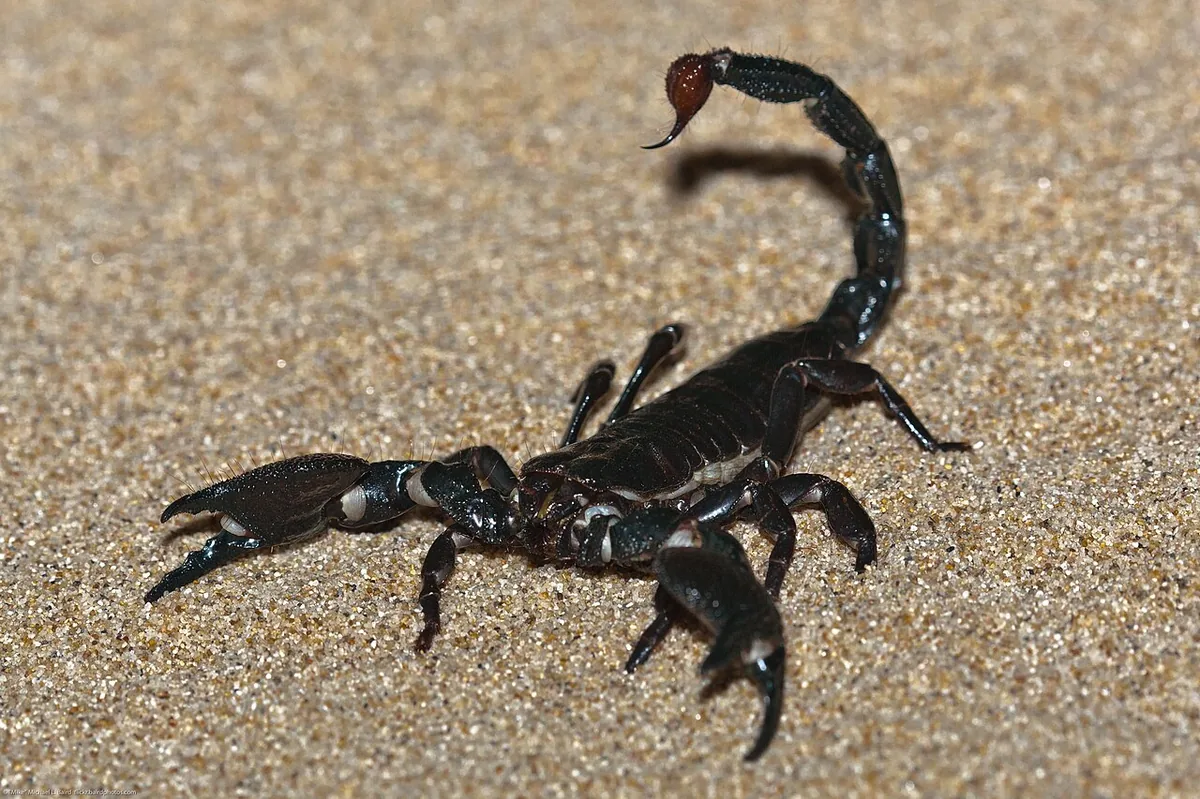
The emperor scorpion is the large, glossy black one everyone pictures, and it is genuinely among the calmer scorpions kept. It is also listed on CITES Appendix II because the pet trade took too many.
At a glance
| Adult size | Up to ~8 in (20 cm), ~30 g |
| Lifespan | 6-8 years, sometimes longer |
| Day temperature | 75-85°F (24-29°C) |
| Night temperature | 68-75°F (20-24°C) |
| Humidity | 60-80% day, up to ~90% night |
| Substrate | Deep and moisture-retentive; they burrow |
| Diet | Appropriately sized live insects |
| Legal status | CITES Appendix II |
| Experience | Beginner among scorpions, with respect for the sting |
Why people keep them
- Large, striking and genuinely impressive as a display animal
- Among the most docile scorpions in the hobby
- Mild venom compared with many scorpions
- Long-lived for an invertebrate at 6 to 8 years
Why you might not want one
- Still a venomous animal, and individuals vary
- Needs consistently high humidity, which is harder than it sounds in a dry home
- CITES Appendix II paperwork and provenance questions
- Nocturnal and a burrower, so expect to see it less than you imagine
What most care sheets get wrong
Docile does not mean harmless, and calm is not a species guarantee.
The emperor's reputation is deserved: the venom is mild by scorpion standards, stings are not considered life-threatening to a healthy adult, and the animal generally prefers to pinch with its pincers than to sting. None of that makes it a handling pet. Individuals differ, a sting still hurts, and people do react differently to venom. The sensible default is the same as for tarantulas: look, do not hold.
CITES Appendix II is part of the care sheet, not a footnote.
This species was collected from the wild in large numbers for the pet trade and is now listed on CITES Appendix II, meaning international trade is regulated. For a buyer that translates into a practical question: is this animal captive bred, and can the seller say so? Captive-bred animals are available and avoid adding to a pressure that is the reason for the listing in the first place.
The humidity requirement is the part people underestimate.
Sixty to eighty percent during the day and rising toward ninety at night is a genuinely humid enclosure, and it has to be achieved with deep moisture-retentive substrate and sensible ventilation rather than by sealing the box. Too dry and the animal struggles to molt. Wet and stagnant and you get mould and mites instead. This is the husbandry detail that separates a thriving emperor from one that slowly fails.
Common questions
How big do emperor scorpions get?
Adults reach up to roughly 8 inches or 20 centimetres and about 30 grams, which makes them one of the largest scorpions kept and the reason they are so often the species people picture.
Is an emperor scorpion sting dangerous?
Its venom is mild compared with many scorpions and stings are not considered life-threatening to a healthy adult, typically causing localised pain and swelling. It is still a venomous animal, individual reactions vary, and it is not a species to handle casually.
How long do emperor scorpions live?
Six to eight years with correct care, and sometimes longer. That is a real commitment for an invertebrate and considerably longer than most people expect.
Are emperor scorpions endangered?
They are listed on CITES Appendix II, which regulates international trade, following heavy collection from the wild for the pet trade. Buying captive bred is the straightforward way to avoid contributing to that pressure.
Can emperor scorpions be kept together?
Communal housing is possible with this species, which is unusual among scorpions, but it is not a beginner project. It requires generous space, multiple hides and consistent feeding, and getting it wrong means cannibalism.
Sources
- Emperor scorpion care — Tree of Life Exotics (veterinary)
- Emperor scorpion care guide — Exo Terra
- Pandinus imperator care sheet — The Tarantula Collective
- ARAV, find a reptile and amphibian veterinarian
Related reading
All invertebrates · husbandry fundamentals · feeder insect nutrition